Dover Publications: The Quintessential Trade Paperback

Dover Publications reprint of Edith Diehl’s “Bookbinding: Its Background and Technique. I’ve used it heavily since 1988.

A recent piece from the NY Times Magazine, “As Everything Else Changes, My Dover Paperbacks Hold Up”, reminded me how much I love my Dover books. From the perspective of a book conservator, Dover made the best paperbacks I know of, combining physical durability, pleasant tactility and legibility.

The Dover sales pitch, on the back cover of every book, is no lie. “A Dover Edition Designed for Years of Use!  We have made every effort to make this the best book possible. Our paper is opaque, with minimal show-through; it will not discolor or become brittle with age. Pages are sewn in signatures, in the method traditionally used for the best books, and will not drop out, as often happens with paperbacks held together with glue. Books open flat for easy reference. The binding will not crack or split. This is a permanent book.” In addition to being very well made, Dover books were always very reasonably priced. What’s not to like?

The textblock of my “Bookbinding” is in good physical condition, though the surface pH of the leaves is around 4.5. The spine is becoming concave, due to 32 years of very hard use, but the sewing is completely intact. The covering material, consisting of three layers, is also in good condition. There are only a few detached areas on the spine, some delamination, and tension/compression creasing. The spine glue is still surprisingly flexible. Dover books were always well printed, with nicely chosen paper for reproducing illustrations. The book has a pleasing solidity, reminiscent of a phone book. It is not a book that needs careful handling.

At the beginning of my career, this book was read, reread, abused, annotated, and weighted the book open with a bar of steel while I bound my own books following Diehl’s instructions. While the book repair section is quite dated, the binding information is still solid. My students always get a copy of her calm and detailed checklist of what to do in the flurry of covering a full leather book (pp. 208-209).  I like the Dover reprint so much, I’ve never been tempted to buy the original two volume first edition, or the Hacker Art Books reprint.

It is great the Times published a piece about book structure for the general public. As the author notes, the current worldwide instability may drive us to look for more permanent things in our lives, and re-appreciate them. A bit of hope found in a Dover paperback?


Edith Diehl. Bookbinding: Its Background and Technique. New York: Dover Publications, Inc., 1980.  Reprint, orig. 1946.


UPDATED 6 OCT 2020: Corrected title from “… Mass Market Paperback” to “… Trade Paperback” in the title. Thanks to Ann’s comment below!
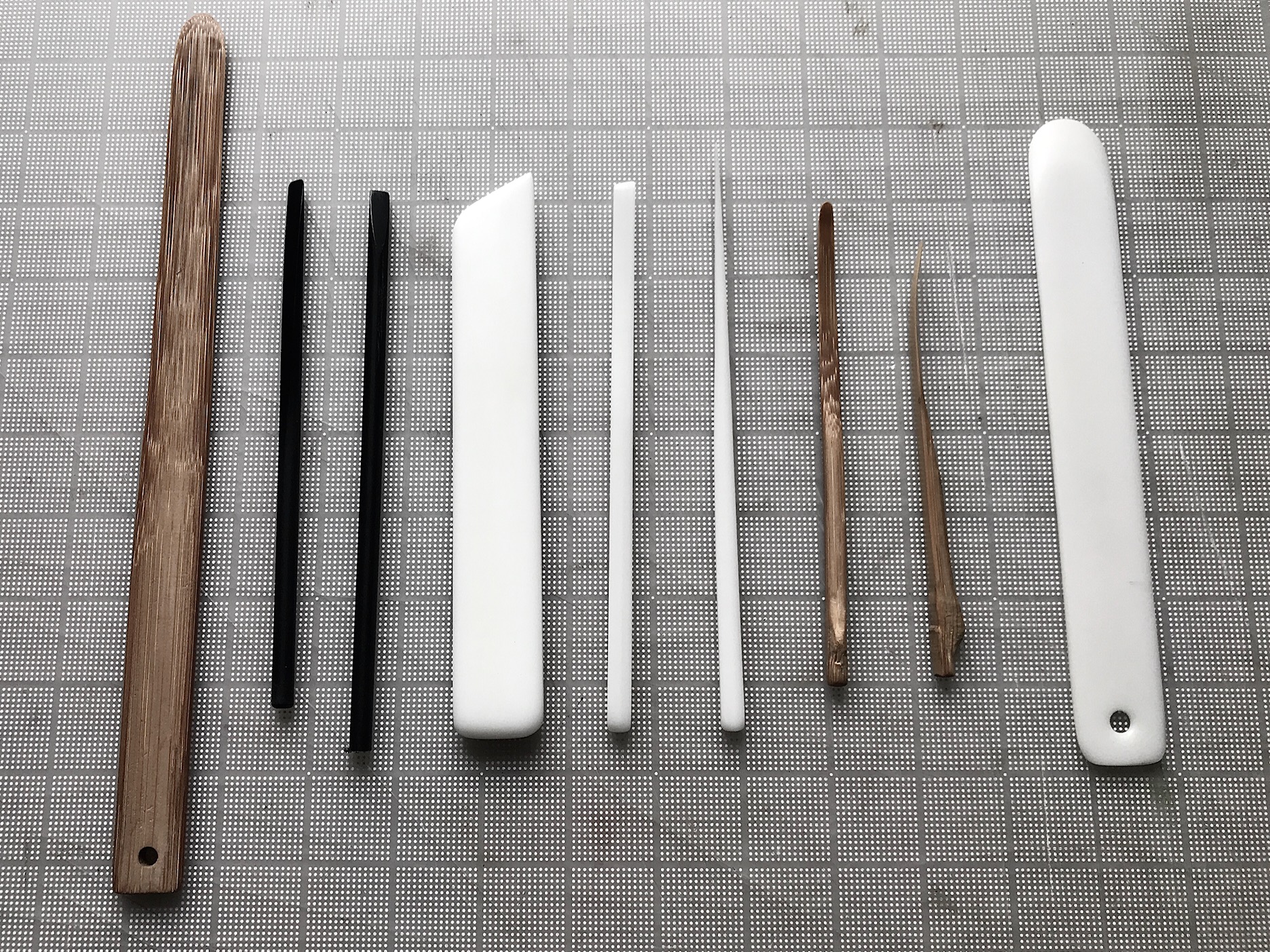
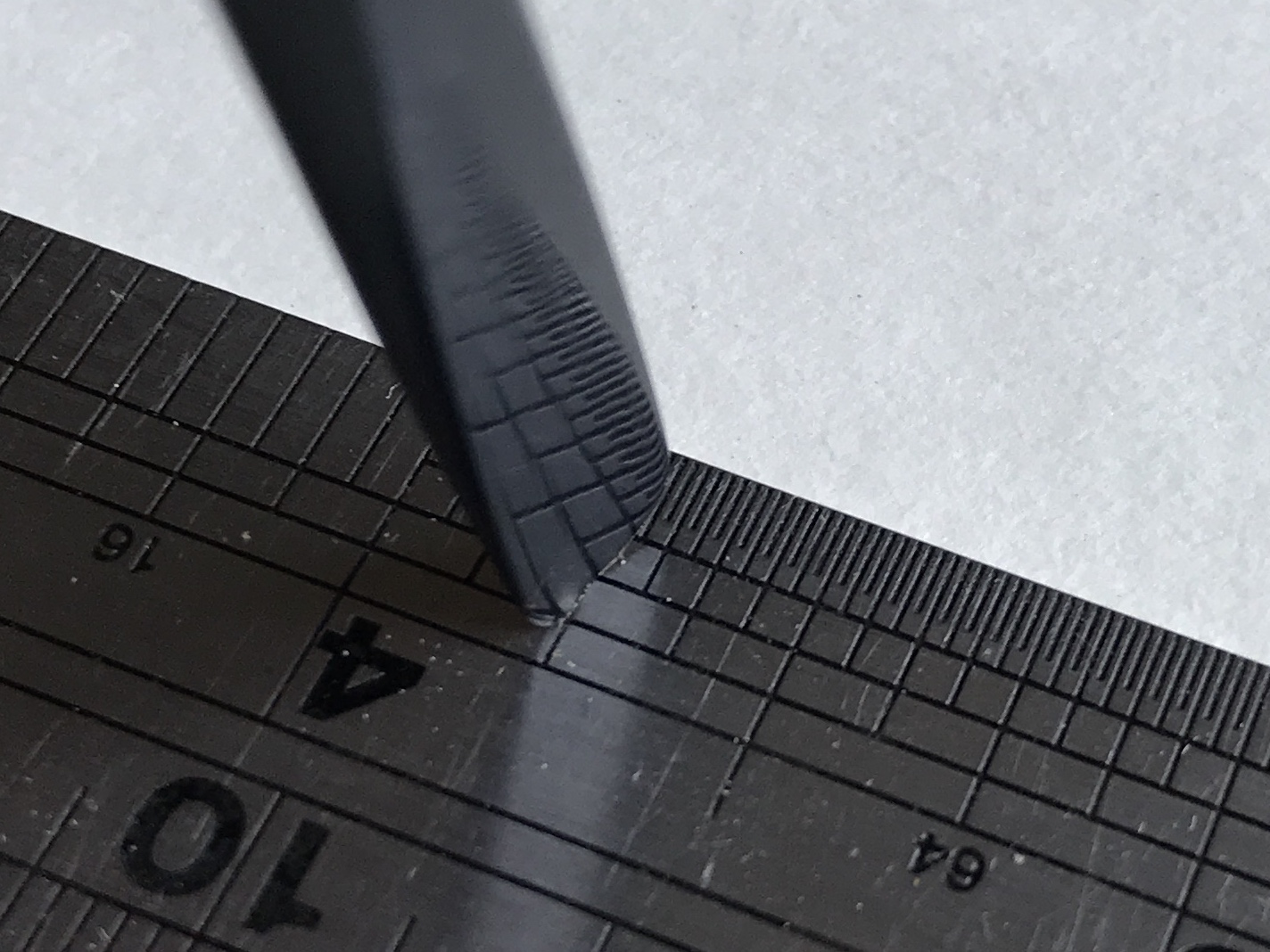
Online Workshop: Making Delrin and Bamboo Tools. November 14 and 21.

Nine different basic tools we will make in the workshop. Of course, everyone is encouraged to redesign them for their own needs.

NOTE: The workshop is now full. If you would like to be on a waiting list, and also notified first of the next time I run this (likely spring 2021) please contact me. 

Making tools is not only engaging and fun, but entirely practical since the result is set of tools you can use daily. Bookbinders, book conservators, photographic conservators, paper conservators, and others will find this workshop valuable. Filing, scraping and polishing are meditative activities, no previous experience required. Working Delrin and bamboo is a great way to start toolmaking and we will make folders, lifting tools, microspatulas, hera, and creasing tools. Fair warning: making your own tools is highly addictive!

All aspects of making tools with delrin and bamboo will be discussed in detail: design considerations, cutting, filing, rough shaping, final shaping, and polishing. The workshop consists of two 3- hour synchronous zoom sessions with PPT’s, videos, discussion of handouts, demonstrations, Q&A chat sessions, and working together time. Also included is one month access to four videos demonstrating key techniques.

The workshop includes a kit with enough materials to make nine tools with a retail value over $300. Hand tools are also included: a cherry bench hook, scraper, burnisher, a file for plastics, and a variety of sanding and polishing supplies. All you need is a stable work surface, and some time to work between the two weekend sessions.

SCHEDULE: Two 3-hour sessions. Saturday November 14 and 21. 12-3pm Pacific, 1-4pm Mountain, 2-5pm Central, 3-6pm Eastern, 8-11pm GMT, 9-12 CET, 10 – 1am EET, 5am – 8am (+ 1 day) JST, 6am – 9am ( +1 day) UTC

International participants need to contact me for an invoice to pay by credit card, and order before October 17 to ensure kit arrival.

US participants can register here

COST: $375 US  ($425 Canada/  $445 other countries, includes shipping)

A Very Cool Patent Model Press

Patent Model Press. Source: https://americanhistory.si.edu/collections/search/object/nmah_998708

One of the best ideas for a standing press I’ve seen. The adjustable bottom platen solves a lot of problems for modern binders and conservators, that often are working on only one book at a time. It would alleviate the need to add heavy wood packing materials, and the lower platen could be positioned at a comfortable work height.

According to the patent description, “This patent model demonstrates an invention for a bookbinders standing press which was granted patent number 30243. The press has a platen, or upper follower, lowered in the usual way by an iron screw, and a bed, or lower follower, that was raised by a rack and pinion.” Patent date 2 October 1860, Pelletreau, Maltby K.

The ratchet would allow for tremendous pressure with short swings of the press pin, and were not uncommon for heavy duty presses in the 19th century.

Were any ever made? If so, I want one!

There are around 400 printing and binding patent models in the Smithsonian’s Graphic Arts Collection.