A Few Random Thoughts on 19th Century Books and Machines

Starting in the mid 20th century, many book conservators and proto-conservators rallied around the now common premise that it is the material make-up and structure of books, and not just the surface decoration that needs to be studied and conserved.  So it seems somewhat ironic that most of the recent research/ interest in 19th century cloth case bindings focuses on– you guessed it– surface decoration and famous designers.

For those who think the structure of 19th century cloth case structures are all the same, I urge you to look again. They document the most radical change in book structure during the past 12 centuries.  They dramatically evolve to become the ideal structure for fabrication by machinery.  In fact, the machinery itself is of interest, beginning almost contemporaneously with the Luddite Rebellion of 1811-12.  Interpreting how the machines evolved, were used, were maintained and affected labor is virtually unresearched.  I fear many of these machines gone- sold for scrap.  Similarly, a friend of mine recalled seeing mountains of smashed linotype machines left for trash in the 1970’s along the West Side Highway in NYC.

The structure of cloth cased books, and boarded books, preceded mechanization and was originally done by hand.  Around 1820, the only machine used in cloth binding was a rolling machine to replace hand beaters, but by the 1880’s about the only operation done by hand was the final casing in. I almost always find it interesting to look at machines, speculating about how they functioned and appreciating their aesthetics.

In some respects, the Espresso Book Machine could be considered the quintessence of bookbinding machines. It can print, bind, cover and trim a “library quality paperback” in about 4 minutes, with humans only needed to clear the occasional paper jam in the high speed printer.

Now we just need a reading machine to replace the outdated human interface….

A Portfolio Box

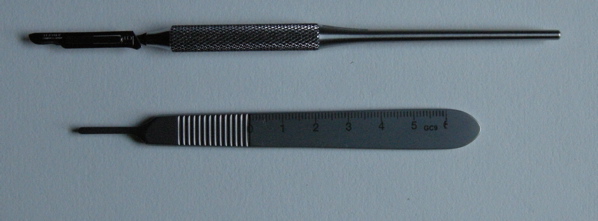
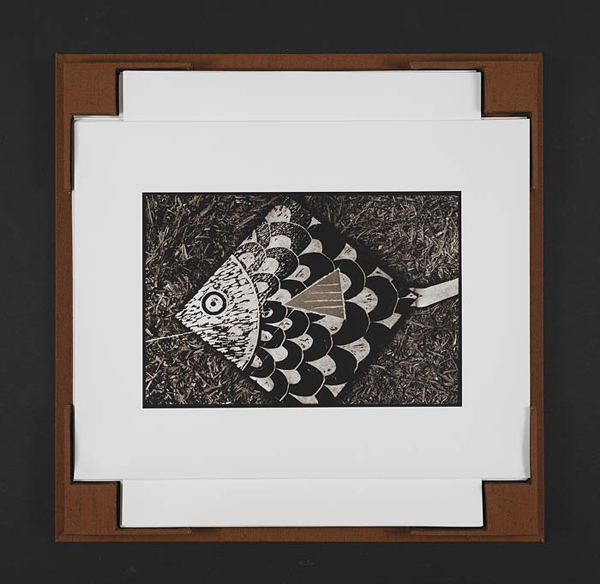
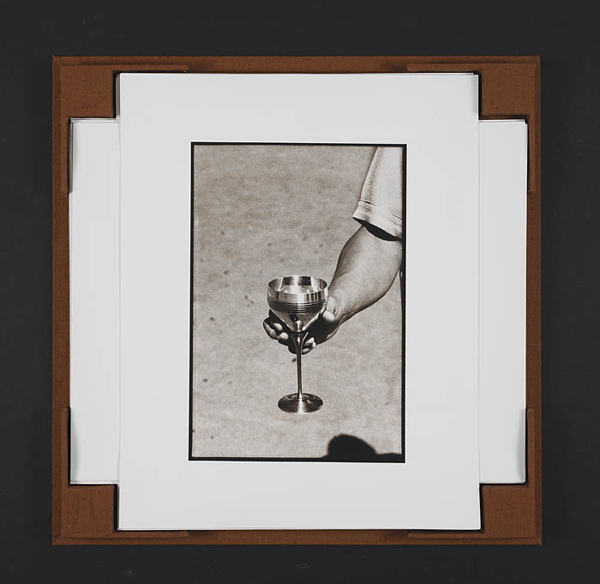
Dwight Primano, a NYC based photographer and I designed this presentation box for a sequence of photographs titled “ken”.  Since the images had a specific sequence, and alternated horizontal and vertical format, we decided on a box with a lift off lid and small squares in each of the corners to prevent the images from shifting.  There are cut out areas for finger access on the top and sides.  The image size is slightly smaller than the width of the paper, so all the images remain hidden until the top one is lifted off.  The box is roughly 14 inches in height, square and covered with canapetta book cloth.   A new tool, the 25 degree flexible mini knife proved very useful for paring down a ridge between the complex cut outs on the corners and bottom lining cloth.

It’s always fun to collaborate on a project that is somewhat unusual like this one.  Dwight also teaches conservation documentation for The Institute for Fine Arts, as well as a great weekend workshop version covering some of the basics, which I took a couple of years ago. The top image looks like a woodcut, but it is a photograph of a kite lying on the grass.  There are a few copies of this series for sale, contact him for details.

Short Pencils

This pencil box, filled with well worn pencils, strikes me as extremely poignant.  Someone treasured, or at least saved these used up pencils and eventually they were resold to in a junk shop.  It is increasingly rare to even see well worn objects– things just break or get discarded because they are obsolete or out of fashion.  No one today (except Jim Croft!) would ever consider using a pencil that is so short, awkwardly grasping it at the end of two fingers and a thumb, then slowly writing.  I imagine when the ferrule prevented the pencils from entering any further into the pencil sharpener, someone removed it and tried to sharpen them from the other end.  Using the ferrule to make the double ended pencil seems an absurd amount of work for very little benefit.  But since many of the pencils appear not to have been used after being sharpened, were these made as an exercise to pass the time? Could the person who made this not be able to afford a new pencil, or just being creative?  Even the pencil box, well constructed with finger joints and a sliding lid, is a rarity these days.  The remains of these pencils are possibly more interesting than the words or numbers that they once wrote– pointing to the value and importance of tools.

***

For those old enough remember card catalogs and the little pencils (aka. golf pencils) scattered around them, this informative documentary explores where they come from, how they were made and how they were used.  Documentaries like this one give us a fascinating glimpse into how earlier cultures lived, worked,  and constructed the objects of daily life.

***

The new Zebra mechanical pencils, available from Staples and Amazon, costing 39 cents each are close to ideal. They are light, cheap and cleverly designed. The lead that comes with the pencil is fairly poor quality, but is easily replaced. Pressing the eraser advances the lead. But  their best feature is their perfect overall length– most pencils are too long, at least for my hand, and have been that way for the past 100 years or more.