Thomas D. Conroy: A Tribute

Thomas D. Conroy – a friend and colleague – died on November 11, 2025. He was a bookbinder, woodworker, book historian, toolmaker; basically one of those people who knew something about everything.(1) Needless to say, his extensive knowledge often resulted in impromptu discursive lectures, accompanied not only with citations, but sometimes extended quotations from memory. 

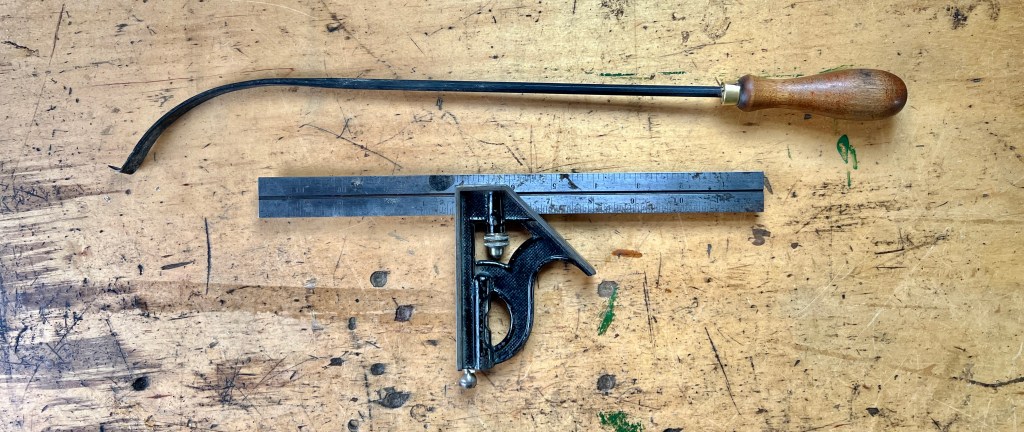
Unusually, his wide ranging interests and experiences would often coalesce into useful information. He was my go to source for identifying all types of tools. Once I queried him on a “whatsit”; or unknown tool. It was an 18 inches inch with forged octagonal shaft, flattened and hooked at one end, a brass ferrule, and the other end extending through a beautifully turned wood handle.

Fig. 1. A Stuffer that Tom identified. A Starrett combination square is under it for scale.

Tom identified it as a stuffer of some sort, likely for horse collars. But not after a lengthy, though fascinating, unasked for treatise on the history of golf ball stuffing materials and tools. I’m sure Jack Nicholas couldn’t have given a more through explaination. That was Tom. 

His expansive and free-range mindset was cemented during his undergraduate years at St John’s University. Only half-jokingly, he once complained that St John’s had ruined his life; convincing him to accumulate ideas rather than money. Most of his adult life he lived simply but comfortably in Berkeley, CA. He obtained an  MLS from UC Berkeley. 

I suspect his scholarly rigor didn’t come from formal education; instead it sprouted from his stubborn autodidactism. He was an autodidact’s autodidact; fusing the history of books, woodworking, craft, general mechanics, and god knows what else into his unique take on things. 

His hard earned knowledge was freely shared. Sometimes his comments on blog posts exceeded the length of the original. I had to be careful when corresponding: a seemingly simple question could provoke a comprehensive answer a few hours later: a little slower than AI, but more accurate. I didn’t want to take advantage of his intellectual generosity by constantly pestering him.

Tom took a well-deserved pride in his writing. We primarily corresponded through writing, first in letters and later through email, and we usually discussed things, not personal history. I don’t think it was because we were reluctant to share; it’s just that we were both more interested in things outside of ourselves. Are writing chops genetic? He never mentioned to me his grandfather Jack Conroy, was a self described “proletariat worker advocate” and professional writer, with a Guggenheim fellowship and an armful of published books. Tom had a tremendous influence on my own work and as our relationship progressed over 30 years, I changed from a fanboy to a peer – at least in my own mind. 

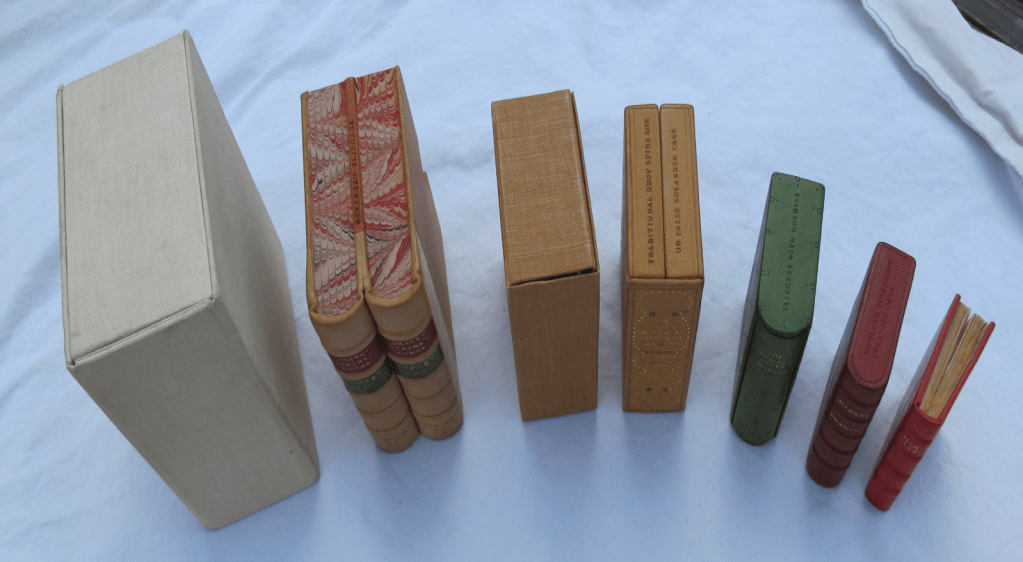
Not content with theoretical knowledge, he was also a maker: working in metal, wood, paper, and leather. These converged in unexpected ways, guided by his Conrovian cosmology. (thank you John DeMerrit and Dominic O’Reily for coining this apt term!) One example was his clever set of nesting boxes explored the range of book housings for a single book. 

Fig. 2. A set of six nesting book boxes. From Right to Left: a full leather binding of Hamlet, a Zahensdorf style full leather fire resisting case, a French style chemise and leather edged slipcase, a full leather Solander Case, a cloth 4-flap folder, a faux book spine slipcase, and finally a cloth covered drop spine box. Photo: Emily Ramos

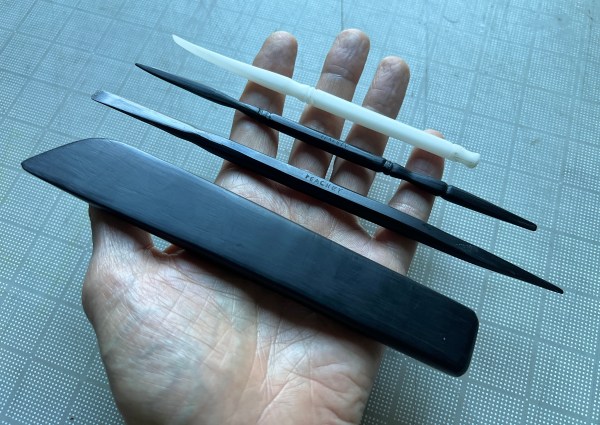
Another example is a group of bone folders he had shaped. They looked unfinished and crude to me, a puzzling departure from most of Tom’s work. He carefully explained that their form was a direct result of function, along with the philosophic underpinnings of this type of craft work. His self-imposed challenge was to alter the original shape of the bone as little as possible to achieve a functional tool, instead of compulsively polishing every surface.

He loved all types of tools. A set of band sticks in a virtually airtight leather case was another tool he made that I particularly admired. He explained that he had copied them from a set owned by another binder, reportedly in order not to steal them! True tool lust.  

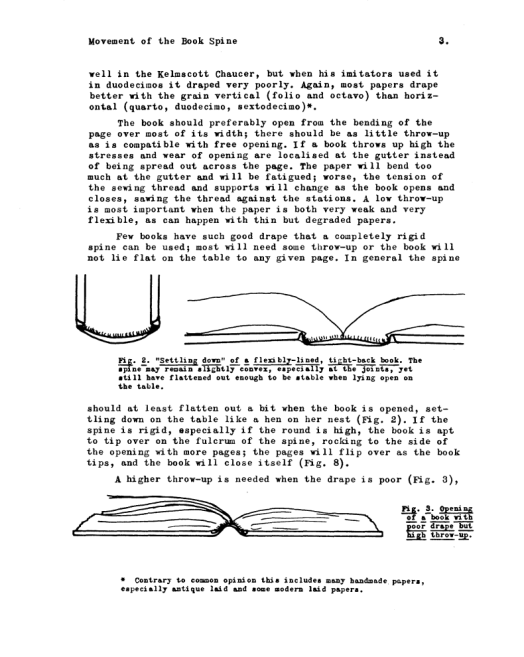
Fig. 3. Screenshot of typescript and drawings of movement with Tom’s drawings. This was made before widespread use of personal computers in 1987. Source: https://cool.culturalheritage.org/coolaic/sg/bpg/annual/v06/bpga06-01.pdf

Tom was a prolific author, despite often complaining of writers block. One of his many contradictions. If you are not familiar with Tom’s work, here are two recommended articles.

First, his 1987 “The Movement of the Book Spine”. It is essential reading for any bookbinder or book conservator. In it, he organizes the craft knowledge of bookbinding spine engineering into a rational system. He acknowledges that this is theoretical: it is up to others to test his hypotheses. And you know what? Despite some minor disagreements I have, they hold up really well. 

In 2023 he wrote “Bookbinding in the time of Cholera”; the tale of a sewing key and a coincidence that lead to its identification. It’s a great read and demonstrates how disparate bits of knowledge can coalesce once critical mass is reached. 

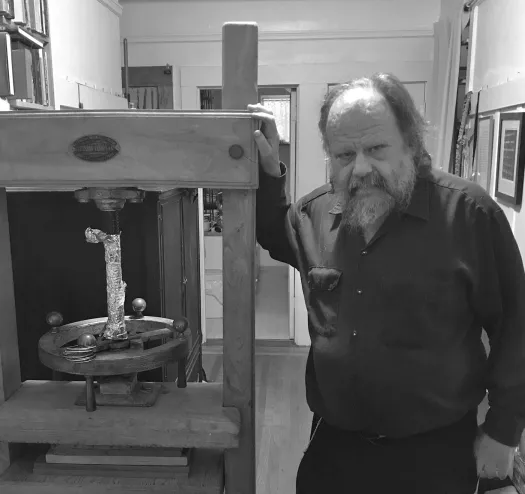
Fig. 4. Thomas D Conroy in 2020.  He lovingly restored his French style percussion press. The tinfoil on the screw is not to prevent alien mind control; it simply keeps the grease off your forearms if you accidentally touch the screw.

The last time I visited him, we talked for a few hours about books and tools and associated tangents. He was apologetic for his occasional lapses in memory and general fatigue, yet was prolific to the end; publishing two articles in the 2025 Suave Mechanicals 9 and working on a final uncompleted article about bookbinder’s backing hammers.

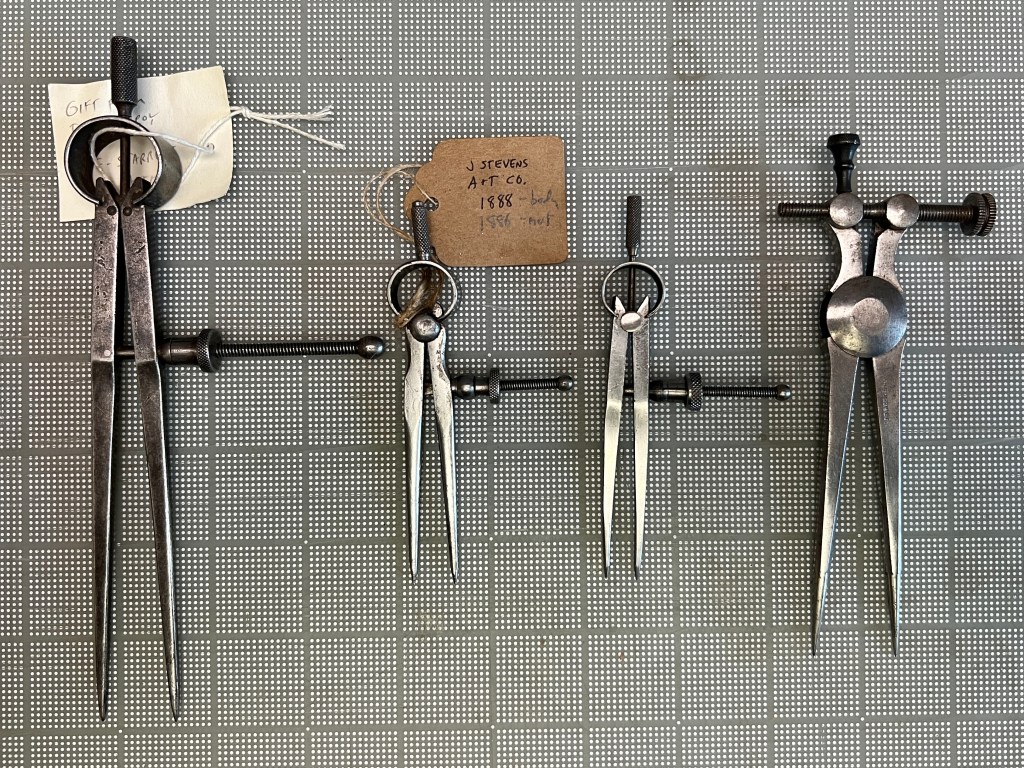
Fig. 5. Different spring dividers. The Fay pattern on the far left was a gift from Tom. Later the patent was bought by Starrett, and their version is third from the left. Tom loved dividers, and when asked how many he needed, wrote, “six pairs isn’t too many. Sixty isn’t. Six hundred?… maybe, but I’ll let you know when I get there”.

Before I left his Berkeley house,  he gifted me a pair of original Fay dividers. As I stepped down the stairs of his weather eaten front porch he hoarsely shouted I could find more information in appendix three of Kenneth Cope’s American machinists tools

As typical with Tom, tracking these citations expanded into related patents, like the beautifully shaped Steven’s dividers. More interesting things to research. Endings are messy. Tom is gone. I’ll miss him.

Footnote

  1. Tom was also a lover of footnotes. Occasionally they even exceeded the length of his primary text. This mirrored his digressionary speaking style. This one’s for you Tom, apologies for the brevity!

Delrin Toolmaking Workshop. NBSS, Boston, October 4-5, 2025

Some tools you can make in this workshop, or design your own.


Making Delrin Tools by Hand for Bookbinders and Conservators. Register here!


This is a rare chance to take a two day Delrin toolmaking workshop. Anyone who needs small hand tools for manipulating, delaminating, spreading adhesive, etc. is welcome. Making tools is engaging, fun, and practical. Delrin is an excellent material for many bookbinding and conservation tools, such as folders, lifting tools, microspatulas, hera, and creasing tools. We will work together designing, roughing out and finishing of several tools. Working Delrin is a meditative activity, no previous experience required. Safe, low dust methods of working Delrin will be emphasized. This workshop is a great opportunity to geek out with other tool lovers. After the workshop you will have some useful new tools, and possess the know-how to alter, maintain, and make more variants. Warning: tool making is highly addictive. 

North Bennett Street School, Boston Mass. October 4-5 2025. Register here!

A Clamshell Box with an Integral Flat Back Cradle. By Annie Ujifusa

Annie’s completed box open, ready to display and protect a book during handling.

Annie Ujifusa, who developed this variant of a cradle box, guest blogs about her process and details the construction. I came up with the one-piece cradle box in 2009.

During a book conservation internship at the Boston Public Library (BPL) last summer, I was shown a beautiful medieval manuscript from the rare books vault that was housed in a clamshell box with a delightful built-in cradle. This enabled the book to be safely opened and read without even having to take it out of the box. I was charmed by the idea and when I asked how I could make one, I was pointed in the direction of Jeff Peachey’s blog, and then I went down a rabbit hole into making and experimenting with it. I started modifying small elements until I eventually ended up with a structure that I think serves a specific, useful purpose. I recommend reading his blog first to understand his terminology that I have adopted here. 

The original construction from Peachey calls for two pieces of bookcloth glued back-to-back serving as the hinge connecting the two wedges of the cradle. I made two boxes this way, and I really loved how, when closed, this limp hinge is able to wrap perfectly around the curve of the spine of the book. But I wanted to keep playing around. For my third attempt I got to thinking about what changes could benefit the structure. I wanted the hinge to have a more finished look; I decided to add a piece of binder’s board to it, making it stiff, so that the cradle looked like a complete, cohesive structure — almost like a book itself — instead of two wedges connected. A structure I was shown by Mary Hamilton French, the Conservation Officer at the BPL, came to mind as the perfect inspiration: the post binding. I took the spine from this binding and adapted it to this purpose.

Figs 1. A: The spine piece exterior covered. B: The inside. C: .

Its construction is simple. To make it, cut the binder’s board to match the thickness and height of the book. Cut two pieces of cloth—one should have a height that allows for turn-ins around the head and tail of the board, and the other should have a height that is just a few millimeters shorter than the board. The width should be oversized for now, allowing enough to cover the spacer boards on each wedge, and then some. Glue out the taller of the two pieces of cloth and lay the board down in the center. Turn in the cloth at the head and the tail, and crease it against the sides of the board, keeping the turn-in folds as perpendicular to the board as possible. (Fig. 1A) Then glue out the other piece of cloth, lay it onto the board, then crease it against the sides and then across the expanse of the other piece of cloth (Fig. 1B) Fold both layers of cloth in, against the board edges (Fig. 1C).

Then trim off the excess cloth. With fixtures holding the book and the folded-up wedges in place, glue one side of the hinge to the inner spacer, and then the other side to the outer spacer. If you’re using cloth that cuts nicely, without frayed edges, you can simply cut and glue the cloth down right up to the edge of the outer spacer. (Fig. 2A) Otherwise, before adhering the spacer to the platform, leave enough cloth to wrap around the spacer and glue it to the underside for a nice, seamless look as seen in Fig 2B below..

Left: Fig. 2A. A cut spine wrapper. Right: Fig 2B. At the top, the cloth is wrapped around for a more finished look.

There were a couple of other minor adjustments I made. The gap between the spacer and upright was suggested to be one centimeter. I ended up reducing that to 5mm, for no other reason than I felt it simply looked more elegant. I also found that adding about one spine thickness to the height of the outer upright, as suggested, caused the wedge angle to be too steep. Instead, adding only about one third to one half of the width of the spine created an angle that more closely matched that of the other wedge. (Figs. 3A and 3B)

Figs. 3A and 3B. The left image has about a third the width of the spine added for even wedge height.

I then added the pull ribbons to a different spot as seen in Fig. 4. I adhered them to the back of the upright pieces before covering the back of the wedges in cloth. The outer wedge ribbon needs to be long enough so that it falls over the wall of the outer tray when opened, and the inner wedge ribbon needs to be long enough to span the width of the upright, the wall height of the inner tray and about two thirds of the width. I felt this saved time, while still allowing the opening to be effortless with a minimal learning curve.

Fig. 4. Ribbon placement for ease of opening the cradle.

Since this was just a model, I made it for a small, skinny book (Fig. 5). At the time, I didn’t realize it’s most valuable use and greatest potential; I think it would really shine in the case of large, flat-backed books that need the added support. It’s an overall neater look in the box, and it feels sturdier when opening. It also avoids potential abrasion from the edge of the inner tray where the spine in the limp hinge would have rested on.

Fig. 5. Completed box closed.

As Peachey laid out in his blog, this type of box requires very specific needs, and has some obvious drawbacks. This one I created calls for even more specific needs, but I think that’s one of the joys of conservation. Each book and each treatment is different and has its own set of obstacles. In addition to providing protection during storage and use, this box is a sure crowd pleaser and fun to open. It was an immensely satisfying structure to make, and I’m looking forward to making more in the future!

Annie Ujifusa Bio I’m currently a second-year student in North Bennet Street School’s (NBSS) Bookbinding program. Originally from Washington state, I moved to Boston from Alabama. During my first year at NBSS, I quickly became enamored with conservation. It’s truly magical to me. I will be starting as the newest Conservation Technician in the Conservation Lab in Special Collections at the Boston Public Library after I graduate. I believe the book is an object that should be engaged with, and I can’t wait to repair and stabilize books every day so they can be safely handled and studied for generations to come. In my spare time, I hope to continue making new bindings, as well as slowly mastering the art of gold tooling, which I have become obsessed with. I’ll be trying to build my hand tool collection for the rest of my life! Instagram: @annieuji

Thanks for the great idea and post, Annie! Some other cradle boxes from around the web are here. The AIC wiki is also useful for more information.