Last weekend, when checking out at the supermarket, I impulsively purchased a DVD of Executive Suite. This 1953 drama, directed by Robert Wise (The Sound of Music) stars William Holden, June Allyson, Barbara Stanwyck, Fredric March, Walter Pidgeon, Shelly Winters, and more. In addition to being a fantastic film, one of the central themes is craftsmanship.
The movie begins with a subjective camera, from the point of view of corporate president Arthur Bullard. Within the first minute he dies, and the rest of the film details the political maneuverings of the other board members, as they backstab, blackmail and bribe each other in an attempt to gain control of the company. In the final scene William Holden’s character, an idealistic VP of manufacturing — a man with a heart and integrity — battles controller Fredric Marsh, a number crunching opportunist who is only concerned with the bottom line. This is a Hollywood movie and I’m not spoiling the plot by revealing that in the end William Holden (the good guy) wins the new directorship.
This is in stark contrast to the real world, where the bad guys seem to have won: the bottom line rules, the S&L scandal, the Wall Street bailout, the virtual disapperance of US manufacturing. Many are fearful, feeling we have sold everything of worth, and are warry of an unsustainable future. Idealism and honest work, work that feels meaningful, produces something of worth and quality is on the wane. Even mentioning these sentiments can invoke ridicule at being naive. Of course, many may object why it is the elite board of directors that are debating (and ursurping) these issues rather than the workers themselves, but craftsmen began to loose control of their work, philosophically and pragmatically, long ago, perhaps as early as rules and regulations around trade developed.
In the climatic scene, Holden tears the leg off a chair to demonstrate that poor craftsmanship is cheating our essential drive; to do good work and take pride in it. He challanges us to examine our work life. Do you make something you would be proud to put your name on? Do you want the dividends report on your tombtone? What involves your attention, interest and devotion? What do you love? Just a paycheck? Is this all there is? What is the alternative?
Craftsmanship, he suggests. Honest, engaged, thoughtful, skilled craftmanship. Making something of worth and value the best we are able to. And this is why many of us, myself included, were originally attracted to the idea of craft. In the early 21st century, many turn to craft, often after pursuing another occupation or profession which proves unfulfilling. The relationship between conservation and craft (or art and craft, for that matter) is a woefully unexplored, complex topic that deserves much attention. Many have a hope that a life in craft will satisfy something. Why is this skilful manipulation of our physical environment, using tools, so deeply satisfying to so many of us? And why do so many craftsmen view financial success as virtually incompatible with integrity in craft? I suspect the answers — if any — may lie in the results of crafting.
Craft is always a battle. External and internal pressures often threaten to crush the soul of craftsman, but this film inspires by exuding the virtues of true craftsmanship, through the medium and the message.

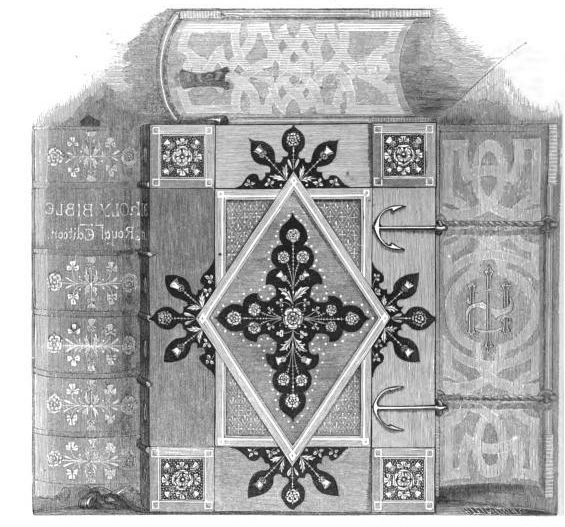 The Official Descriptive and Illustrated Catalogue of the Great Exhibition, Vol. 2, 1851 (p. 538)
 Peachey Conservation