

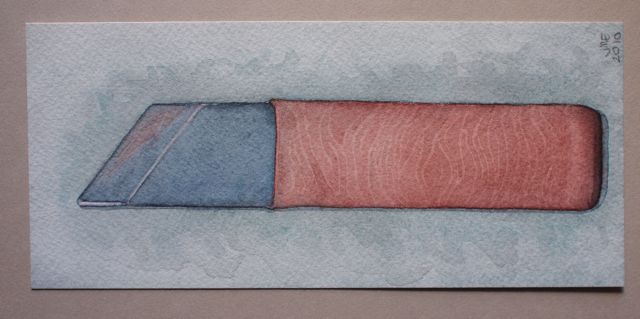
It seems somewhat incongruous to the nature of a tool to laud its aesthetics, since when we are using a tool it essentially disappears–it becomes embodied, an extension of our hand. Once we are proficient, we just use it, generally concentrating on what the tool is doing to the material being worked. It may even be a stretch to apply the usual notions of beauty and attraction when thinking about tools– you might pick up a pretty hammer when faced with a choice, but if you need to drive a nail, picking the right size hammer is paramount. When tools are waiting to be used, they are generally stored or arranged according to functional considerations, not displayed, except for some collections. But tools do have aesthetic qualities, ranging from a modern sleek functionality to a worn, well used patina of wear patterns and scratches–what I call their use value, their record of being in the world and being used. These marks and accretions are evidence from their time used unconsciously, which is perhaps why we find them beautiful. They are natural, real and becoming more and more rare in our disposable society.
Other non-book related photos are up on a different blog, shot with my new Olympus E-P2, which is a great tool, btw.
 Peachey Conservation