Woodcut printed in violet ink, open edition, graphite corrections additions, Stonehenge Fawn paper, 250 gsm, 9.5 x 11.5 inches. $75.00
Click here for ordering information


Book Conservation
Woodcut printed in violet ink, open edition, graphite corrections additions, Stonehenge Fawn paper, 250 gsm, 9.5 x 11.5 inches. $75.00
Click here for ordering information
“In European bookbinding the sewing frame or sewing press is an essential piece of equipment. The primary sewing–that which connects the quires of sections of a text-block– is the very foundation of binding, and I believe a well-consolidated, multi-quire text-block sewn onto bands can only be achieved by using a sewing frame.” Christopher Clarkson, ‘Thoughts on Sewing Frame Design for the Book Conservator’ in The Paper Conservator 19, 1995. (p. 41)
The earliest known representation of a sewing frame is found in the well known Bamberg Miniature, from around 1250. During the past 750 years there have been few changes to its basic structure. Essentially, a sewing frame consists of a base, two uprights and a crossbar which can hold the sewing supports at 90 degrees to the signatures while sewing. This allows the supports to be properly tensioned and keeps the entire text-block in precise alignment. I find it is faster to sew a book on a frame and the sewing is more accurate for all types of supports– even if you are pre-piercing and using tapes. Additionally, there is an ineffable satisfaction in using a piece craft equipment with such a long history, it makes bookbinding easier and more enjoyable. Many shortcuts in current bookbinding technique– one of them not sewing on a frame– tend to produce a book that can look and feel homemade, rather than handmade.
Despite the essential stability of the sewing frame as standard bookbinding equipment, there have been minor changes: the shift from the base being a table to portable, the Northern European addition of adjustable hooks, gated fronts, and cantilevered uprights, the (French?) addition of a ‘tenter’, changes in the size and shape of the sewing keys, the use of manufactured woods and other materials for dimensional stability, etc…. A candle holder, pictured in C. E Prediger’s Der Buchbinder und Futteralmacher, 1745, (reproduced in Mirjam Foot’s Bookbinders at Work) has to rank as one of the more creative improvements. It is only recently that sewing frames have changed significantly.
During the past 60 years or so, sewing frames seem to have the allure of a better mousetrap, with inventive bookbinders and conservators rethinking some traditional formulations. Sidney Cockerell used the idea of cantilevered uprights, but improved the rigidity of them by making them solid. Chris Clarkson refers to this as the ‘Mark I’ style sewing frame. I believe John Corderoy, in the 1967 Bookbinding for Beginners was the first to mention a folding sewing frame on page 21. Later Roger Powell created a unique key slot that permitted the supports to be strung at the front of the base, making starting the sewing much easier, and was possibly the inventor of cushioned sewing boards. Chris Clarkson and Peter Clothier in 1992 contributed several more improvements with their Mark III sewing frame. Laurenson-Stuart also made a non-adjustable cantilevered frame modeled in the Cockerell design, which was sold by Hewit & Sons in the 1990’s. Phillip Smith created a single post frame,and a clamp-on version. Most recently, Tim Ely has invented the Dreadnaught and Scout, a modern rethinking of the cantilevered design, made with modern materials, outfitted with a rear view mirror and ‘anubis’ clips to hold supports. Some who have caught the sewing frame bug– such as Tim Moore, Keith Uram, Robert Walp, and Frank Weisner— are not tempted to improve on the traditional design, but are making well crafted, high quality hardwood frames with a modern aesthetic.
Yet the siren song of the sewing frame inspires some truly bizarre ideas– for example, here is a sewing frame made from an old book— conceptually clever, yet I can’t imagine it is actually rigid enough to function, but the author claims it also works as a piercing jig. For some reason, there is also an odd tradition of using the legs of a chair, in this image the chair is placed flat on a table, and the book attached between the legs, from the front to the back, under the seat. Halliday’s 1930 Bookbinding as a Handwork Subject contains two additional variants of this unfortunate approach; using the chair upside and using the bottom of the seat as the base, and using the chair upright and attaching the supports to the back of the chair.
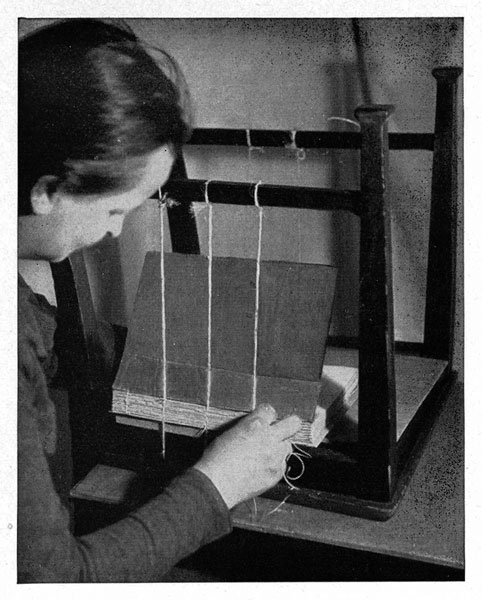
Ruth Zechlin, Werkbuch für Mädchen und für alle die Freude am Werken haben, 1961 (first edition 1932)
The tradition seems to be not just confined to America and the United Kingdom, Peter Zillig sent me the above German example, I presume from the 1932 edition, but am not sure. It looks like the opposite side of the chair is also strung up, perhaps for a ‘dos-a-dos’ binding? I’m surprised no one has claimed chair/sewing frame as a combination book press/ sewing frame– after sewing, one could simply sit on the book to press it. Of course, a simple frame is relatively easy to construct, if you have a few hand tools– drill, saw, router, sandpaper– and some basic woodworking skills, like this one I made with metal rod uprights.
Many book arts suppliers also offer inexpensive traditional looking wooden versions, though they should be carefully inspected for quality– at least make sure the center of the crossbar coincides with center of the slot on the base and the screws turn smoothly. Older frames, due to poor storage, are sometimes too loose and warped, which can interfere with accurate sewing. Also, when evaluating a frame, make sure the uprights are at 90 degrees to the base and crossbar is rigid. If it deflects, each time you tension a support, it will change the tension on the others. A few broken or chipped wood threads are common and will not interfere with the action of the nut. If a wood nut is very tight, the threads need to be filed or sanded slightly larger.
***
I began to make and think seriously about sewing frames in 1997, during a week long Mellon Advanced Conservation Workshop held at the University of Iowa, co-taught by Joel Spector and Tom Conroy. I made two wood frames– a full size German style cantilevered press, and a smaller, traditional English style. I’ve also made a dozen of the portable frames, similar to the one pictured above, for a class I taught at PBI. My interest in frames was rekindled when I saw a Hickock Blank Book sewing frame, with its easy to use T-slot adjustment mechanism for attaching sewing supports.
A major, inherent problem with all previous sewing frames is that they are awkward to store when not in use; often they are placed on a high shelf, difficult to access and exposed to excessive heat and dust, or have to be disassembled, which is also a pain. I suspect these inconveniences sometimes keep them from being used. I often found sewing keys difficult. I borrowed the t-slot idea from Hickock, supports that attach to the front of the base from Powell, added advantage of folding uprights solidly constructed out of aluminum, and The Nokey Sewing Frame was born.
***
THE NOKEY SEWING FRAME

Fig. I: The Nokey Sewing frame strung up with a tape, thin cord, thick cord, double cord and slit thong.

Fig. II: The Nokey folded.
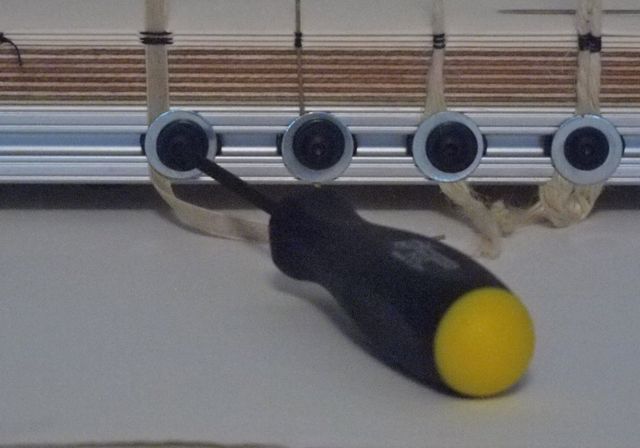
Fig. III: Hex head adjustment driver.
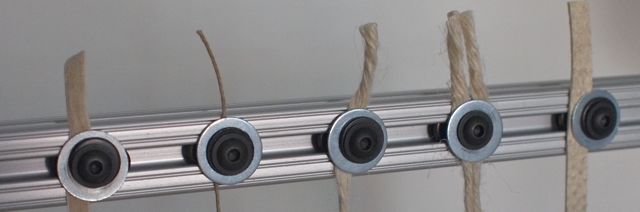
Fig. IV: Close up of buttons with various supports.
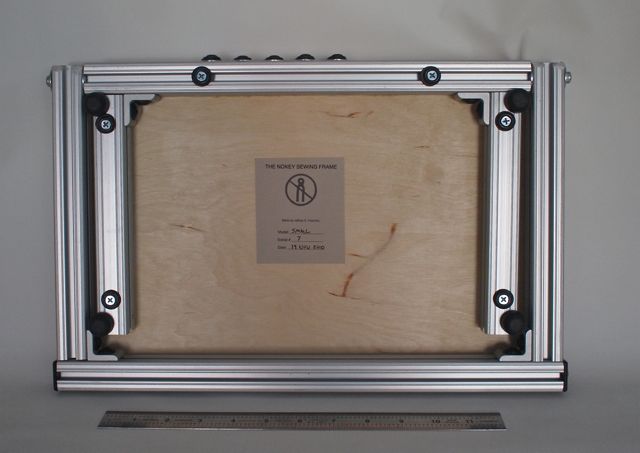
Fig. V: Bottom of Nokey, folded, with 12 inch ruler.
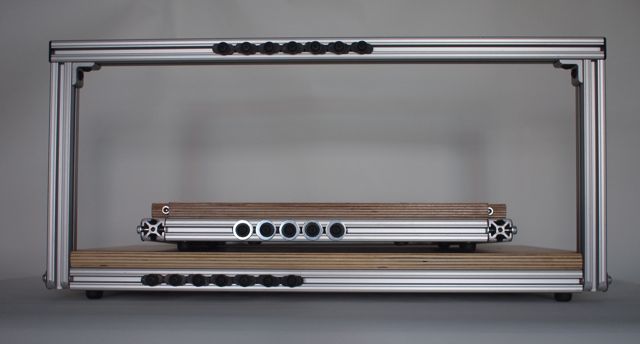
Fig. VI: Large Nokey open, small Nokey closed on top.
***
ADVANTAGES OF THE NOKEY SEWING FRAME
1. Nokey means easy to set up and quick adjustment of spacing for all types of sewing supports- tapes, single and double cords, thongs, etc….
2. Folds flat for convenient dust free storage and transportation, only 2.25″ thick.
3. Solidly constructed of aluminum and plywood. Zero deflection, this is the strongest sewing frame ever made.
4. Uprights stop at exactly 90 degrees, and can be adjusted.
5. Sewing starts at the edge of the sewing board, making it easy to begin sewing and sew in the round.
6. Rubber feet keep even small size frame from sliding around on the bench.
7. Minimum distance between supports: 1 inch.
8. Buttons which attach supports tighten and loosen with a 5/32″ simple hex head driver, which is included.
9. Partially sewn books can be quickly removed and replaced, which make the Nokey ideal for schools.
10. Custom sizes and additional buttons available, please inquire.
“Nearly 40 years ago I made my first sewing frame out of scrap wood. It rocked back and forth like an old table but it taught me the value of the sewing frame as a tool and I’ve never been without one since. I now have three in my shop. The Nokey Sewing Frame is a real innovation, taking the best of a traditional design and adapting it to new materials and needs. It is actually fun to use. The button screws make for very fast and easy setup.And it’s versatile enough to accommodate nearly all the variations on supported sewing I can think of for general bookbinding as well as conservation work. Well designed and well made with high quality materials, this is quite simply a great tool.”
-John Townsend, (aka Anonymous Bookbinder)
*
UPDATED 21 NOVEMBER 2015: I’ve changed the design slightly, see the “Tool Catalog” section of this blog for prices and how to order.

Please welcome Guest Blogger Peter D. Verheyen. There was recently a lively thread on the CIPP (Conservators in Private Practice) listserve, which is a specialty group of AIC (American Institute of Conservation), and Peter agreed to expand on some of his views into the post below. He ends this post with a challenge to all of us to become more proactive in securing open access for our professional publications.
Challenges to the online access of conservation literature
By Peter D. Verheyen
BIO
Peter D. Verheyen is a book conservator by training and currently Head of Preservation at Syracuse University Library where he also is part of efforts to use digitization as a preservation tool in addition to working to preserve the digital. He has published, is publisher of an “open access” e-journal, retains the rights to his work, and shares it freely on general principle. < http://www.philobiblon.com > & < http://library.syr.edu/about/people/staffbio/Verheyen_Peter.php >.
The past week or so has seen lively discussion on the Conservators in Private Practice (CIPP, a part of AIC) listserv, about how the research needs of conservators, especially those in private practice can be met. This is an area of concern becauseit is critical to keep abreast of trends and new developments, as is understanding the history of an object. While we can gain access to some of the literature as members of scholarly societies, one cannot be a member of all, nor be completely aware where research is being published. There are just too many diverse sources. The digital age has made finding things much easier, and more frustrating in the sense that we are now coming across articles but not able to gain access.
Given that one cannot reasonably afford or be expected to have access to all sources of professional and related information, libraries (and the resources they provide) are critical. Depending on the scope of the library, they may have the resources available on the shelf in print, as electronic, or be able to provide access via inter-library loan. While it is nice to think that all, regardless of location can have access at no expense, this does not reflect the realities. Jstor < http://www.jstor.org/ >, Artstor < http://www.artstor.org >, and dissertations [available through Proquest < http://www.proquest.com/en-US/products/dissertations/ >]… were all mentioned as being essential resources in the CIPP discussion. These kinds of resources are VERY expensive to provide, and as a result of declining budgets and increased costs, libraries have been forced to cut back. I write this as a librarian working in an academic research library that subscribes to Jstor $35,000 and Proquest dissertations/theses at $27,851. Our total budget for e-resources is over $1,000,000… and this does not keep pace with increases in costs. The costs of these resources, especially serials, is something that has been oft discussed in the library literature with articles such as < http://www.libraryjournal.com/article/CA6651248.html >, < http://www.thenewatlantis.com/publications/the-science-journal-crisis >, and < http://www.arl.org/sc/marketplace/journals/ >.
One of the issues with many of the journals in Jstor and Artstor is that they often bundled with lots of other journal titles saving costs, but making it difficult to pick and choose titles. Subscribing to packages via Elsevier, Springer, … is even more expensive. Publishers heavily restrict who can access the packages, often limiting concurrent users to the packages. In real terms this means that only affiliated users logging in from campus or at the library may have online access. Even then access to particular titles may not be available. This can be because the title is too recent (Jstor has a “moving wall” of on average 5 years before a title is available online to protect publishers), or that title in not available as part of the package. Even AIC has a 5-year moving wall on its website, even for members. In other cases, titles for some journals published by scholarly societies might not be available other than in print. This is especially true for the humanities.
While working in a research library has its advantages, it does not solve all challenges of access. There may be options, evenif not affiliated with a research library. Joining a “friends” group can give one borrowing privileges and perhaps access to selected databases and inter-library loan (ILL). Likewise some libraries may also allow one to purchase access to other resources beyond that. While it is worth asking AIC to pursue providing access to titles, I fear that trying to corral and pay for the breadth of resources desired would be very costly and complex. Calls for assistance with research would effectively require at least one full-time research librarian position with access to the collections AND the ability to share that research. Even with grant support, it would invariably need to be fee-for-service to be sustainable.
When Jeff asked me to expand on my posting to the CIPP list I used an article he recently posted in ICON’s Journal of the Institute of Conservation, Vol. 33, No. 1, 2010 as an example. Jeff has the abstract of the article at < https://jeffpeachey.wordpress.com/2010/05/12/the-use-of-parchment-to-reinforce-split-wooden-bookboards/ >. Logging into the publisher’s (Francis and Taylor offers it electronically for ICON) website it showed that Syracuse provided access to some of the titles they offer, just not this one. The option to buy an e-version directly was not available… Ordering a print copy of the issue from the publisher would cost $228. Jeff cannot really share the article himself because of the restrictions incurred when he signed away his rights to the article for it to be published in the journal, a common practice that the AIC Journal also demands.
This brings us to the next topic… The “rights” (copyright) issue is a complex one, and authors often give away their copyright to their research and other work in order to get published… Then, their institutions (in most cases) have to buy back the output of that work, often created “on the clock,” at very steep prices through those journal subscriptions… Where one publishes can be dictated by tenure requirements (the more prestigious the journal the better), subject matter, intended audience, and any number of other variables…
In the case of Jeff’s article,
“It is a condition of publication that authors assign copyright or license the publication rights in their articles, including abstracts, to ICON, The Institute of Conservation. This enables us to ensure full copyright protection and to disseminate the article, and of course the Journal, to the widest possible readership in print and electronic formats as appropriate. Authors retain many other rights under the Taylor and Francis policies, which can be found at < http://www.informaworld.com/authors_journals_copyright_position >. In addition, authors are themselves responsible for obtaining permission to reproduce copyright materials from other sources.”
AIC’s policy is at < http://www.conservation-us.org/index.cfm?fuseaction=page.viewpage&pageid=586 >. In contrast to ICON, AIC provides free access online. Some organizations do, others do not seeing it as benefit of membership. These policies are regardless of whether the publication is print only, a hybrid, or “e” only. They will also dictate how the articles can be shared, whether authors can deposit them in repositories (see below), share via their websites, and much, much more… The fine print is required reading.
In effect, institutions are paying twice for the research and scholarly output of their faculty and staff – once as they pay for their salaries and provide resources to do research, and then again to pay for the outcomes of that research through subscriptions to journals without retaining any of the rights.
There is a way out of this, but that requires work and a very long, patient view. That way is “open access” (online) publication. E-Conservation at < http://www.e-conservationline.com/ > would be an example in our field that I know of. So is the Distlist/CoOL. The Directory of Open Access Journals (DOAJ at < http://www.doaj.org >) has listings of thousands of journals in all disciplines that are “open access.” Open Access does not imply “public domain” with the authors giving away their copyright, but it does mean that the publications can be freely accessed, shared, and the research built upon. Many are peer-reviewed, just like those exclusive print journals or the AIC Journal and the peers are sometimes even the same as for the exclusive print journals. For more information see , < http://www.doaj.org/doaj?func=loadTempl&templ=about > or Peter Suber’s overview at < http://www.earlham.edu/~peters/fos/overview.htm >.
If we as authors don’t want to start our own “open access” publications – doesn’t always cost money, just tons of sweat equity, but also very rewarding from my own experience with The Bonefolder < http://www.philobiblon.com/bonefolder > – we can choose to publish or work via our own websites or “institutional repositories” (IRs) to those working in academia. Here at Syracuse where I work, we recently launched our IR < http://surface.syr.edu/>. I plan to use it for departmental (Department of Preservation and Conservation, Library) manuals, project descriptions, proposals, presentations. This is in addition to using it for my own articles. Individuals can also set up free accounts via SelectedWorks, also hosted by the Berkeley Electronic Press (BePress), with my output at < http://works.bepress.com/peter_verheyen/ >. The advantage of these over sites like Google Docs or one’s own domain is that they work to create and maintain a digital preservation environment in which the documents are more likely to persist over time, important for citations. They also make sure the content is well indexed and rises to the top of Google searches.
There are benefits and drawbacks to all publication methodologies. For professionals, the most important is acknowledging that peer-review is essential for vetting research, treatment reports and the like. It can also be critical for professional advancement, especially for those working in “faculty-like” environments. However, as authors we need to be more assertive in retaining our intellectual property rights to our research so as to allow their work to be shared more widely. For example, this could include agreeing to a 6 month “embargo” period during which the publishers have exclusive rights to share the work, but after which authors are allowed to work with the material as they feel appropriate, including republication. The language of agreements is also important because most often restricted is the final published version of an article, with the author able to share the preprint version. Reading the fine print is critical.
We can lament the lack of accessibility to professional research, but in doing so must acknowledge our collective role, beginning with signing away our rights, in perpetuating the publication models that can severely limit that access to our peers. What needs to develop is a balanced approach that acknowledges the role scholarly societies play in facilitating research with the rights of the authors and the need for that research to be available. The US National Institutes of Health as taken a lead in that by mandating that any research receiving funding be available “open access” and posts it’s policy online at < http://publicaccess.nih.gov/ >. While not conservation related, it is serving as a model for other disciplines and repositories, especially moving forward because it will be difficult, if not impossible to open up those materials now “owned” by the scholarly societies and publishers unless they themselves agree. Libraries will follow their leads and restrictions, and cannot break their contractual obligations. They can however facilitate the creation of institutional or discipline specific repositories.
What I have attempted to do is outline some of the issues related to being able to access “the literature,” something that is only becoming more complex as society’s and publisher’s business models change, the technology of publishing changes, and user’s expectations rise. In pursuing elusive references we will need to become increasing nimble and self-reliant in that we build the costs of access into our business models or budget for them with our institutions should we not have access already.
Email: verheyen(at)philobiblon(dot)com
 Peachey Conservation