A Mid-20th Century Ace Bandage

Ace Bandage in original box. Mid-20th century.

Like many bookbinders and conservators, I’ve used Ace bandages for many years. They are almost essential when rebacking leather bindings (apologies to Bill Minter) since nothing else has the gentle stretch and breathability. I never really wondered about the name, assuming the word “Ace”  meant something like excellent, marvelous, or first-rate.

So I was interested to learn, upon purchasing an older Ace bandage in the original box, that it is an acronym for “All Cotton Elastic”.

According to the blurb on the original box,”This Ace Bandage obtains elasticity from the unique weave and its properly twisted warp of long-fibered Egyptian… Washing restores elasticity.”  The familiar looking brass clips were patented by Fairleigh Dickinson in 1933, though there are only two teeth on each end, not three as drawn in the patent. The patent expired in 1950; most Ace bandages I’ve seen use something similar.
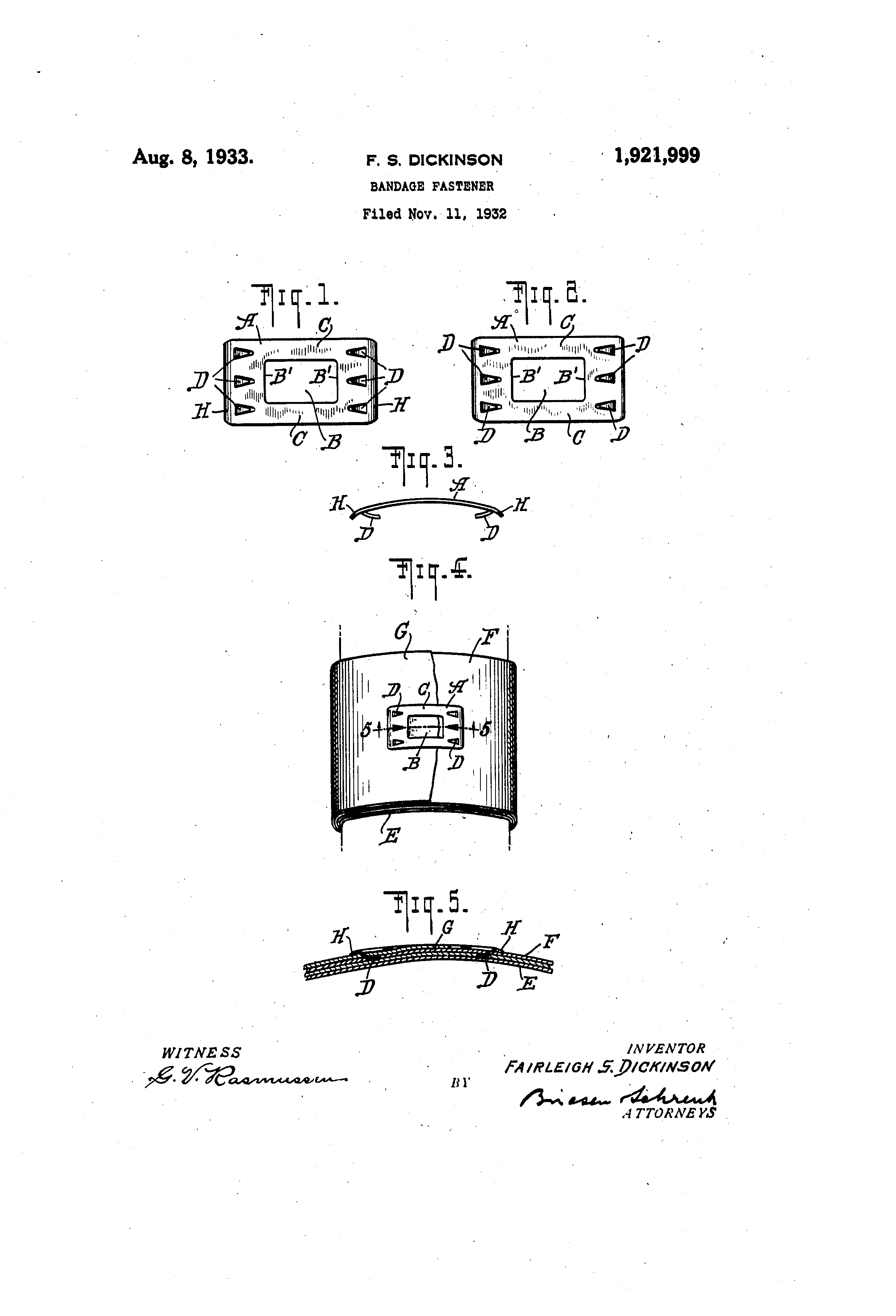
The original patent for the Ace bandage fastener.


A bandage I have from the 1990’s is a looser weave, and doesn’t conform as well to irregular surfaces. One from the 2010’s made by 3M has “latex free” printed on it, is less breathable, possibly containing synthetic fibers. This is a good reminder that something that we generically call an Ace bandage may have significantly different working properties.

The older bandage stretches less when tensioned than either of my newer ones, so it can apply more compression in use. Yet another item to keep an eye out for while conducting primary research at flea markets and antique malls; aka. shopping.

DISCARDED

DISCARDED stamp on a former New York Academy of Medicine Bookplate. This book has been discarded twice, and is now back in a Rare Book Collection.

A somewhat ironic placement of this DISCARDED stamp.  I suspect every institution has sold, discarded, or recycled books in their collection, often quite quietly, not just the NY Academy of Medicine. I’m amazed how many books I have worked on that were deaccessioned at some point in their lives, then recollected, once again deemed valuable. What is considered a rare book changes. I’ll lay good money that a lot of currently “non-rare” books will become rare at some point in the future. Will all paper based codex books be rare someday?

Bookbinder’s Pliers

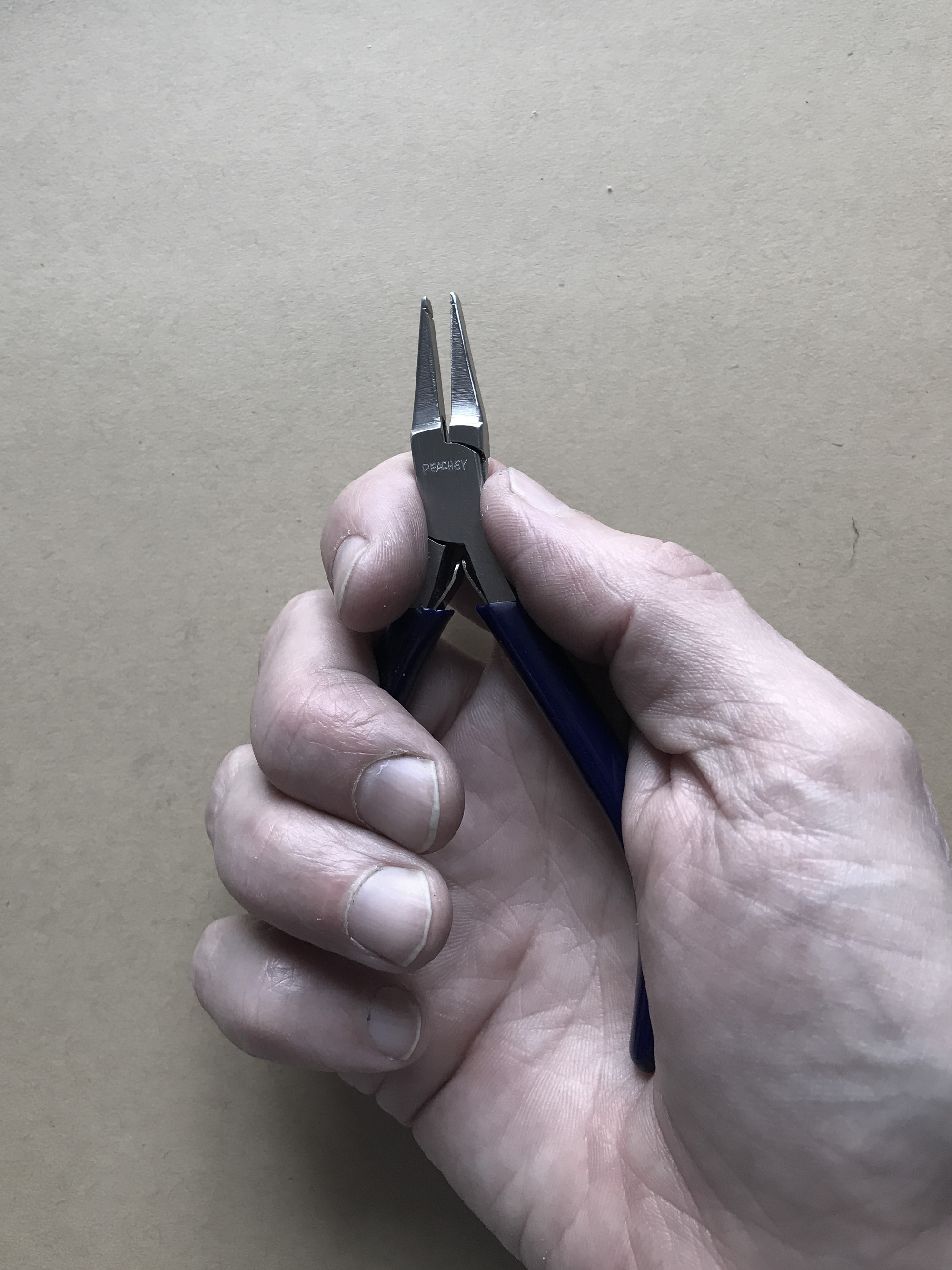
The Bookbinder’s Pliers. It securely holds commonly used bookbinding needles.

When sewing books or endbands, it is sometimes helpful to grip the needle with a pliers in order to position it or increase leverage. Standard pliers do not grip a needle securely, and the jaws are the wrong shape for these types of manipulations. Precise needle control is also essential in book conservation, for in-situ resewing of loose signatures, endband reinforcement, and various types of board reattachment. If you have ever had to pierce a parchment spine lining, you will likely understand the purpose of these pliers immediately. These pliers are also great for removing staples.

The Bookbinder’s Pliers. Fits needle sizes from 24 gauge (.020″) to 12 gauge (.104″) The massive 12 gauge needle on the right is an antique John James, labeled bookbinders needle. Possibly it was intended for sawn-in cords?

The Bookbinder’s Pliers have a small groove cut near the tip, which securely grip needle sizes from 24 to 12 gauge. (.020″ – .104″)  Note that 18 and 15 gauge needles are most common in bookbinding, though conservators may need smaller sizes for specialized tasks.

The Bookbinder’s Pliers holding a 24 gauge needle. Tip: always sew with needles that have eyes the same size as the shaft to prevent an excessively large hole in the paper.

The jaws are ground to .375″, which is wide enough to leverage and guide the needle through stubborn materials, but narrow enough to get close to the work. All edges of the pliers are rounded to prevent potential damage to the book and the user.

The Bookbinder’s Pliers fitting comfortably in the hand.

Made of stainless steel, this precision tool fits comfortably in the hand. The pliers have a box joint to apply even pressure. About 4.5″ long. You will wonder how you ever worked without these.

Purchase your Bookbinder’s Pliers here.