Conservation Hand Tools: Making, Modifying, and Maintaining. Upcoming Toolmaking Workshop. Emory University, October 7-11, 2024

Register here

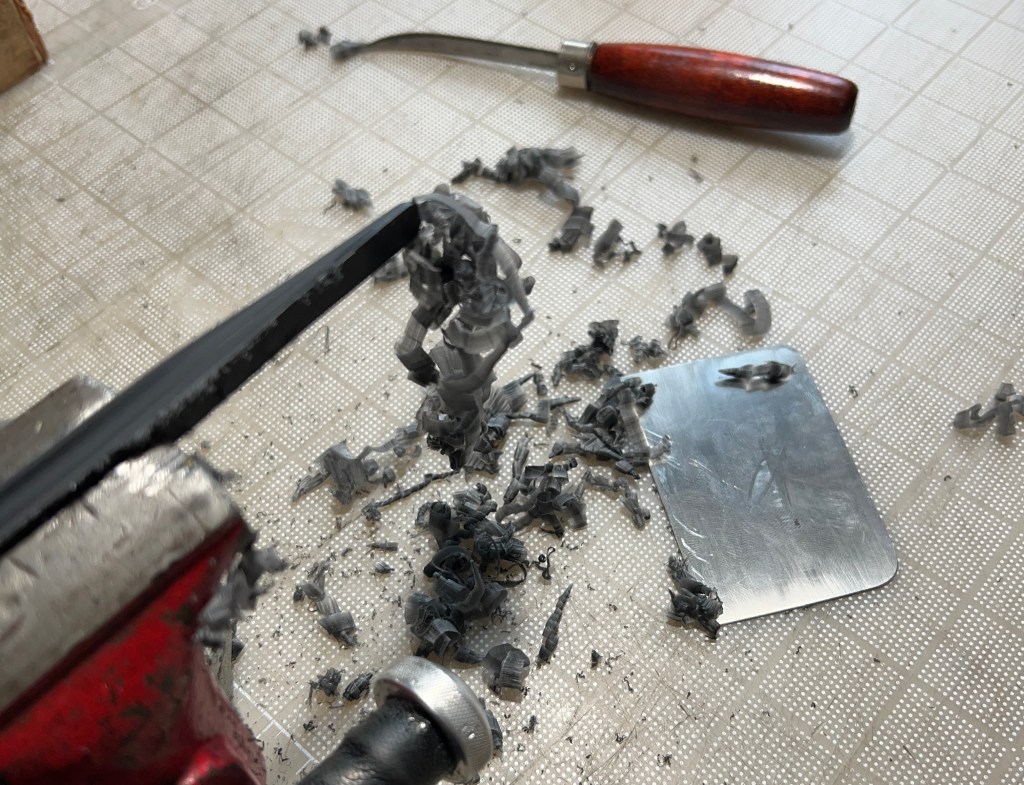
For dust free Delrin finishing, we will use a cabinet scraper and wet sand.

Conservation Hand Tools: Making, Modifying, and Maintaining

Workshop Description 

Most interventive conservation treatments are mediated through hand tools. Many of these tools had their origins in particular craft traditions; but conservators often modify them for particular uses. Tools become embodied in use, extensions of a conservator’s hand, sense of touch, and intention. Personal hand tools often become prized arrows in a conservator’s quiver. 

This five day workshop emphasizes simple and safe methods of working hardened tool steel, stainless steel, Delrin, wood, and bamboo. Progressively more difficult techniques will be introduced during the week using primarily hand tools. This workshop will be tool-centric; for example, hand sawing — with the appropriate blade and technique — will be used for all the materials introduced. Choosing materials appropriate to the desired task will be emphasized. Possibilities include tools for cutting, folding, prying, delaminating, lifting, scraping, and burnishing.

Participants will complete a number of tools of their own design during this workshop. Examples of common existing tools — such as delaminating or lifting tools — will be provided as prompts. One goal is to free participants from the plethora of misinformation and mystique that surrounds knife sharpening, and learn fundamental freehand techniques applicable to any edge tool. Another is to gain competence in mechanical problem solving and practical hand tool use. Participants are encouraged to bring their own tools for discussion, possible modification, and repair.

Making tools is engaging, fun, and useful. It is also highly addictive. Consider yourself warned.

Workshop topics

• Basic tool use for stock reduction: sawing, filing, abrading, scraping, drilling, tapping

• Understanding what makes something sharp, efficient hand sharpening

• Tool design and mechanical thinking in general

• Making a high carbon, M2 tool steel knife by stock reduction

• Differences and similarities in shaping Delrin, Wood, Bamboo, and steel

• Tool handles, sheaths, and handle ergonomics

• Connoisseurship of vintage tools and tool maintenance

• Safe use of power tools

Please join us for an intensive toolmaking week at Emory University October 7-11, 2024!

Register here

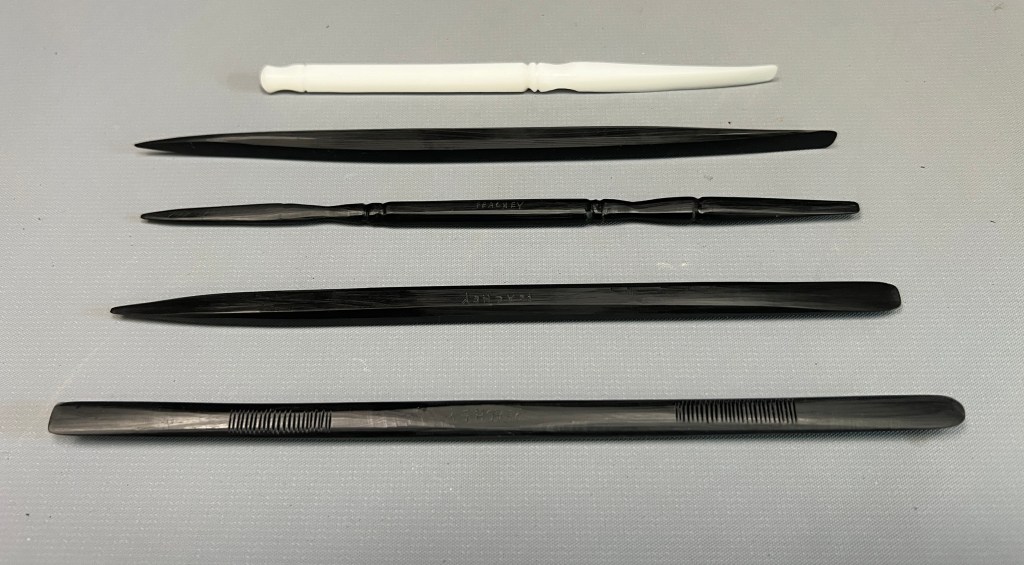
Some new Delrin spatula shapes I’ve been experimenting with.

FREE UPCOMING EVENT! Live Q&A during a screening of “The Craft of Leather Paring”, Saturday Jan. 13, 12:00, noon, EST.

On Saturday at noon, I will answer questions live during the premier.

In November 2022, I performed virtually for The American Bookbinders Museum, demonstrating the hand paring of leather. I discuss the reasons for paring, show some historic paring examples, then demonstrate in detail the techniques and thought processes that paring leather involves. And of course I talk about the tools, using an M2 hybrid knife to demonstrate.

In a collaboration between myself, The American Bookbinders Museum, and Darryn & Carrie of DAS Bookbinding, the recording of this event has been edited to provide a concise overview of the subject that Arthur W. Johnson describes as “one of the most admired skills in bookbinding”. Video link, or sign up for a notification to watch.

During the presentation, I preform a bookbinders’ party trick of seeing how many sides of leather I can edge pare in a single strip. Any guesses? I hope to chat with some of you Saturday. Bring lots of questions!

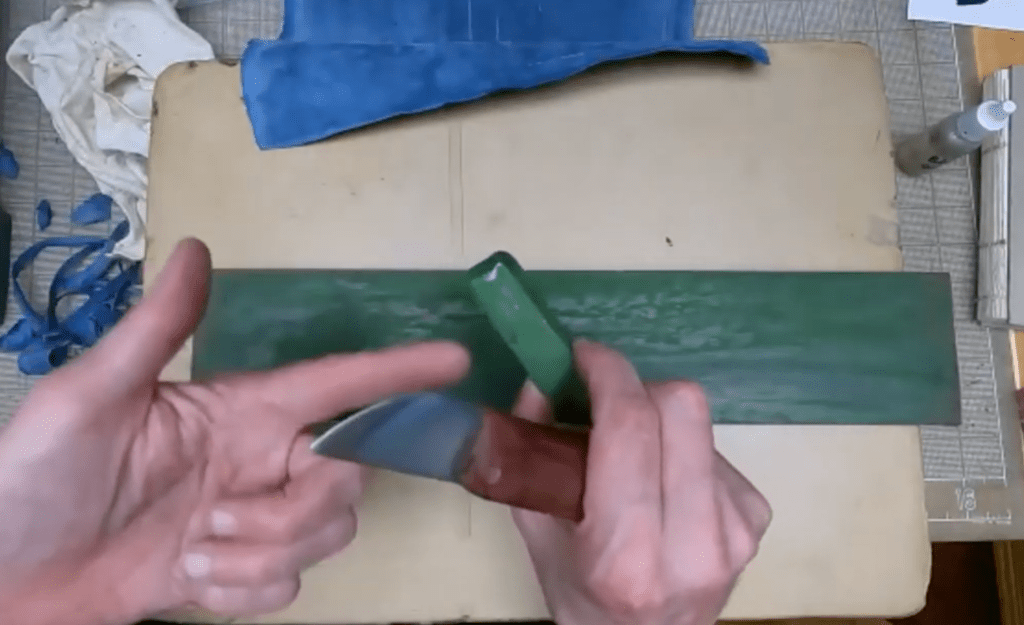
Stropping is an easy way to keep your knife super sharp. Preparation and use are demonstrated.

Thank you Darryn for the edits!

Just Published! “The Binder’s Curse: John Bradford and Early Nineteenth Century American Bookbinding” in Suave Mechanicals Vol. 8, The Legacy Press, 2023.

The Binder’s Curse: John Bradford and Early Nineteenth Century American Bookbinding, in Suave Mechanicals 8, The Legacy Press, 2023, 387 – 457.

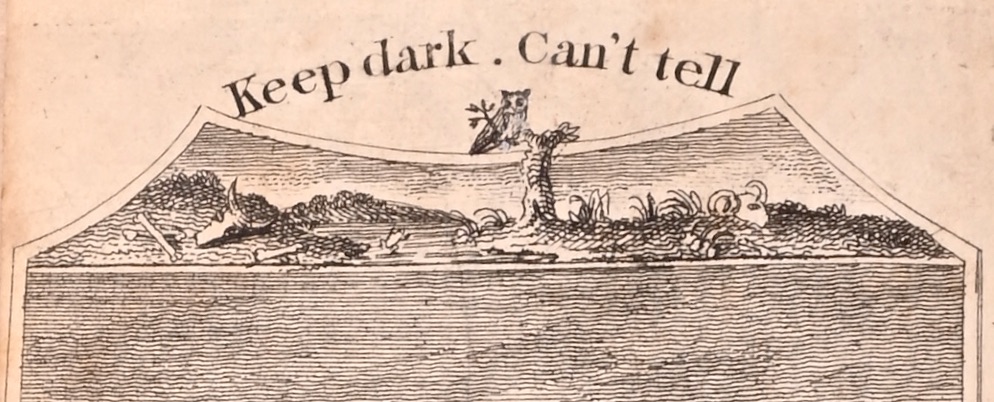
“Keep Dark. Can’t Tell” With these four words, 19th century NYC bookbinder John Bradford begins an extraordinary book of bookbinding related poetry and imaginative parody. Written records from craftsmen during this time are very uncommon. Writings from bookbinders are very, very uncommon.

Bradford’s well-known poem, The Binder’s Curse, contains an introduction which places it in the context of a trade dispute, which is not so well known. The full title of the book gives a hint at Bradford’s wacky worldview: The Poetical Vagaries of the Knight of the Folding-Stick of Paste-Castle and The History of the Garrett, &c. &c., Translated from the Hieroglyphics of the Society, by a Member of the Order of the Blue String, Printed for the Author, [New York], 1815. The title is not just poetic exaggeration; part of the text consists of — supposedly — translated and untranslated hieroglyphics.

“This world’s a huge bindery…” Bradford proclaims, decades before Mallarmé’s more famous dictum, that everything in the world exists to end up as a book.1 Bradford constantly reinforces this world-as-bindery cosmology: Did this guy ever think about anything but bookbinding? Yet these poems provides primary documentation of bookbinding techniques and tools: the first mention of a squaring shears, details of which tools the binder owns (Bradford was a journeyman his entire career) and which the master provided, the use of templates, and more. There is a lot of serious bookbinding history buried in his poems.

There are also less serious aspects, like some really cringey love poetry. “Her forehead is like a paste bowl / And smooth as a fine paring stone.” Anyone want to guess what body part is “white as wheat paste”?

Bradford gives us a sense of the working life of an early nineteenth century binder, including day-to-day annoyances, and trade politics, all written with his relentlessly quirky sense of humor. The poem “Receipt for binding a book” consists of the earliest comprehensive listing of the steps in American binding, which is analyzed in depth by comparing it with extant bindings and relevant bookbinding manuals of the day. Bradford’s poems provide a insight into an imaginative bookbinder working on the cusp mechanization, especially dealing with the importance of tool ownership and use.

Thanks to editor Julia Miller and publisher Cathy Baker of the Legacy Press. And congrats to all the other authors below! I can’t wait to read the other essays. Available soon from Oak Knoll Press.

KEEP DARK

Essays in Suave Mechanicals, Vol. 8.
DO NOT attempt this curse at home! Provided for informational purposes only. The beginning of “The Binder’s Curse” from The Poetical Vagaries of the Knight of the Folding-Stick…. 1815.
  1. Malarmé, “Les Livre, Instrument Spirituel,” Quant au livre, 1895. ↩︎