Conservation Hand Tools: Making, Modifying, and Maintaining. Upcoming Toolmaking Workshop. Emory University, October 7-11, 2024

Register here

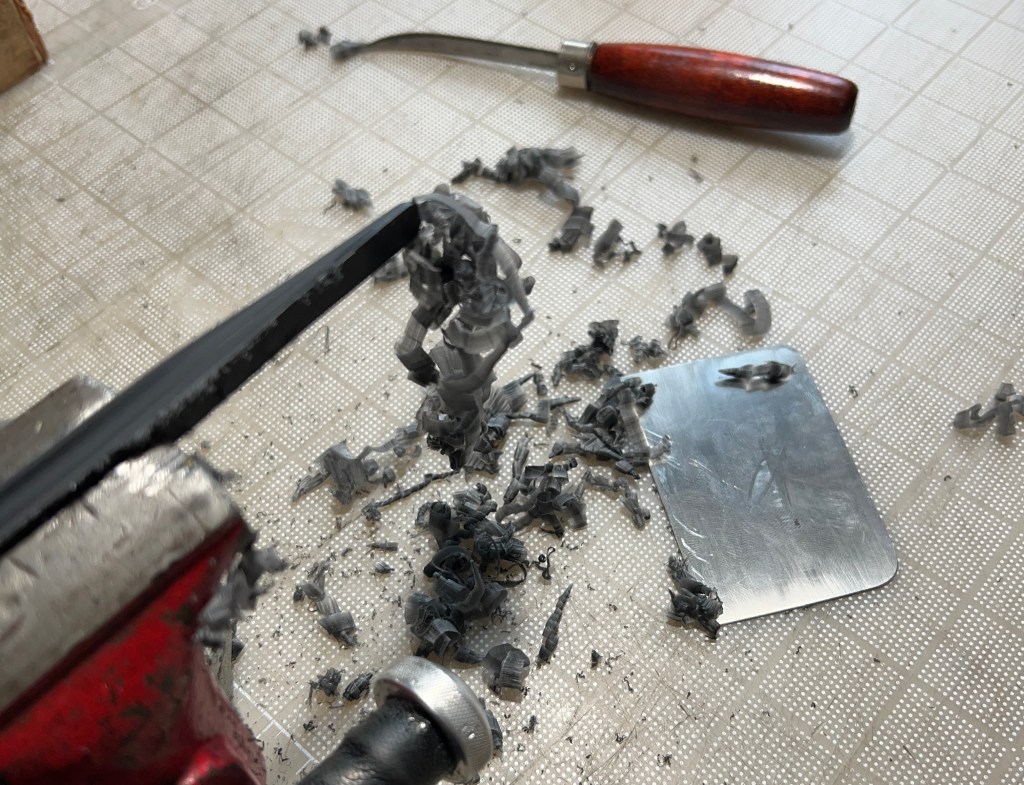
For dust free Delrin finishing, we will use a cabinet scraper and wet sand.

Conservation Hand Tools: Making, Modifying, and Maintaining

Workshop Description 

Most interventive conservation treatments are mediated through hand tools. Many of these tools had their origins in particular craft traditions; but conservators often modify them for particular uses. Tools become embodied in use, extensions of a conservator’s hand, sense of touch, and intention. Personal hand tools often become prized arrows in a conservator’s quiver. 

This five day workshop emphasizes simple and safe methods of working hardened tool steel, stainless steel, Delrin, wood, and bamboo. Progressively more difficult techniques will be introduced during the week using primarily hand tools. This workshop will be tool-centric; for example, hand sawing — with the appropriate blade and technique — will be used for all the materials introduced. Choosing materials appropriate to the desired task will be emphasized. Possibilities include tools for cutting, folding, prying, delaminating, lifting, scraping, and burnishing.

Participants will complete a number of tools of their own design during this workshop. Examples of common existing tools — such as delaminating or lifting tools — will be provided as prompts. One goal is to free participants from the plethora of misinformation and mystique that surrounds knife sharpening, and learn fundamental freehand techniques applicable to any edge tool. Another is to gain competence in mechanical problem solving and practical hand tool use. Participants are encouraged to bring their own tools for discussion, possible modification, and repair.

Making tools is engaging, fun, and useful. It is also highly addictive. Consider yourself warned.

Workshop topics

• Basic tool use for stock reduction: sawing, filing, abrading, scraping, drilling, tapping

• Understanding what makes something sharp, efficient hand sharpening

• Tool design and mechanical thinking in general

• Making a high carbon, M2 tool steel knife by stock reduction

• Differences and similarities in shaping Delrin, Wood, Bamboo, and steel

• Tool handles, sheaths, and handle ergonomics

• Connoisseurship of vintage tools and tool maintenance

• Safe use of power tools

Please join us for an intensive toolmaking week at Emory University October 7-11, 2024!
Register here

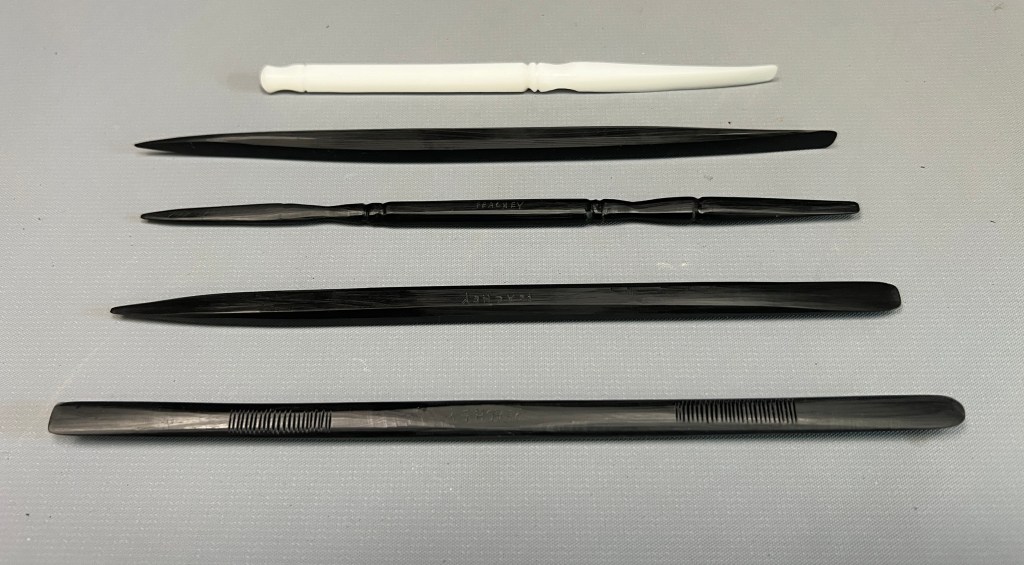
Some new Delrin spatula shapes I’ve been experimenting with.

FREE UPCOMING EVENT! Live Q&A during a screening of “The Craft of Leather Paring”, Saturday Jan. 13, 12:00, noon, EST.

On Saturday at noon, I will answer questions live during the premier.

In November 2022, I performed virtually for The American Bookbinders Museum, demonstrating the hand paring of leather. I discuss the reasons for paring, show some historic paring examples, then demonstrate in detail the techniques and thought processes that paring leather involves. And of course I talk about the tools, using an M2 hybrid knife to demonstrate.

In a collaboration between myself, The American Bookbinders Museum, and Darryn & Carrie of DAS Bookbinding, the recording of this event has been edited to provide a concise overview of the subject that Arthur W. Johnson describes as “one of the most admired skills in bookbinding”. Video link, or sign up for a notification to watch.

During the presentation, I preform a bookbinders’ party trick of seeing how many sides of leather I can edge pare in a single strip. Any guesses? I hope to chat with some of you Saturday. Bring lots of questions!

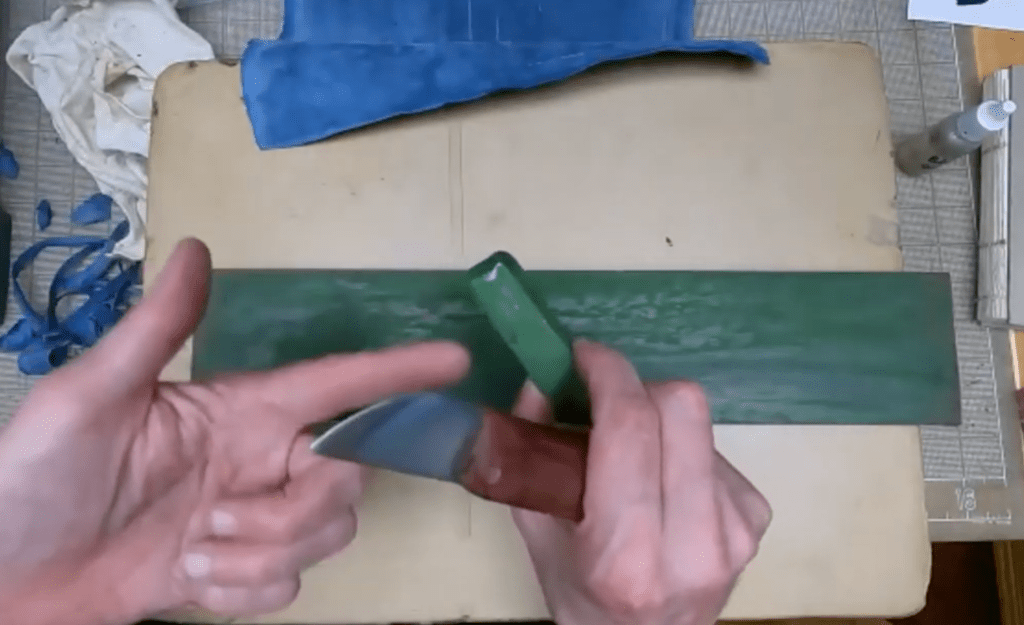
Stropping is an easy way to keep your knife super sharp. Preparation and use are demonstrated.

Thank you Darryn for the edits!

The Craft of Hand-Paring Leather: An Upcoming Zoom Presentation for the American Bookbinder’s Museum, Saturday November 12, 4:00 pm EST

Are you leather curious? Interested in larger issues of hand craft? Then you will enjoy this zoom presentation on the craft of hand paring leather. Both practical and theoretical aspects of hand and tool interaction will be explored. Leather is a three dimensional material, and selectively reducing the thickness is essential for making a well functioning binding.

I will begin by showing some historic examples of leather paring, then to demonstrate the process of paring vegetable tanned leather using just one knife. Have a seat, make yourself comfortable, grab your beverage of choice and a snack, then enjoy watching the relaxing progress of gradually paring leather. While working, I will attempt to narrate — like a homunculi in my head — some of the complex decisions that go on in this process. As the leather gets thinner and thinner, excitement will mount: will I ruin the skin by tearing it? Towards the end of the demo, there will be time for Q&A and comments from the audience.

This presentation is based on my recent article, On Tool Embodiment, and I encourage everyone to read it beforehand.

Jeff Peachey: The Craft of Hand-Paring Leather. Sponsored by the American Bookbinder’s Museum. Saturday November 12, 4pm EST. Zoom. Attendees will have access to a recording after the event.

Register here!