New Tool! Deluxe Delrin Spatula

Last month I taught a toolmaking class at the University of Cincinnati, and Ashleigh Ferguson — rare book and paper conservator and Co-lab manager — made a beautiful “Griffin” spatula which I coveted. Rather than steal her tool, I developed my own version. Her tool helped me reexamine some long-held negative opinions about double ended tools.

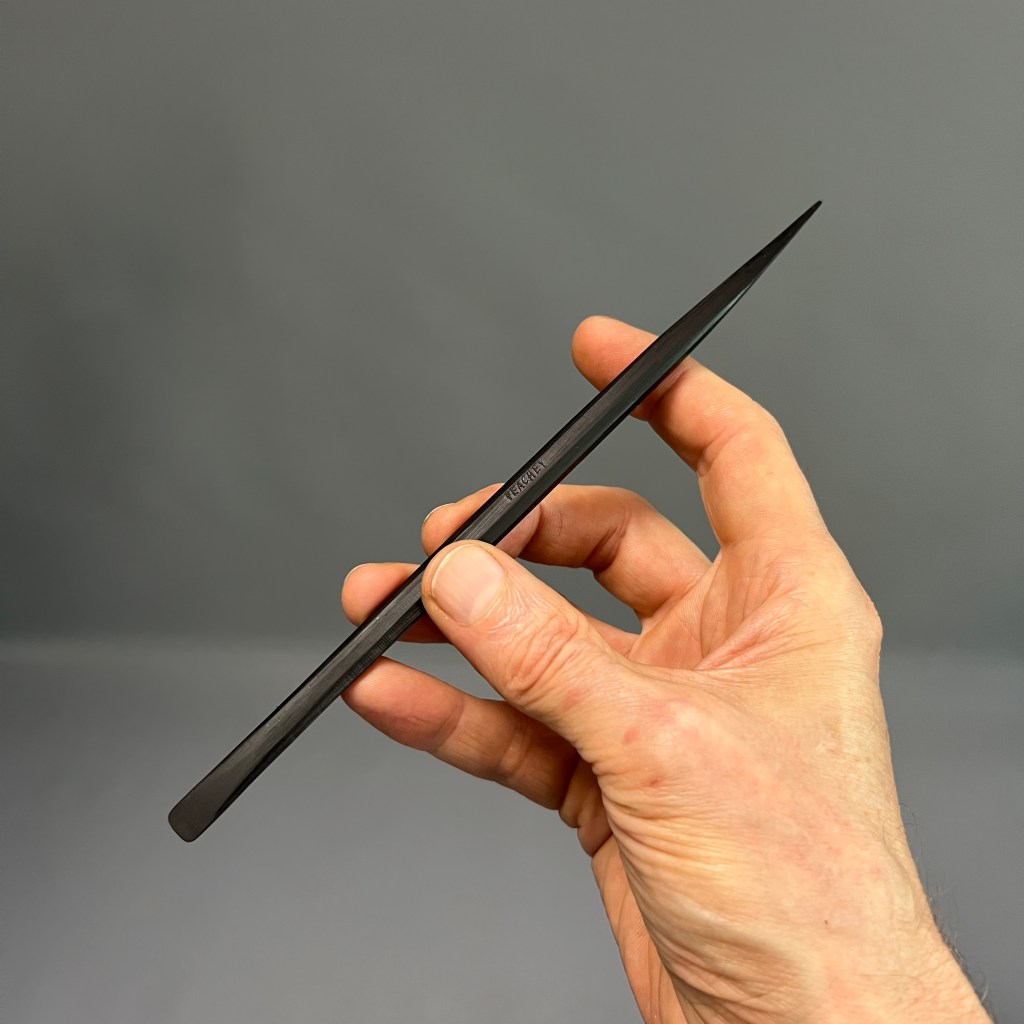
This Deluxe Delrin Spatula is an ideal hand tool for conservators in almost any discipline. Useful for pressure sensitive tape removal, delaminating, paint and emulsion consolidation, applying adhesive under detached layers, controlled pressing, excess adhesive removal, working under magnification, and more.

The thin tip — due to the wedge shape in the thickness — is great for applying minute amounts of adhesive. The flexible wide tip (see below) can direct pressure downward, and be used with a twisting motion to help pry off unwanted layers.
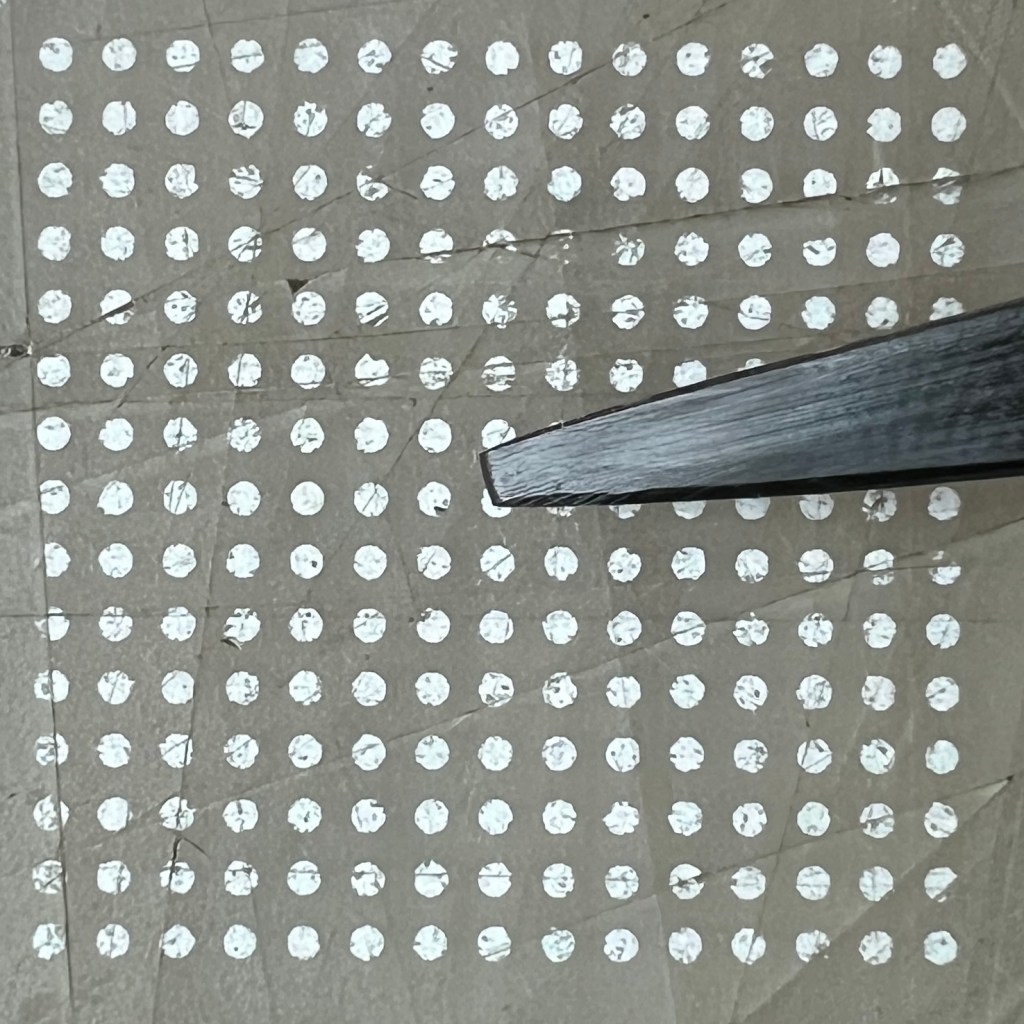
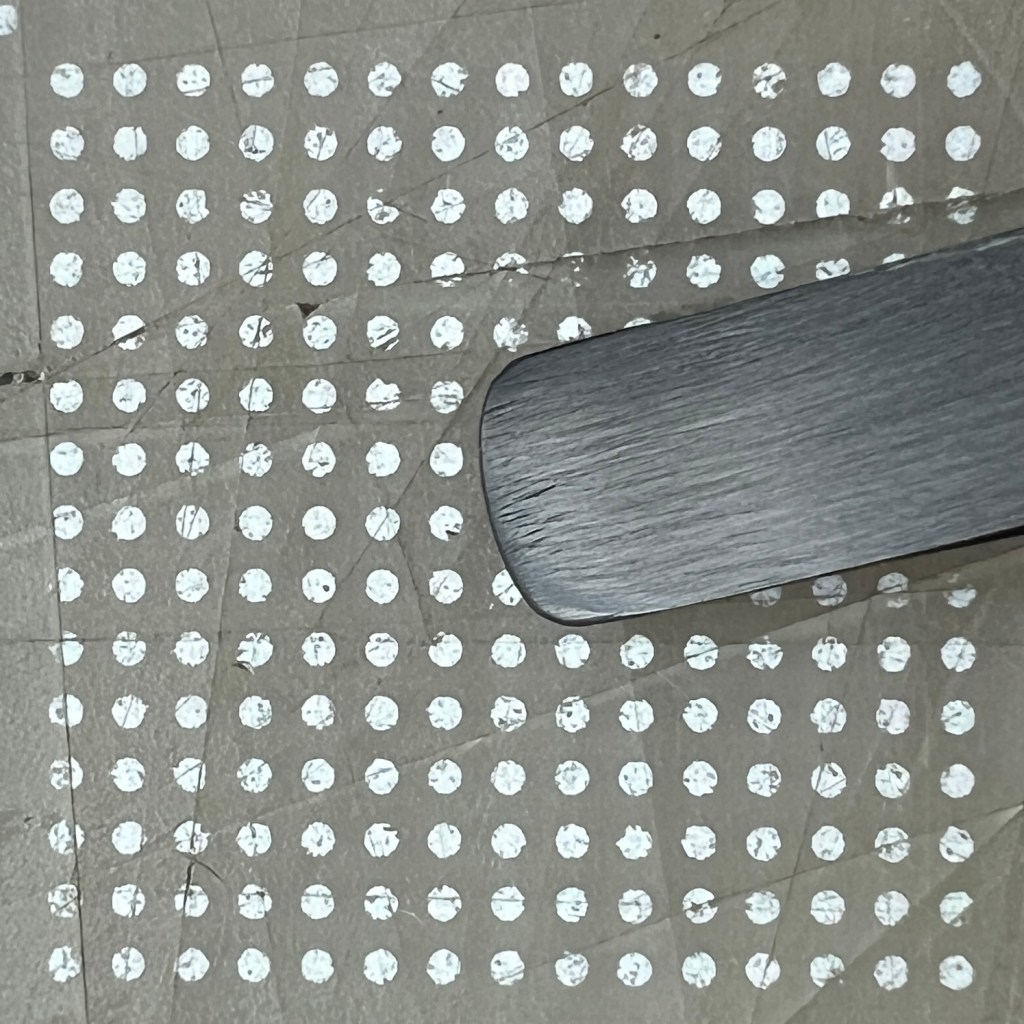
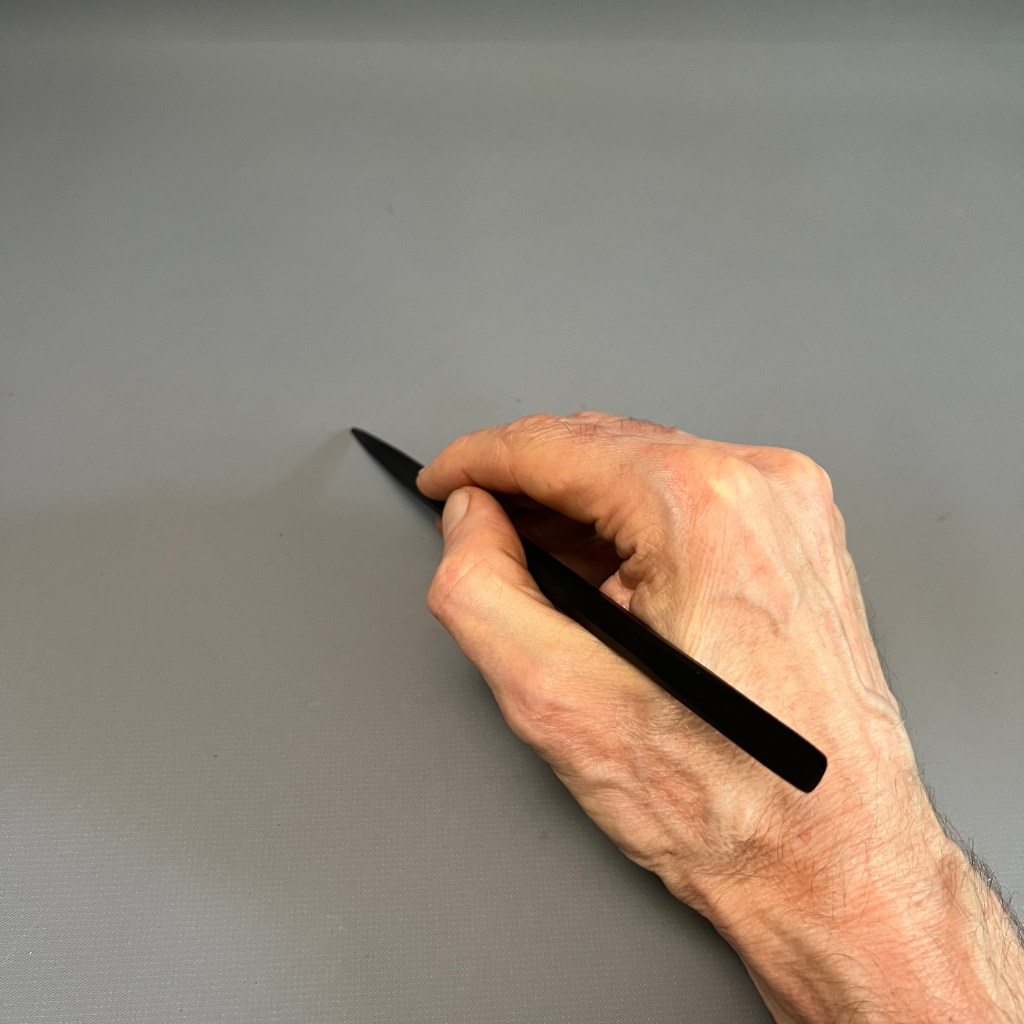
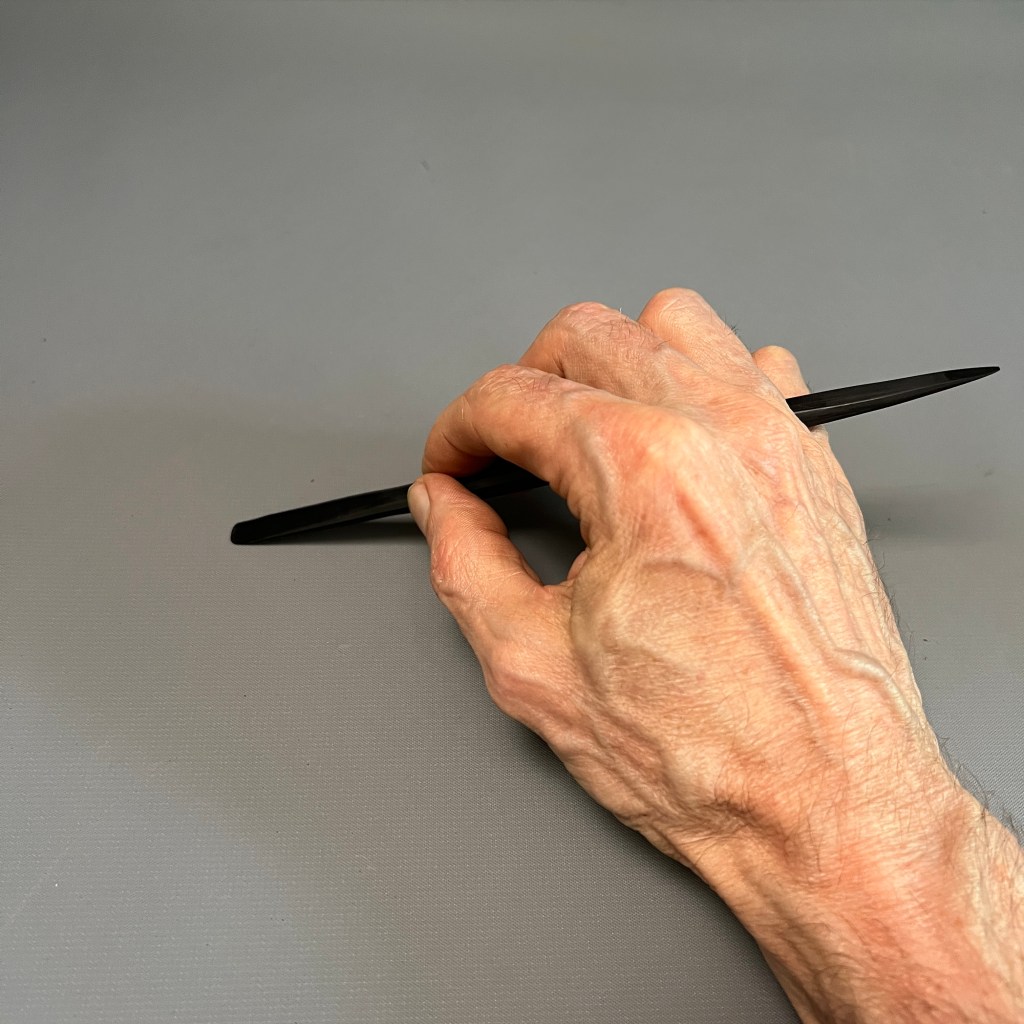
Delrin has a similar coefficient of friction as teflon, but is more abrasion resistant. Black delrin is harder than white delrin, likely due to the carbon, and stays sharp longer. The octagonal handle shape is comfortable in a writing or drawing hand position, and won’t roll off your work surface. Comes with a two stage sharpening kit and instructions to resharpen. The handle may feel familiar to some: it is the same diameter as a Rotring 600 mechanical pencil.

Black Delrin, octagonal handle, approximately 200mm x 8mm. Both tips are slightly flexible, with the small one about 1-2mm wide and blunt. The large tip is straight with sharp round corners, and about .15mm thick at the end.

Purchase here!

Or if you would like to make your own version, join us for a week-long toolmaking workshop at Emory University, October 7 – 11, 2024.
“An Investigation of Seventeenth Century English Bookbinding Tools in Randle Holme’s Academy of Armory” Now Available!

It’s exciting be published in The New Bookbinder 41 with such a beautiful layout and high print quality!

Publishing a blog post is instant gratification compared to a print article. An Instagram post is an even quicker higher-octane endorphin hit. Writing a print article already feels archaic and process of publishing is frustratingly slow: finding a suitable vehicle, researching a topic, writing, gathering images, requesting (and often paying for) reproduction permissions, formatting, incorporating reader’s comments, working with an editor for additional revisions, triple checking everything, and finally approving a final layout. Then waiting for months while it is being printed and shipped. At least in this case, though, the result is deeply rewarding.

Seeing and holding your writing makes it feel like a thing, not just ideas in your head. It implies a permanence and accessibility. But I wonder how long print — at least for non-fiction scholarly articles — will be used, in terms of people reading, using, and citing it. Many papers I read from younger people only cite the online sources. On the other hand, the transparency of online data is rewarding for the author (as well as profit generating for the corporate overlords…) For example, I will know how many of you read this blog post, how many times it is linked to, what links you click on, and where you are from. I have no idea if anyone actually looked at or read the printed article. Anyway, onward!

OVERVIEW

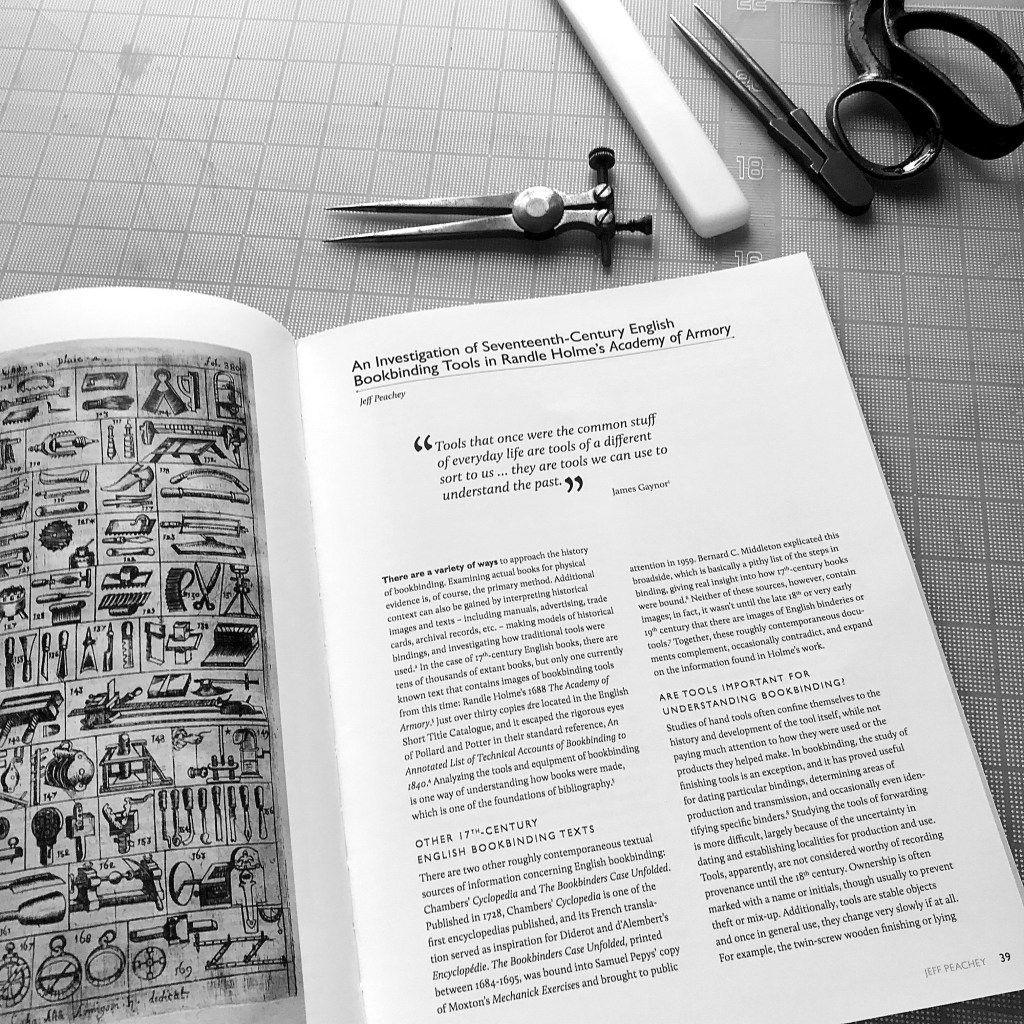
Randle Holme’s little known Academy of Armory contains the only images of seventeenth century English bookbinding tools currently known. Six fundamental tools described in it are analyzed: a folder, a beating hammer, a needle, a sewing frame, a lying press, and a plough. The context of seventeenth century English bookbinding and other contemporaneous sources are investigated. The relationship between the nature of seventeenth century English books and the tools used to make them is also explored.

FIRST PARAGRAPH SNIPPET

“There are a variety of ways of approaching the history of bookbinding. Examining actual books for physical evidence is, of course, the primary method. But additional context can be gained by interpreting historic images and texts — including, manuals, advertising, trade cards, archival records, etc… — making models of historic bindings, and investigating how traditional tools were used. (2) In the case of seventeenth century English books, there are tens of thousands of extant books, but only one currently known text that contains images of bookbinding tools from this time, Randle Holme’s 1688 Academy of Armory. (3) Just over thirty copies are located in the English Short Title Catalogue, and it escaped the rigorous eyes of Pollard and Potter in their standard reference, An Annotated List of Technical Accounts of Bookbinding to 1840. (4) Analyzing the tools and equipment of bookbinding is one way of understanding how books were made, which is one of the foundations of bibliography. (5)”

PURCHASE: The Designer Bookbinders online shop.

Jeff Peachey “An Investigation of Seventeenth Century English Bookbinding Tools in Randle Holme’s Academy of Armory“. The New Bookbinder 41 (2021):38-48.

Thanks to OG Joel Moskowitz of Tools for Working Wood for introducing me to this text and allowing reproductions of his copy!

Timothy Ely’s Five Essential Bookbinding Tools

Timothy C. Ely

Artist in private practice – makes books, prints, drawings and the occasional guitar. Instagram

I had enough warning that I could watch over the course of a few days exactly what was used often. These are tools I grab when I am traveling to teach and they find cross over into other areas. Jeff knows this was a challenge as I have many tools inherited, made and gathered over the years. Next challenge should be the most important twenty five.

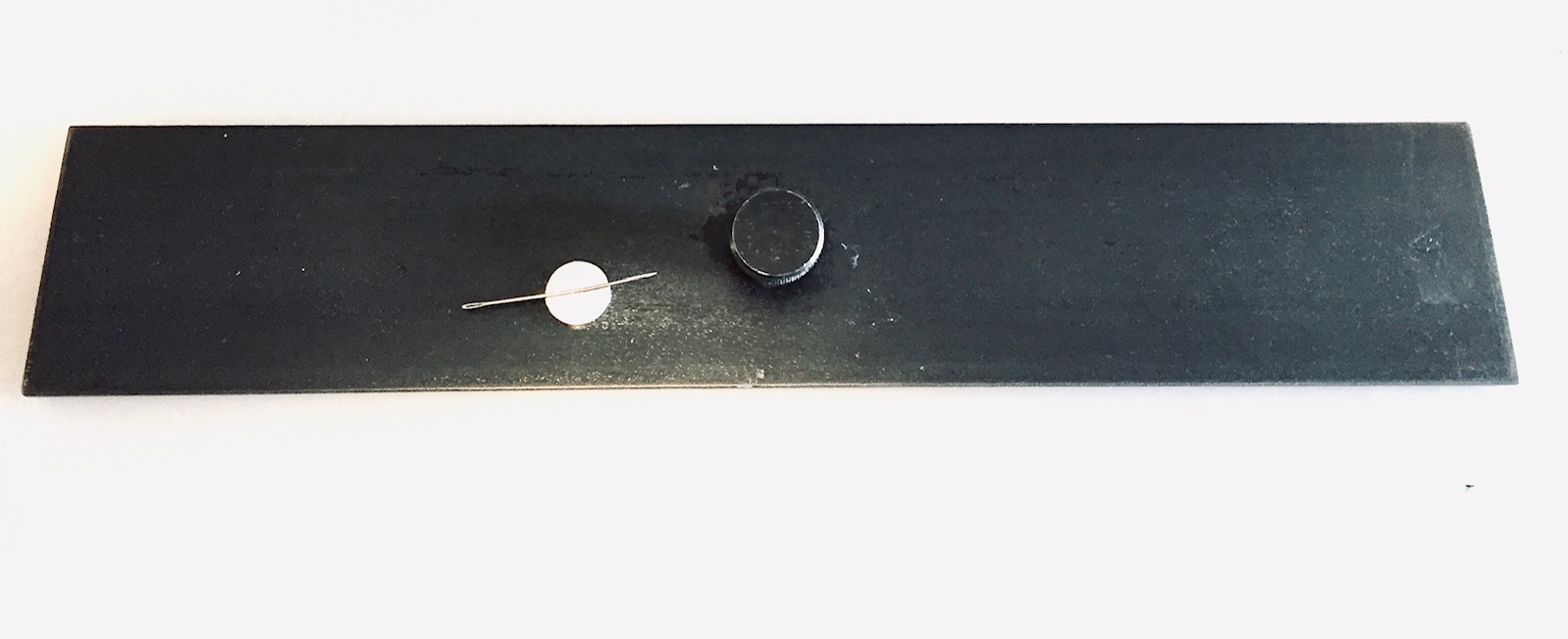
First off, a custom weight made by Randall Hankins of Salt Lake City. I have many weights of Randy’s as well as heavy things found over the years like massive things to hold x-ray machines in place. After making do with essentially the wrong things for decades, Randy and I designed these sixteen inch long weights so that some of the endpapers varieties I make could be selectively weighted or just kept from moving. I have a pair and I could not now work without them. Being steel, magnets can be applied — here is one catching a needle.

I can put you in touch, [contact Tim here] All are custom made.

Cobblers knife from Buck and Ryan [sadly gone] London. Purchased in 1982. Cutting paper and used as a marking knife.


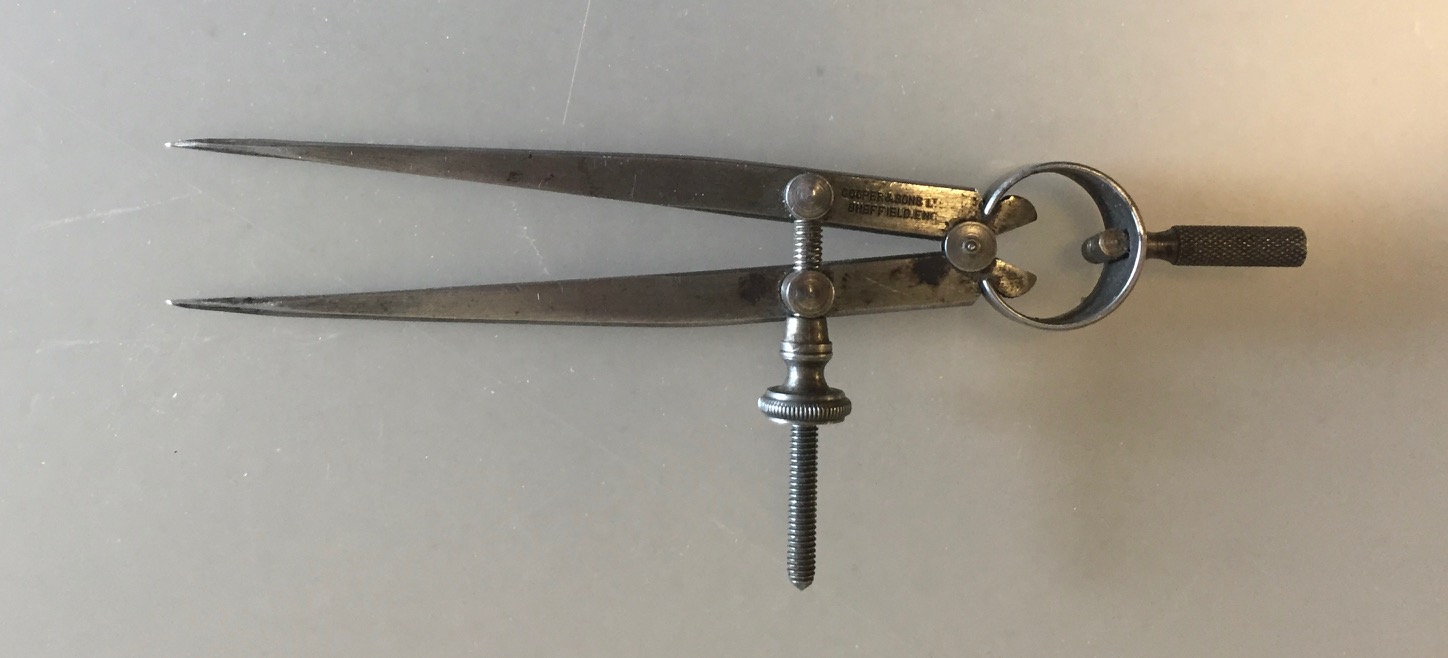
Margaret Smith [d.1982] her dividers, about 6 inches long. She was born while Victoria was still alive and bound books with a Victorian sensibility. Very gracious and knew everyone. Studies a bit with S. Cockerel and was full of stories. She made her stone burnisher from flint found at Brighton. I use this tool more than any. No idea how many dividers of all configurations and lengths that I have found.


Triangle for various squaring and metering jobs. This one allows the worker to dial up the amount of focus required for certain jobs.


My first bone folder. It is sharpened on the lower edge, about 3 inches so that I can fold and then cut folds without needing two tools. I have many bone folders, they are sort of talismans to the discipline and are nice. I have a giant folder made from free range mastodon by Jim Croft. This one is balanced for throwing.