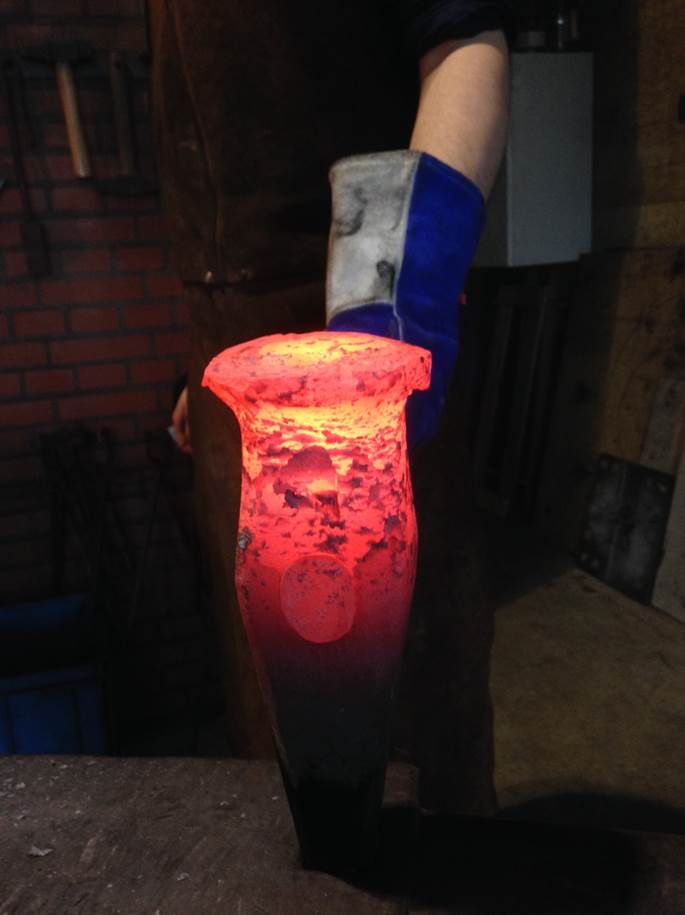
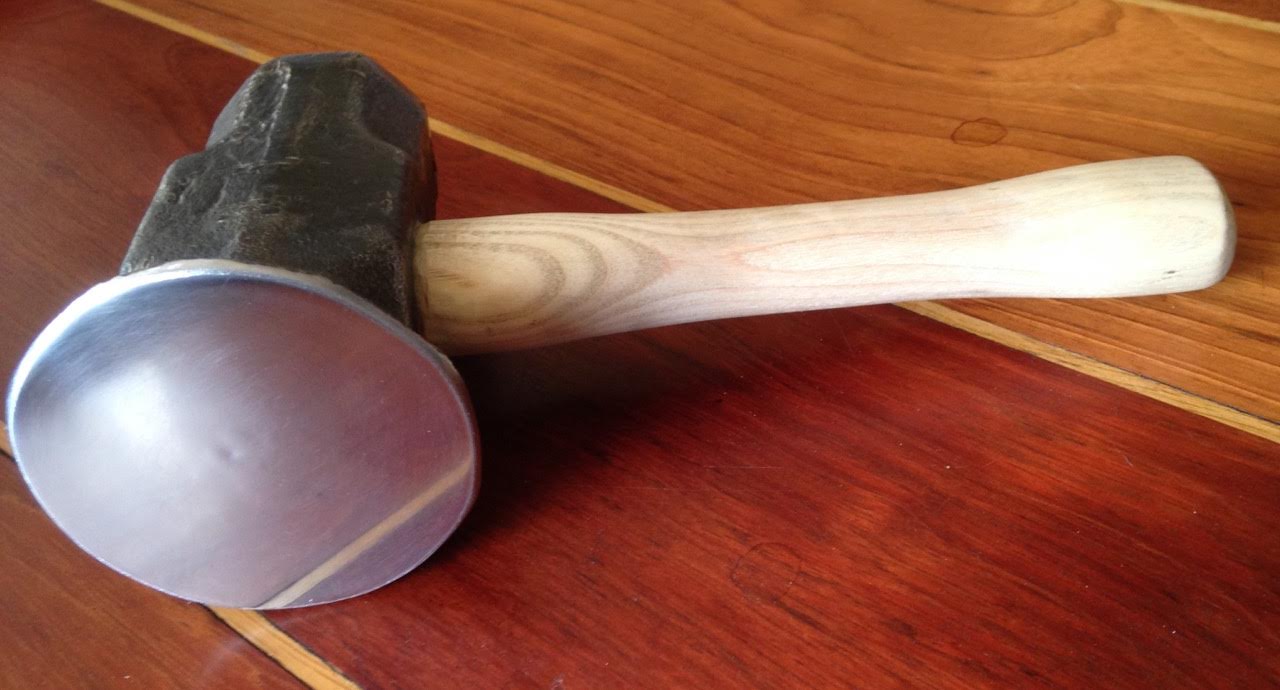
I’m really looking forward to these upcoming workshops. The organizers are making a beating hammer so I don’t have to carry mine! Dutch hospitality! If you are considering traveling from North America, Iceland Air has reasonably priced flights to Amsterdam and you can arrange a layover Iceland if desired.
Two workshops by Jeff Peachey – 25 May – 4 June 2016
organised by Restauratoren Nederland, the Netherlands
Two specialized bookbinding and conservation workshops lead by American bookbinder, conservator and toolmaker Jeff Peachey. Jeff combines his research of eighteenth-century French leather bindings with his practical knowledge of conservation, bookbinding and toolmaking. He will be teaching these workshops at Boekbinderij FopmaWier, a professional bookbinding studio in the Frisian countryside. Surrounded by an enthusiastic group of international colleagues and hopefully bathed in a warm spring sun, these workshops promise to be the perfect working holiday!
Making and sharpening knives: a rational approach, and modifying a spokeshave
https://www.restauratoren.nl/agenda/workshop-jeff-peachey-1/
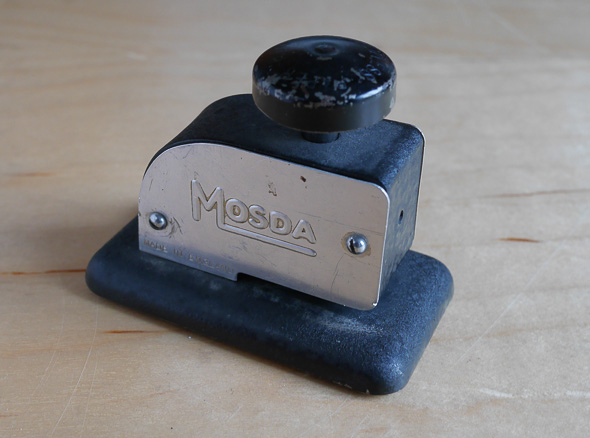
This workshop is an intensive three day introduction to one of the most basic human tool making activities – making and keeping an edge tool sharp without the use of jigs. This workshop will use 3M micro-finishing film, but the freehand techniques learned are applicable to water, oil, or diamond stones. Participants will be provided the materials, instruction and equipment to make several knives by stock reduction of their choosing, and to resharpen any type of edge tool they bring with them as time permits. The specific tools of bookbinders will be examined: paring knives, lifting knives, scissors, hole punches, spokeshaves and board shear blades. Tool steel, edge geometry and grit progression will be discussed. A Stanley 151 spokeshave will be modified for leather paring, and there will be time to learn how to use it. The goal of this workshop is to free participants from the plethora of misinformation and mystique that surrounds sharpening and to instill confidence in sharpening, maintaining and resharpening bookbinding knives and other edge tools.
Course: €375, Materials: €175 Dates: 25-27 May 2016
Late eighteenth century French binding structure
https://www.restauratoren.nl/agenda/workshop-jeff-peachey-2/
Apart from the French Revolution, one of the most exciting aspects of late 18th C. French culture is the existence of two full-length bookbinding manuals. This five-day workshop will focus on reconstructing a typical full calf French structure of this time period, by comparing and contrasting the descriptions in these manuals and examining extant bindings. In some respects, this structure is the end of 1,200 years of utilitarian leather binding —50 years later the cloth case begins to predominate. This class is a hands-on explication of a written text. Some of the interesting features of this book include: beating the paper, sewing 2-on on raised cords, beating pasteboards, trimming edges a plough in-boards, edge coloring with vermillion, sewn front-bead single paper core endbands, parchment transverse spine liners, edge paring calf, “marbling” the leather, and achieving various shades of brown without using leather dyes. Reproductions of 18th C. French tools, constructed from plates in Diderot’s Encylopedie (1751-1780) will be available for experimentation. Participants will learn to use and maintain a plough, and gain experience in translating written descriptions of bookbinding into the construction of a model. Extensive notations (in English) on Gauffecourt’s Traite de la Relieure des Livres (1763) and Dudin’s L’Art du Relieur-doreur de Livres (1772) will be provided. An overriding theme in this class is to interpret historic bookbinder’s techniques by reconstruction. Basic bookbinding skills are a prerequisite.
Course: €540 Materials: €100 Dates: 30 May — 3 June
Excursion
On Friday afternoon, June 3, the eighteenth-century French binding structure course will be followed by an excursion to the local archives and rare books library: Tresoar, Frysk Histoarysk en Letterkundich Sintrum. We will look at several examples of eighteenth-century bindings from this collection using our freshly gained knowledge.
Adress: Tresoar: Boterhoek 1, 8911 DH Leeuwarden. We will travel together in available cars.
How to get there: https://www.tresoar.nl/over/Pages/Route.aspx
The tutor, Jeff Peachey
Jeffrey S. Peachey is an independent book conservator and toolmaker. For more than 25 years, he has specialized in the conservation of books and paper artifacts for institutions and individuals as the owner of a New York City-based studio. He is Professional Associate in the American Institute for Conservation, has taught bookbinding workshops internationally, and was recently awarded a fellowship at the Rockefeller Foundation Bellagio Center, Italy. He is the inventor of the Peachey Board Slotting Machine, used in conservation labs around the world. His most recent publication is “Beating, Rolling and Pressing: The Compression of Signatures in Bookbinding Prior to Sewing” published in Suave Mechanicals: Essays in the History of Bookbinding, Volume 1. More information at: http://jeffpeachey.com
Registration
Please register by emailing: herre66@gmx.net
Please indicate which workshops you would like to register for.
The location
The picturesque village of Wier is situated in the north-west of the northern province of Friesland. In 2009, FopmaWier bookbindery was established in this village of 200 inhabitants. Wytze Fopma, owner and director, specializes in unique graphic productions, mostly in limited editions, for designers, artists, printers, editors, photographers and collectors. Wytze welcomes you into his studio to experience the quiet and space of the Frisian countryside during the most beautiful time of year. What better way to welcome in the spring of 2016?
Boekbinderij FopmaWier, Tjerkepaed 16, 9043 VM Wier, www.fopmawier.nl. Contact person is Wytze Fopma: info@fopmawier.nl
The nearest train station is Leeuwarden. From here, bus 71 leaves for Wier 1-2 times per hour. You can also be collected at the train station if you inform us in advance of your arrival.
Accommodation
The small campsite “De Brinkhoeve” is located within a two-minute walk from FopmaWier bookbindery. Here you can pitch your tent on an open field with view of the village’s historic church. Two recently renovated trailer homes and a cabin are also available at very affordable prices (€10-25,- per person, per night). Booking can be done directly: http://www.debrinkhoeve.com/ or by phone: 0031 (0)518-462287. We strongly advise you not wait too long and please tell the owners you are coming for the workshops at Wytze’s studio. If you would like to share a cabin or trailer with other participants, please advise us and we will get you in touch with other interested participants.
If the campsite is not what you are looking for and you don’t mind missing out the evening social contact with colleagues, please contact us for further information on alternative accommodation in the vicinity of Wier.
Meals
During the day, coffee, tea and lunch (Dutch bread with a variety of toppings) will be provided. This is included in the course costs. Breakfast, dinner and lunch during the excursion are at the participants’ own expense. We are happily to recommend good restaurants, supermarkets and grocery shops in the neighbourhood. It is also possible to cook at De Brinkhoeve, a good occasion to enjoy the end of an inspiring course day together with colleagues.
Organisers
Herre de Vries, contact person: herre66@gmx.net
Natasha Herman,
Wytze Fopma.


 Peachey Conservation