I’m using a M2 Hybrid knife to edge pare this small rectangle of vegetable tanned goatskin all the way around two times, without breaking the pared strip.
The trick is to reverse the direction of the knife by pushing it to turn the corner.

Book Conservation
I’m using a M2 Hybrid knife to edge pare this small rectangle of vegetable tanned goatskin all the way around two times, without breaking the pared strip.
The trick is to reverse the direction of the knife by pushing it to turn the corner.
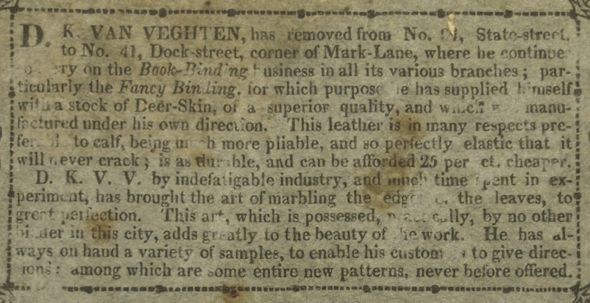
Below is a vegetable tanned deerskin, with two bullet holes. It was shot by my Grandfather between 1946 – 1954, and he had it vegetable tanned. He also had a couple of heads mounted on the wall of his living room. Deerskin is softer and stretchier than sheepskin, and the grain is more pronounced in this example. Because of the stretch, it is difficult to pare, even with the best paring knife in the world. Possibly different vegetable tanning methods would have made it look more like calf. Most of the examples I’ve seen on books are very similar to calf, and a delaminating grain layer is often a clue that it is in fact sheep. D.K. Van Veghten’s advertisment also mentions it is quite similar to calf, but 25% cheaper.
I don’t think of the deer when I look at the deerskin below, but of my Grandfather. The bond between things and memories is strong. I can’t bring myself to use this partial skin. The familiar curse of a precious material; it’s too nice to use. So it languishes, only to be written about.

 Nothing quite sums up the Holiday season for me like a poinsettia and hunks of raw blue fin tuna. Stressed? Too much to do before the end of the year? Feeling overwhelmed? Me too. I coped yesterday by playing hooky and indulging in arguably the best chirashi deal in Manhattan at Yuba for $15. Yuba was founded by a couple of ex-Masa employees: $15 there would get you exactly 11 grains of rice.
Other coping mechanisms include buying stuff.

The Peachey Branded Microfiber Towels are in stock! A great stocking stuffer, or you could even make a stocking out of it. I made to logo by having a steel stamp made from my handwriting, then stamped it onto a piece of horsebutt, then had it dye sublimation printed onto the towel. Genuine Horsebutt Strops are always popular.
To be safe, order soon, although the post office estimates December 17 as the deadline.

