If you have never heard of a kaschtoir, you are not alone. The term is a portmanteau coined by Peter Verheyen. The kaschtoir is a backing tool; a combination of a German kaschiereisen and a French frottoir. More about the kaschiereisen here, and more about the frottoir here. This tool combines the most useful aspects of each.
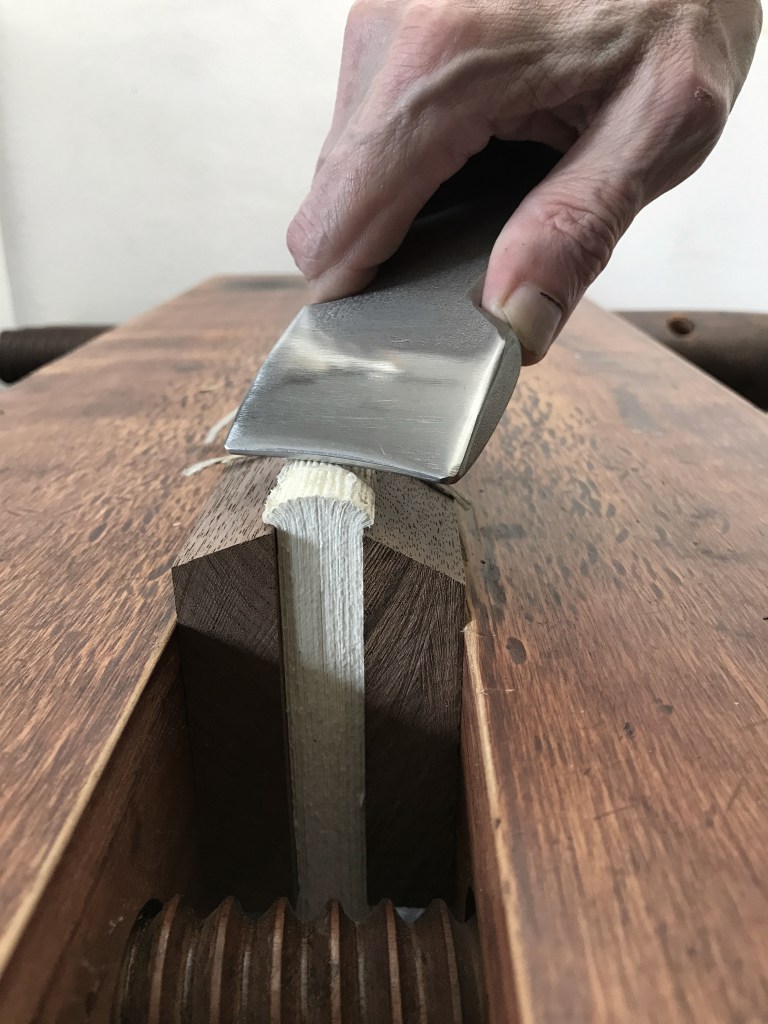
A stainless steel Kashtoir
The kaschiereisen end has small teeth, which help to move the sewn, rounded bookblock into to a backed position. The froittoir end has a gentle smooth curve, which also can help move a bookblock into position, in addition to smoothing out irregularities and trueing raised bands. Two for the price of one!
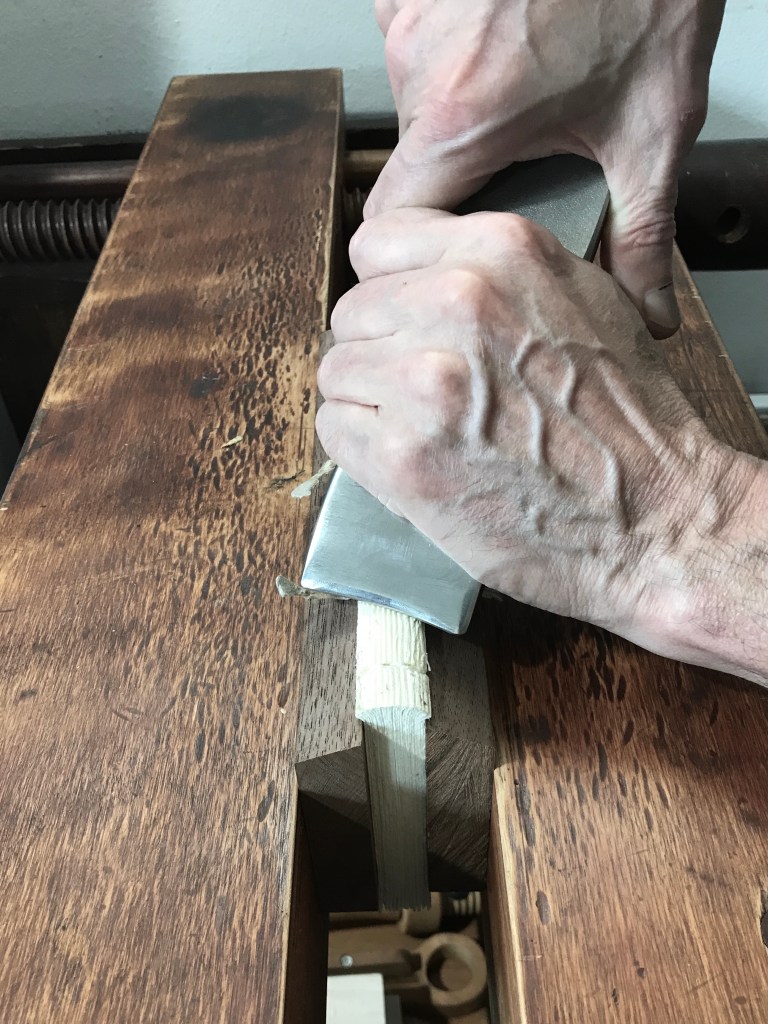
Kashtoir in action, with one hand or two.
If you are tired of deforming your spine into double folds with a hammer, or deforming your fingers hand manipulating your spine into shape, this may be the tool for you. Fits comfortably in one or two hands. The stainless steel is safe for contact even with historic bookblocks. The edges are very comfortably rounded, and the froittoir end is polished to make clean up easy.
I reproduced the gentle curve on the Frottoir from examples in my historic collection. This tool is not a die meant to exactly shape a spine to its curvature. A gentle curve is much more useful for a range of round spine shapes, smoothing irregularities, smushing sewing threads, etc… . The teeth can be cleaned of adhesive with a stiff brush. This tool is quite heavy, and the weight allows you to easily persuade even hard modern paper into the shape you desire with little effort.
304 stainless steel. Approximately 6 x 2 x .5 inch (15 x 5 x 1.25cm). Weighs about 1 lb. 5 oz (600 grams).
A collection of handmade rug hooks bought in Prince Edward Island, CA.
I purchased this small collection of rug hooks while on vacation in Prince Edward Island, Canada, this past summer. Most of them have handmade hooks, and the handles are repurposed, altered, or custom carved. There is a compelling beauty to these humble and utilitarian objects.
Not only are they simply constructed, but they are extremely well used, which implies a degree of excellence. A poorly designed or made tool usually does not see much use! They are purely functional, with no decoration or even extra polishing on the hook end. Things that are well used and worn are an increasing rarity in our current culture. I sometimes refer to this as “use value”, but there must be a better term.
A precisely shaped hook at the tip.
They all have a square shaft end where the handle is mounted, and look hand forged. The overall length is almost exactly the same, so that they fit into the palm of a hand and the tip reaches near the end of a slightly bent index finger. Gravers have a similar length, and one of them has what looks to be a graver handle that is missing the ferrule (the second one on in from the left on the bottom).
Several of them have file marks near the hook, indicating they were sharpened, fixed, or altered. The thickness of the shaft in relation to the size of the hook makes perfect sense: I imagine the thick area pushing apart the backing, and the hook small and sharp enough to pull the material efficiently through.
The first one (top row, far left) reminds me of a Jim Croft awl handle, with its comfortable looking hand carved handle, worked just enough to knock any sharp edges, but not going overboard with sandpaper to make it smooth as if it were lathe turned.
Simple and ergonomic handle.
I imagine them gradually being shaped to the hands that used them over a long period of time. None of them seem to have any extra finish applied, so they feel like natural wood and oil from the hands. The shapes of the handles are all different, and likely the most individual choice.
They all demonstrate the two key aspects of successful tool design; the tool fits comfortably in the hand and fits efficiently with the material worked. They all look like they could comfortably jump into your hand and go to work.
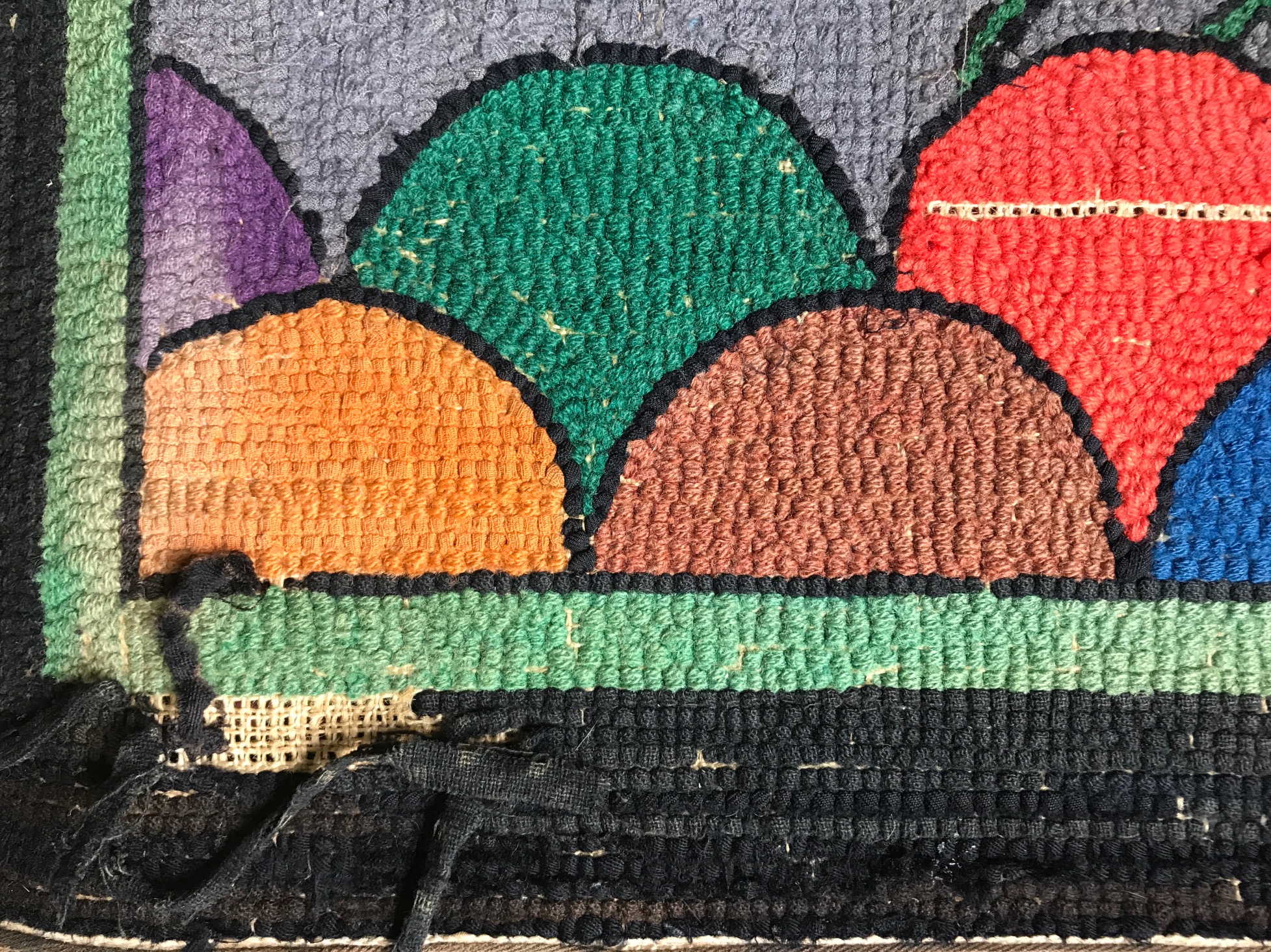
Detail of what a hooked rug looks like. They were often made of strips from worn out clothes.
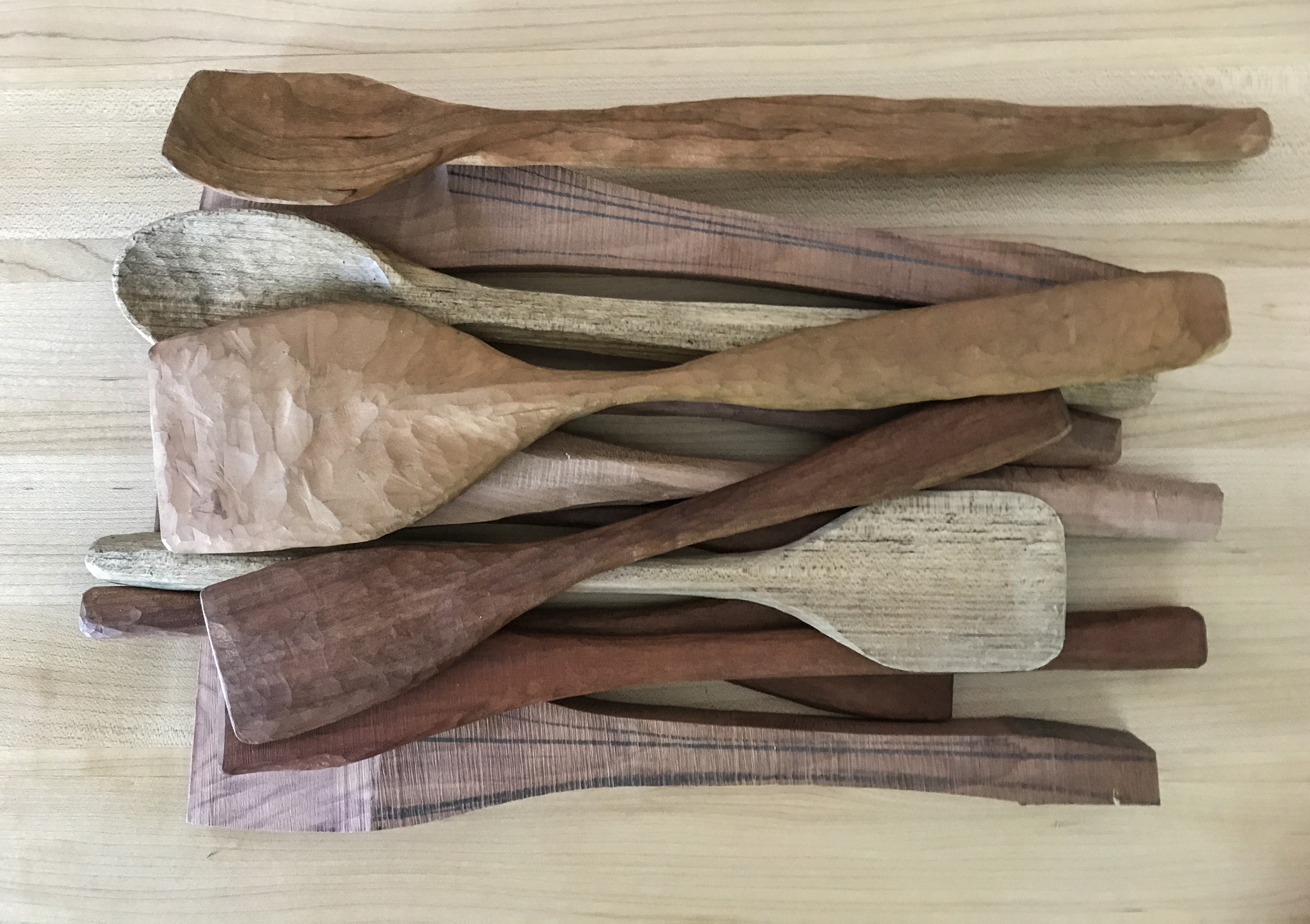
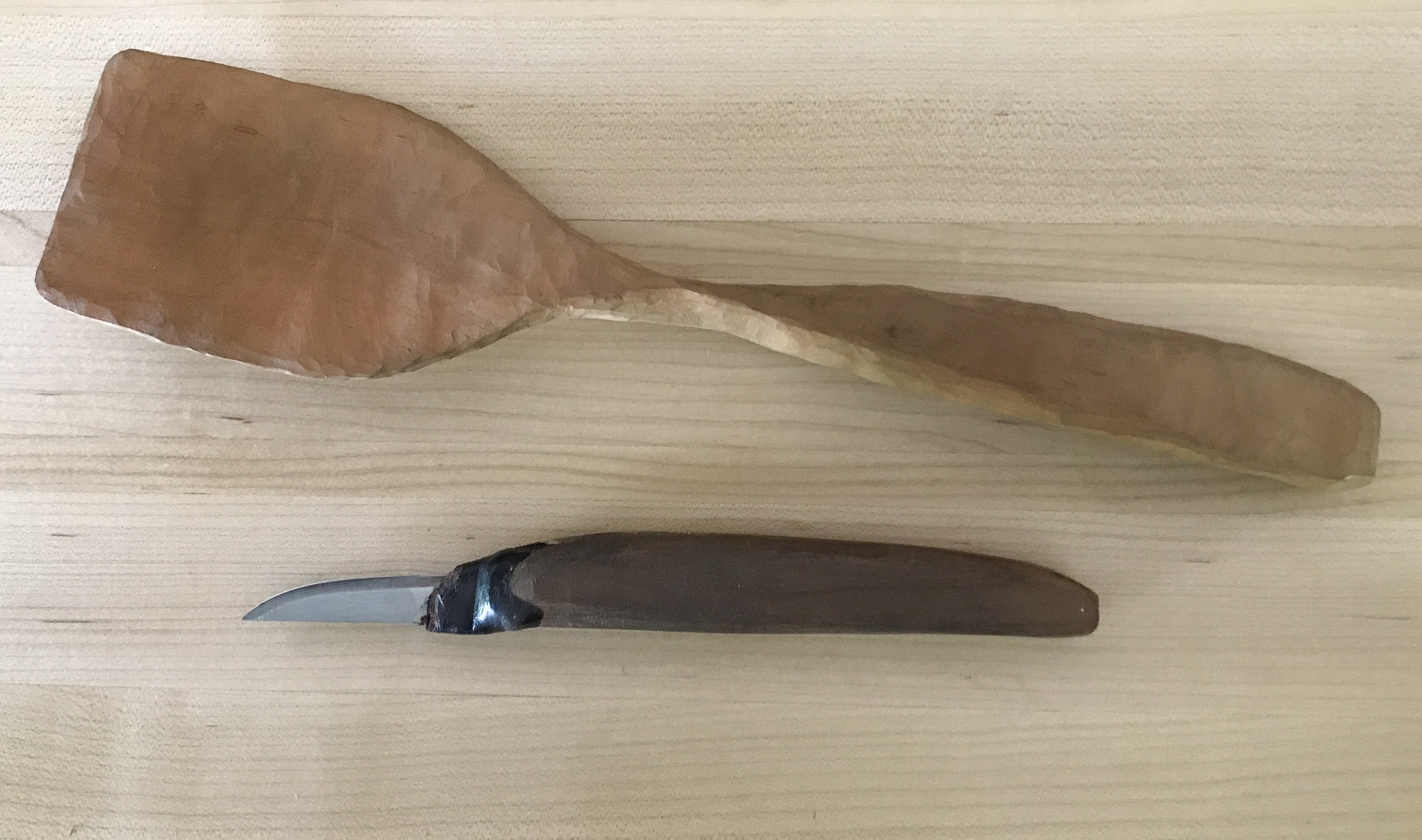
Some finished and in-progress wooden paddles and spoons.
It may seem odd for someone who conserves and makes things for a living to have a hobby. Mine is making wooden spoons and paddles. After all, isn’t this pretty much the same activity as my job? Both involve similar craft skills: working precisely, measuring, knowing material properties, and hand tool use. Two years ago, I wrote a piece on the beginning (and temporary ending!) of my spoon carving hobby. More recently, I started to think about how spoon making as a hobby is different from knife making or bookbinding as a business.
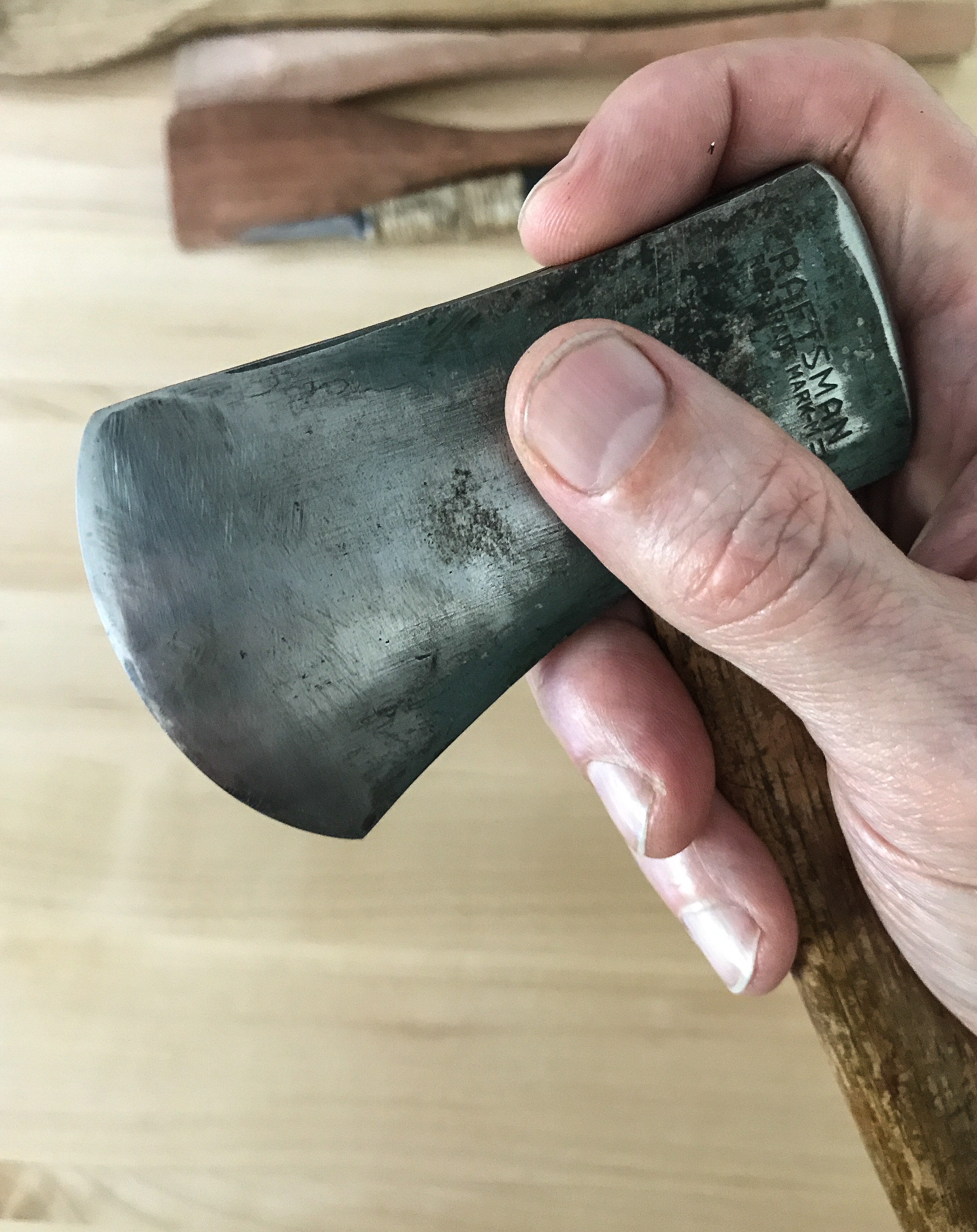
This Sears Craftsman mini hatchet is a great weight and size for how I work.
One of the primary differences is that a craft business is, uh, a business. Once you come up with a product that sells, you need to make more and more identical ones, often according to a client’s order or deadline. With spoon carving I have no such constraints, since I have no intention of selling them. This is freedom from having to make a consistent end product, which is the corner stone of craft. Or maybe I am not skilled enough at spoon carving to turn out an easily and naturally consistent product?
Many people can make one of something, but to make hundreds requires discipline and often knowledge of traditional craft techniques which make the work of repetition easier and more certain (in the David Pye sense). With spoon carving, if a piece of wood splits at the end, I don’t care, I’ll just make it a bit shorter.
My only self-imposed restraint is not to use sandpaper, and leave the faceted knife cut finish. This is mainly for the pragmatic reason that I don’t like creating a lot of dust, not for any purity-craft-workmanship-ideal kind of thing. I have no qualms about using a bandsaw to rough out blanks, which Pye would consider workmanship of risk.
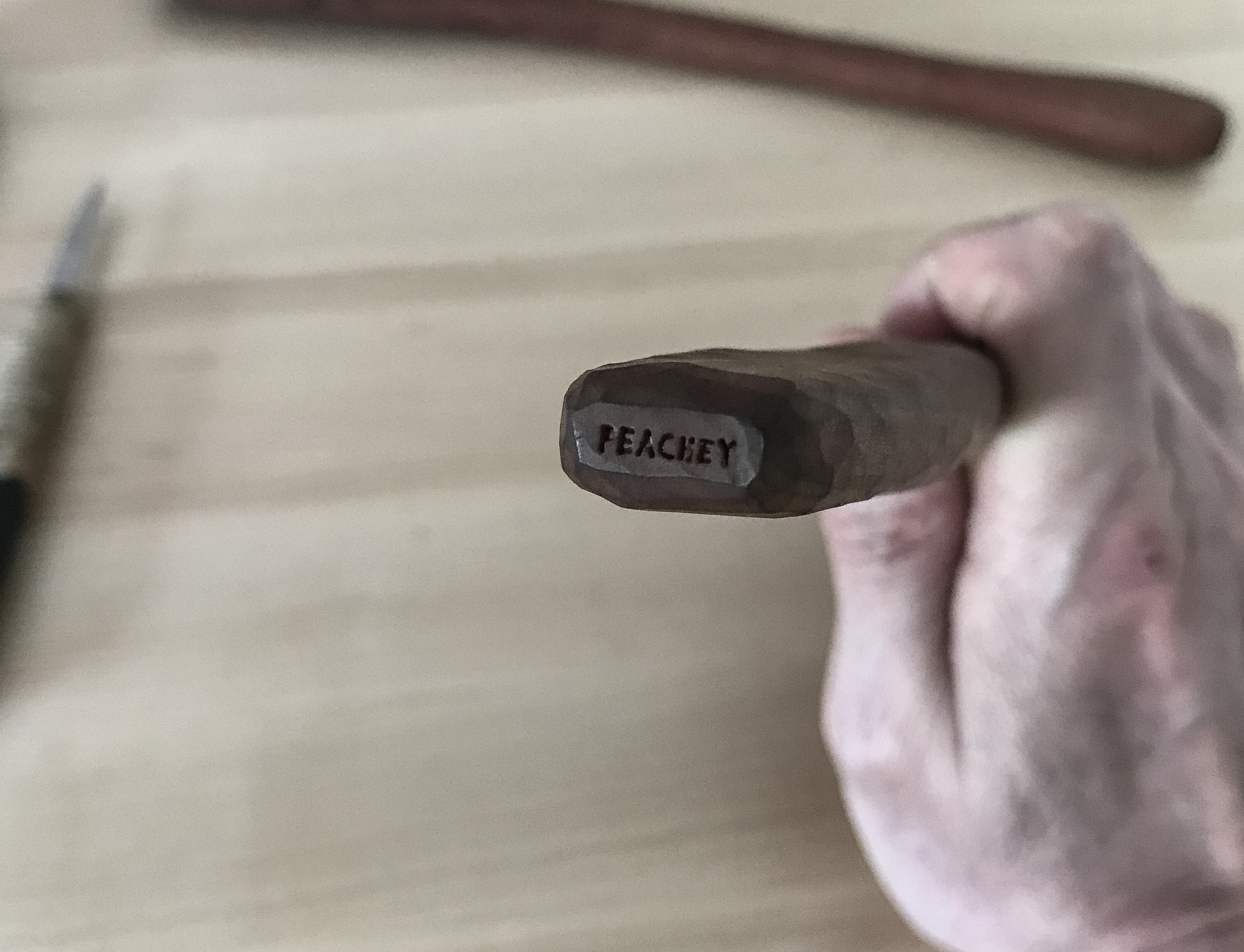
I had a small steel stamp made from my handwriting to mark them.
In fact, I couldn’t sell them since they take so long to make; I’d only make a couple dollars an hour. I can only give them away. Freedom from monetary constraints increases my own agency in making, so it is a more relaxing activity, as a hobby should be.
But don’t get me wrong, I feel lucky to be able to spend a day making knives or conserving books, rather than being a wage slave making nothing but money.
The lines become blurred when I make a knife to make a spoon.
When monetizing craft, there are continual pressures to simplify production, increase output, or raise the price in order to keep up or outpace the cost of living to profit. Continuing education and research into materials and techniques is a way to accomplish this. With conservation and knives, I keep up on new techniques, philosophic approaches, and materials. With spoons, my primary interest is the process of making them: whittling, shaping, and carving. The history of them and what other people are doing is interesting, but doesn’t influence me all that much.
A hobbyist has the freedom to make what they want, when they want, without regard to how long it takes, how other people make it, or how other people regard it. These are some of the pleasures of a hobby, pleasures that can diminish by making a living selling your work. Caveat Venditor!




 Peachey Conservation