Phive Star Light

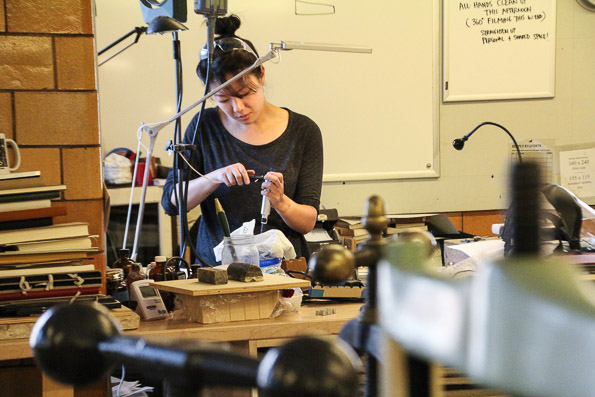
The Phive CL-1 illuminating a book being sewn on a Nokey sewing frame.

My first workbench light was a twin tube florescent I found on the street.  The long tubes illuminated very evenly, without casting shadows from my own hands while I was working. Eventually the buzz from the ballast became intolerable, and I switched to a 100 watt round swing-arm adjustable style, which most people use.

Recently, I decided to try out the Phive CL-1 LED lamp. So far it is a great light. It looks high-tech, the arm is easy to position, and more importantly stays in position. The 5000k color temperature is pretty close to daylight. The area where the LED’s are mounted is very small, so you can position it close to yourself or to your work.

The bulb does not seem to be replaceable, but the lifespan is estimated to be 50,000 hours, which is 17 years at 8 hours a day — very close to my own working lifespan.

Just Looking

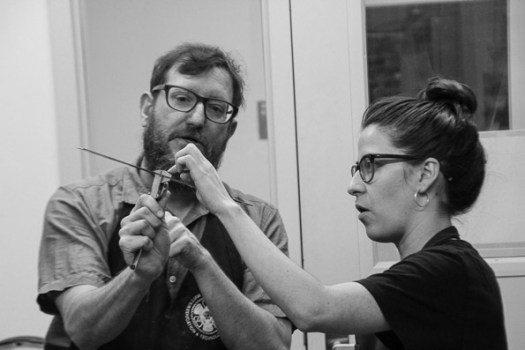
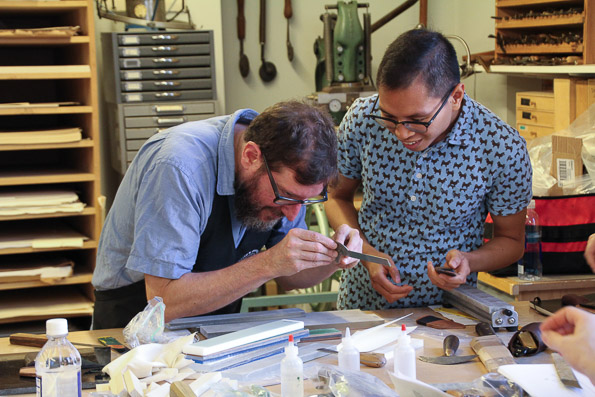
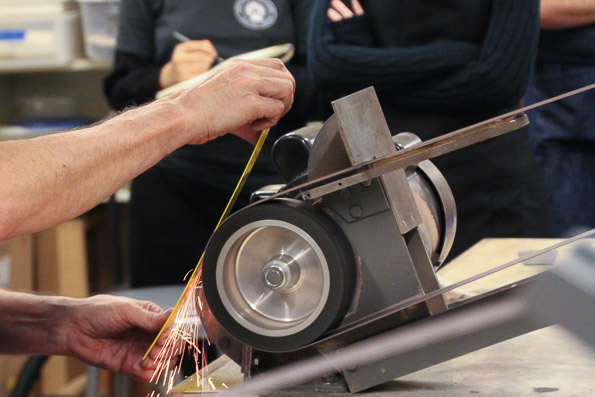
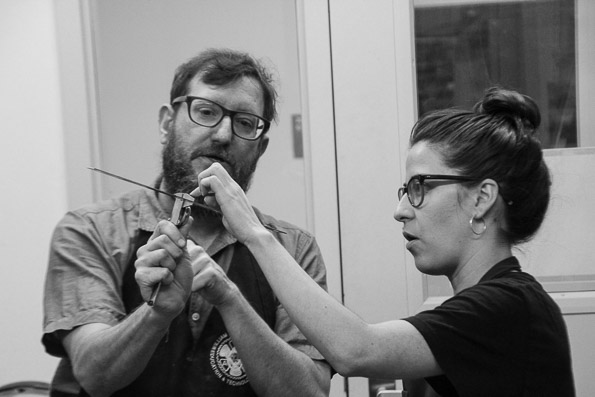
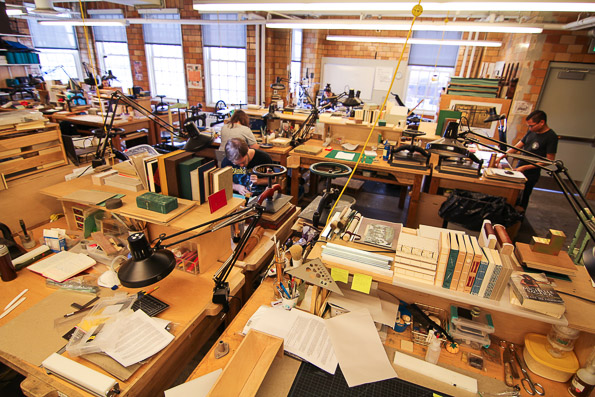
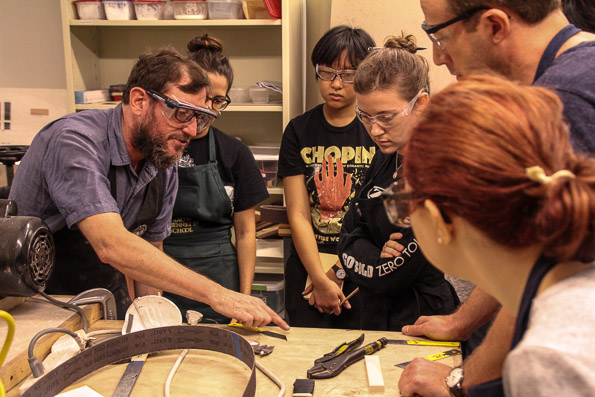
Once a year I teach a knife sharpening and tool making workshop in the bookbinding department at North Bennett Street School (NBSS) in Boston.  NBSS has the finest bench oriented two year bookbinding program in the world. If you have the passion, drive, commitment, dedication — and are crazy enough to pursue this antiquated profession in the 21st century — this is the place to do it. You will find many kindred spirits in your cohort.

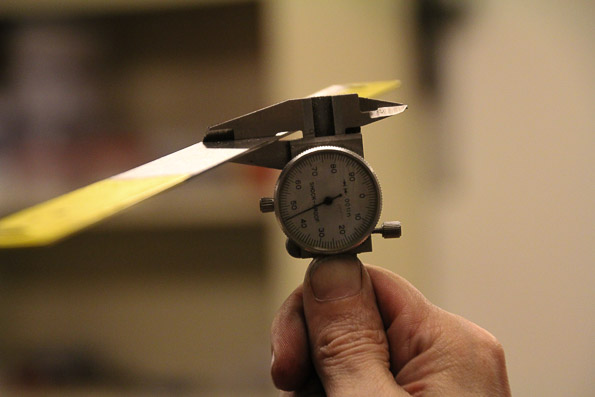
I cover all aspects of sharpening related to bookbinding: blade angles, bevel angles, types of steel, types knives, types of grits, grit progression, hand grinding using power tools, free hand sharpening, and stropping. These techniques can be adapted to virtually any type of sharpening system: oil stones, diamond stones, waterstones, lapping powders and finishing films. Free hand sharpening throws many students into the deep end, for a while, but ultimately equips them to sharpen most types of edge tools. Most bookbinding knives have complex shapes and handles  which preclude the use of jigs or honing guides.

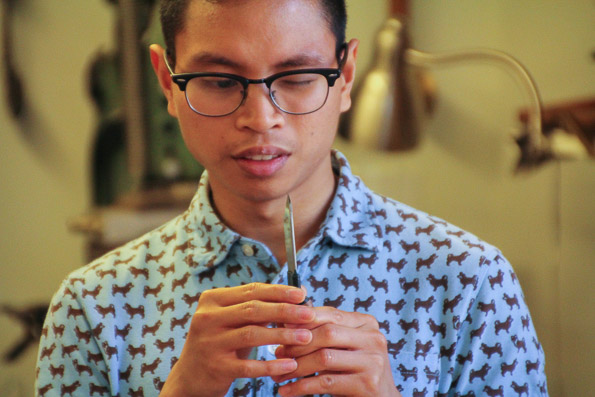
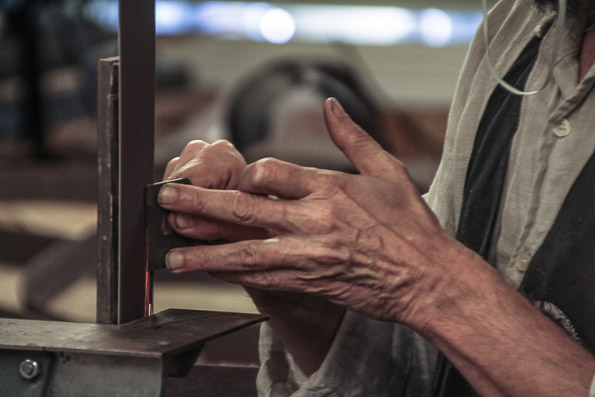
The foundation of this class is critical looking. Critical looking is not only closely watching the instructor demonstrate a technique, but it is looking at what you have done. Often when sighting or aligning, one eye is better than two.

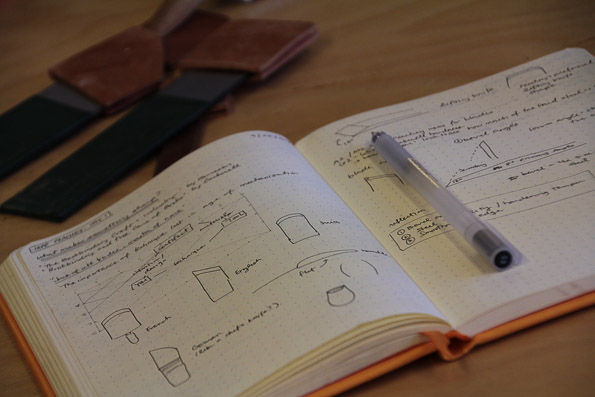
Once you can visually analyze what your hands have done, then you can correct, alter, adjust, repeat your hand technique. Critical thinking is taught via writing in undergraduate curriculums. Could critical looking be linked to drawing?  Taking a photo or shooting a video can be a useful shortcut for note taking that may gloss over important aspects, such as processing and replicating. Drawing really forces you to look closer, again and again and again.

Critical looking is different from just looking. In a narrow sense it means learning to interpret what you are looking at, what the scratch patterns, reflections, divots, rounded bevels mean in relation to how you were holding the knife. In a broader sense it means understanding  what the effect of your actions are. Critical looking is the basis of all sharpening, maybe all craft skills?


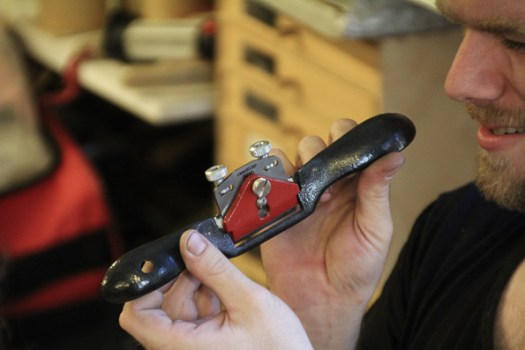
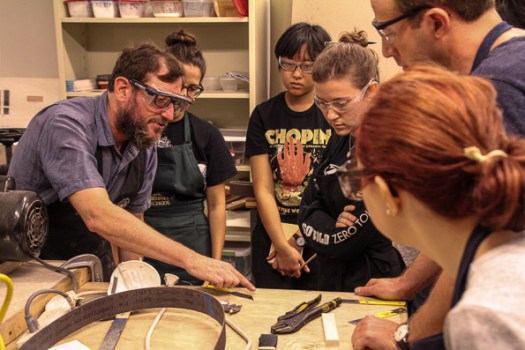
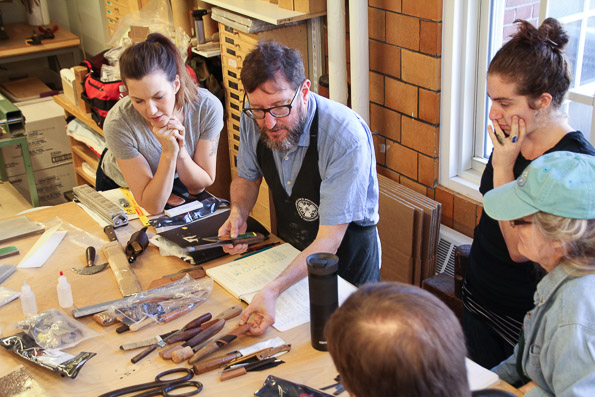
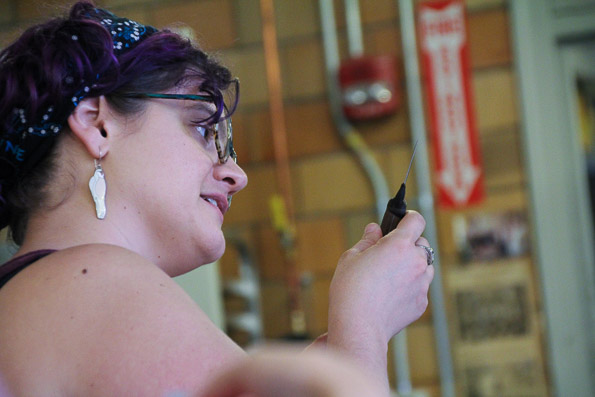
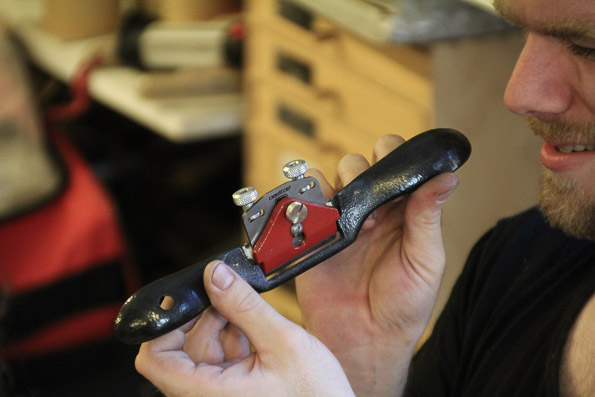
Below are some images of the 2017 workshop shot by Brian Burnett.


All Photos Copyright 2017 Brian Burnett. And he was critically looking.


Using a Modified 151 Spokeshave to Bevel Binder’s Board

Designer binders, conservators who replicate wooden boards with laminated museum board, and others sometimes have to create a bevel or chamfer in book board. Often this is accomplished by sanding, which is at best a very slow process, and at worst an easy way to create a disgusting amount of dust.  A downdraft table and PPE is recommended.

Beveled book boards were very common in the nineteenth century. Various contraptions were invented to do this, including a specialized board shear that cut at 45, rather than a 90 degrees, a jigged foot clamp and large chefs knife, and a machine that used a woodworkers jack plane running in a track. Large production shops sometimes had a board beveling machine with a rotary blade, but most of us are not so lucky.

As the video below illustrates, it is also possible to bevel binder’s board quite efficiently with a modified 151 spokeshave, a tool which is usually used to thin leather over large areas. Note how much I skew the spokeshave, and how it is in motion when I start the cut. Also listen to the sound: this is what a properly adjusted sharp blade sounds like. Even after spokeshaving, it may still may be necessary to refine the board edge a bit with some coarse sandpaper.

If you are laminating your own boards (de rigueur for high end work), it is a good idea to paste a few layers of colored paper to the level you intend to bevel, in order to judge how deep you are spokeshaving. Since binder’s board is quite abrasive, an A2 or PM-V11 blade is a necessity. And the blades do wear more quickly than when shaving leather. It would be smart to dedicate one blade just for board.