Chela Metzger recently found this very cool Victorian reading stand during a conservation project and agreed to guest blog about it. It is almost robotic in its complexity. There is a link to other trade catalogs digitized by the Winterthur near the bottom of this post and they can be browsed by keyword. Chela is Conservator of Library Collections, Winterthur Museum, Delaware. Recently, she published a review of Julia Miller’s ‘Books Speak Plain’ in Bonefolder Extras.
Courtesy, The Winterthur Library: Printed Book and Periodical Collection
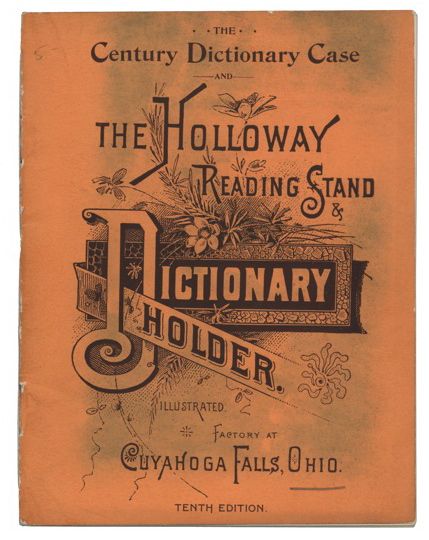
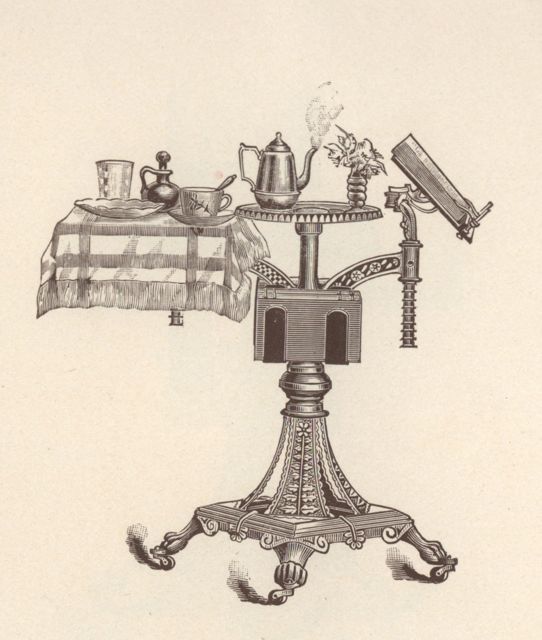
In honor of the long lineage of reading “devices” meant to make everything about reading easier and better, I would like to showcase the late 19th century Holloway reading stand and dictionary table. As the trade catalog’s longer title notes, this reading stand has a “dictionary holder, book rest, lamp stand and writing table”.
Courtesy, The Winterthur Library: Printed Book and Periodical Collection
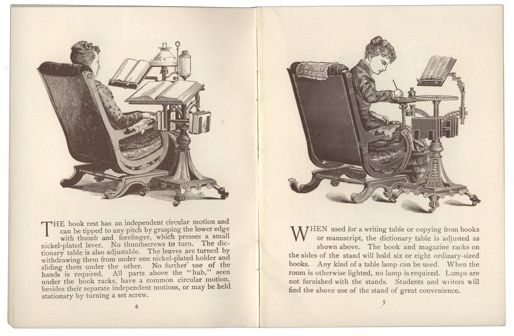
The reading stand company notes that scholars and writers will find the stands of “great convenience”. While I doubt the stand could handle one of the truly behemoth unabridged single volume dictionaries found in the US by 1914.

Courtesy, The Winterthur Library: Printed Book and Periodical Collection
Courtesy, The Winterthur Library: Printed Book and Periodical Collection
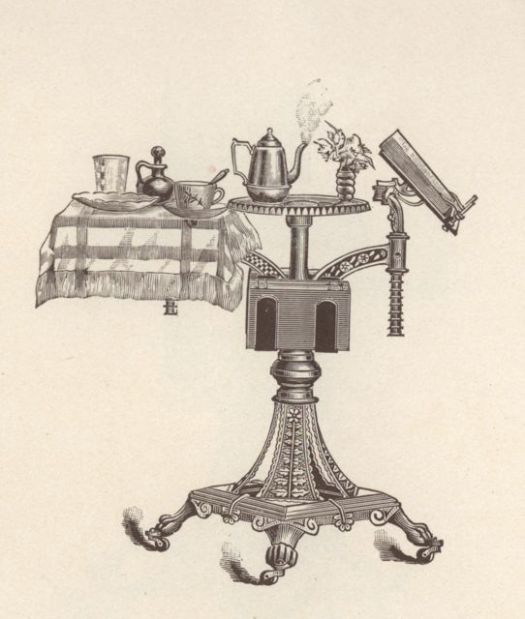
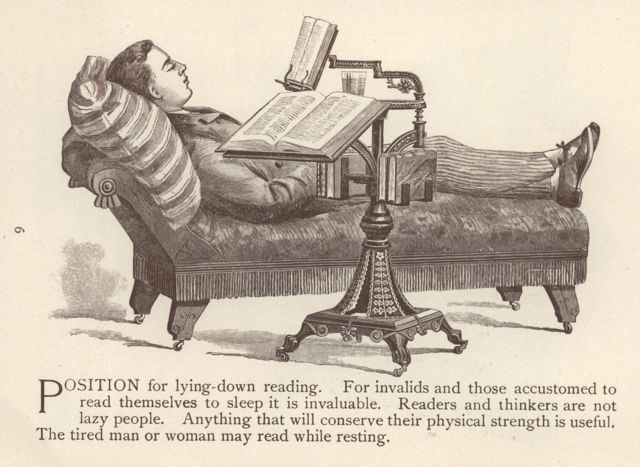
I do think the reading stand would adapt well to the laptop environment, and could hold food, drink and a favorite novel at the same time. And, I suppose, a reasonably sized dictionary as well. One reading stand adapted to a reader reclining on a couch is mentioned as a useful tool for the invalid, and for those who like to read while resting. The catalog notes : “Readers and thinkers are not lazy people. Anything that will conserve their physical strength is useful.” Cleary a pre-diet/exercise world statement. And pre carpel-tunnel symdrome.
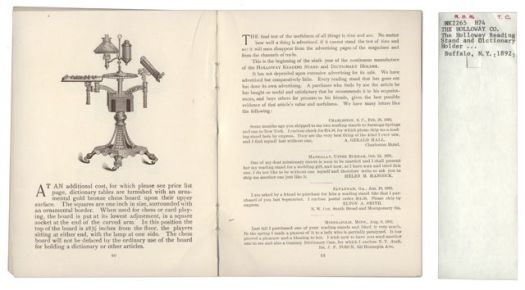
Courtesy, The Winterthur Library: Printed Book and Periodical Collection
Finally, one option is to include a gold bronze chess board with your reading stand. Note that the chess board can also support a dictionary if needed. Clearly our generation is not the first to multi-task.
I came across this wonderful catalog as part of the conservation work for the Winterthur Library’s ongoing Internet Archive project to digitize our extraordinary trade catalog collection. For a glimpse at an ongoing digitization of trade catalogs at the Winterthur library, please see:
<http://www.archive.org/details/winterthurlibrary>
_______________________________________
NK2265 H74 TC Winterthur Library, Winterthur Delaware
Holloway Co. (Cuyahoga, Ohio)
The Holloway reading stand and dictionary holder: combining a dictionary holder, book rest, lamp stand and writing table
Variant title: Century Dictionary case: made expressly for holding the six volumes of the New Century Dictionary
Buffalo, N.Y.: The Company, [ca. 1892] (Buffalo: Press of Gies & Co.)
Thanks Chela! Email: cmetzger[at]winterthur[dot]org






 Peachey Conservation