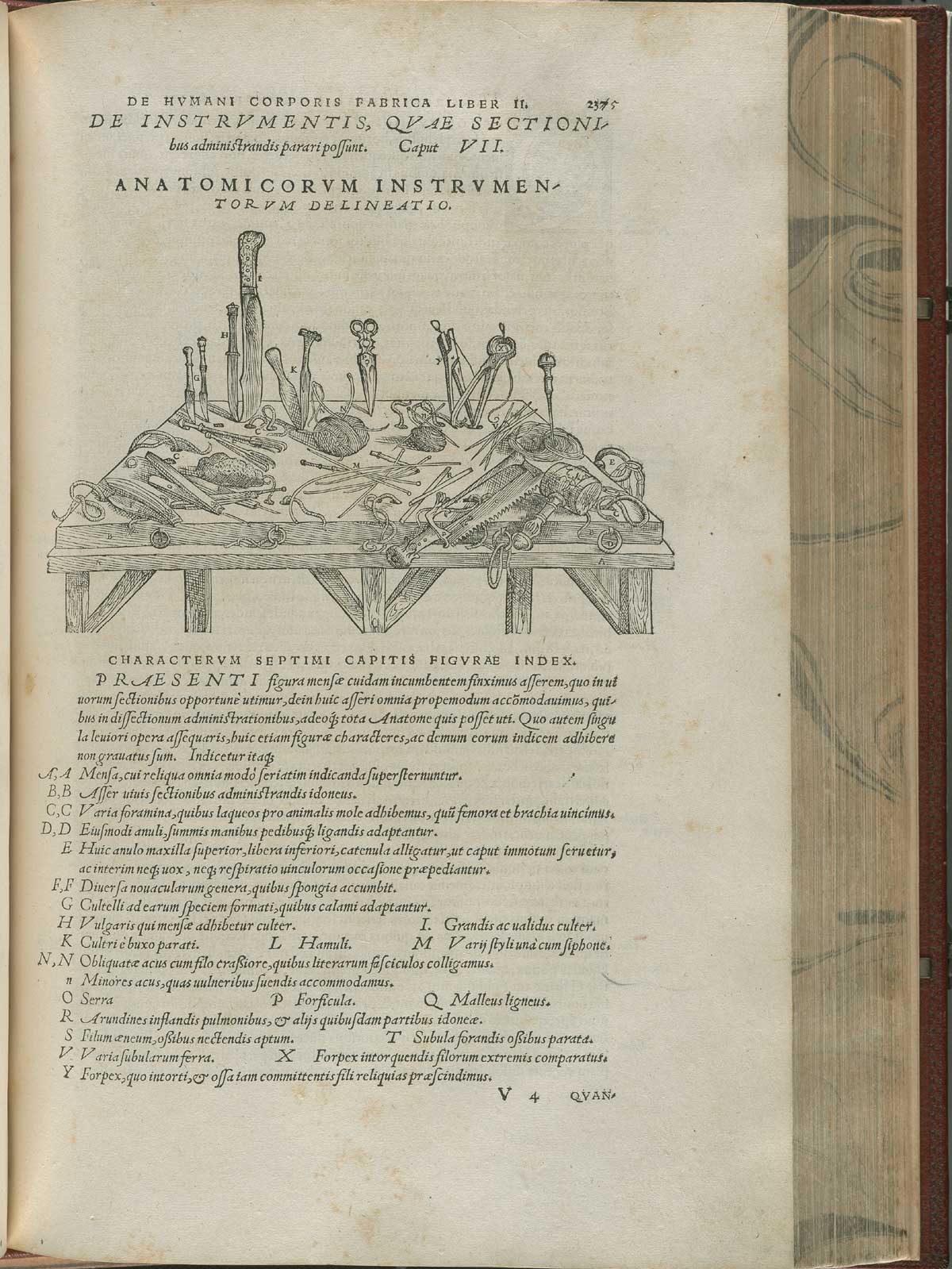
While looking at the surgical tools in De Humani Corporis, I ran across an interesting bit of information from a Cambridge University Online Exhibition. The image is huge, and can be examined in detail. In the text, Vesalius mentions that either silk threads or bookbinder’s threads could be used to prepare a cadaver. In his opinion, German bookbinding thread is the best quality, since it is stronger, thinner, and more well-twisted than thread from other countries. I haven’t noticed this about German 16th C. sewing thread (in large part due to the inflexible spines, see the post below) but it is certainly true for their typically tightly cabled sewing supports. One takeaway is that the thread bookbinders used was the best quality available. Vesalius also describes heating a needle in order to bend it into a “C” or parenthesis shape, a practice bookbinders still perform today. I’m assuming these bent needles, labeled “N” are stuck in bookbinding thread wrapped up in a bun shape. This is likely the earliest image of bookbinding thread.
Anthropodermic bibliopegy, or the binding of books in human skin, has a lurid and enduring fascination. Here; however, we have the cadaver fabricated using a bookbinding material and borrowed or shared tools: Bibliodermic anthropegy???
***
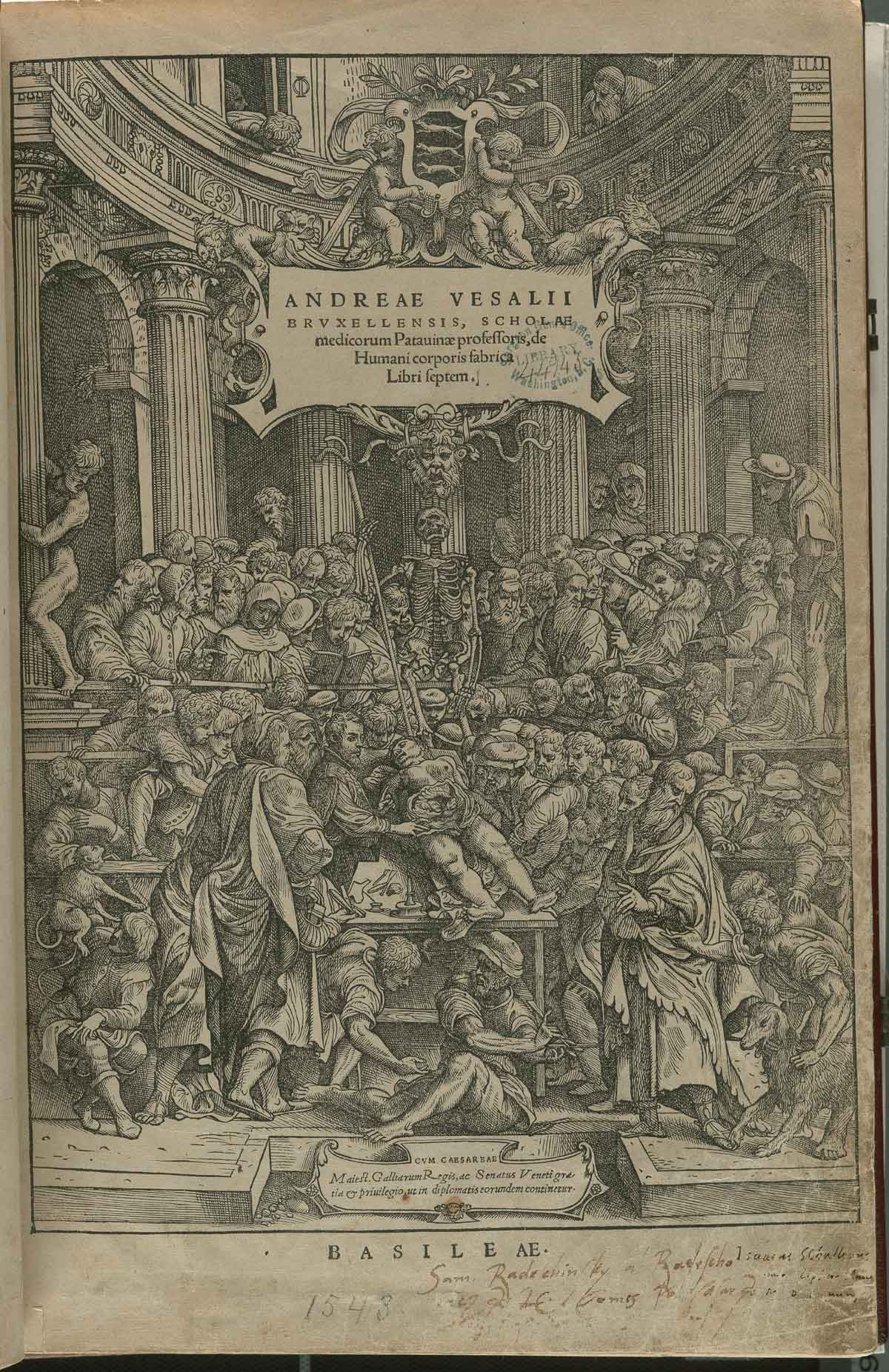
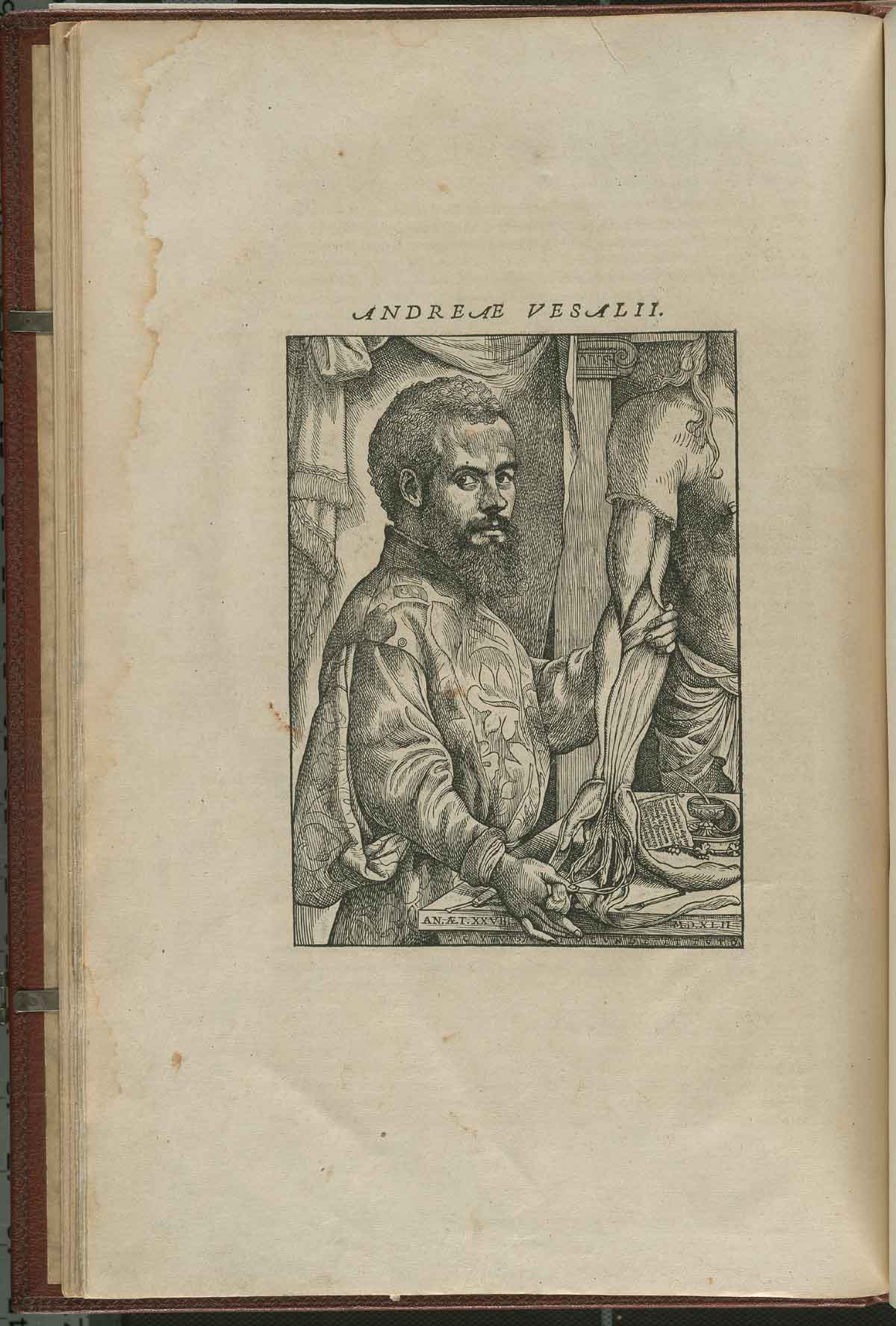
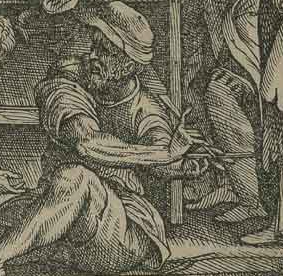
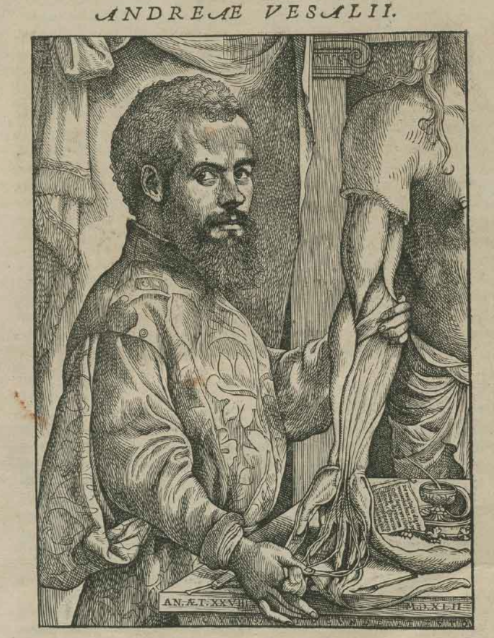
More tools appear on the title page of this book, where a man is stropping or sharpening his razor under the dissection table. The portrait of Vesalius also contains a partially hidden razor lying on the table as he holds body parts of a cadaver. In this case, the razor represents his practical knowledge and experience. His intellectual and theoretical prowess is symbolized by the inkwell and manuscript page on the table behind arm.
The Cambridge exhibition considers that these are ordinary tools, altered by Vesalius, a testament to his manual dexterity. He didn’t need “fancy” instruments, but could use commonly available ones. I wonder about this interpretation, though. Given how many tools even today are shared — and altered — by many crafts, I wonder how many specialist instruments were made only for surgeons. There is no mention of this kind of specialization in J.B. Himsworth’s 1953 The Story of Cutlery, Although it is an excellent resource, it is far from comprehensive.

 Peachey Conservation