Are Beating Hammers Important?

image002
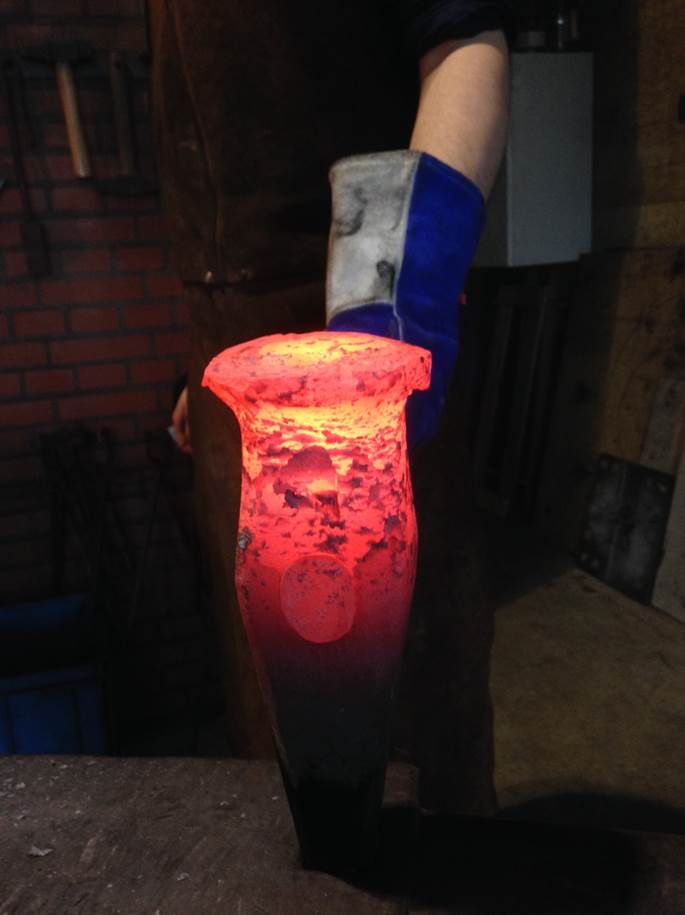
Forging a beating hammer. Photo: Smederij Berndt.

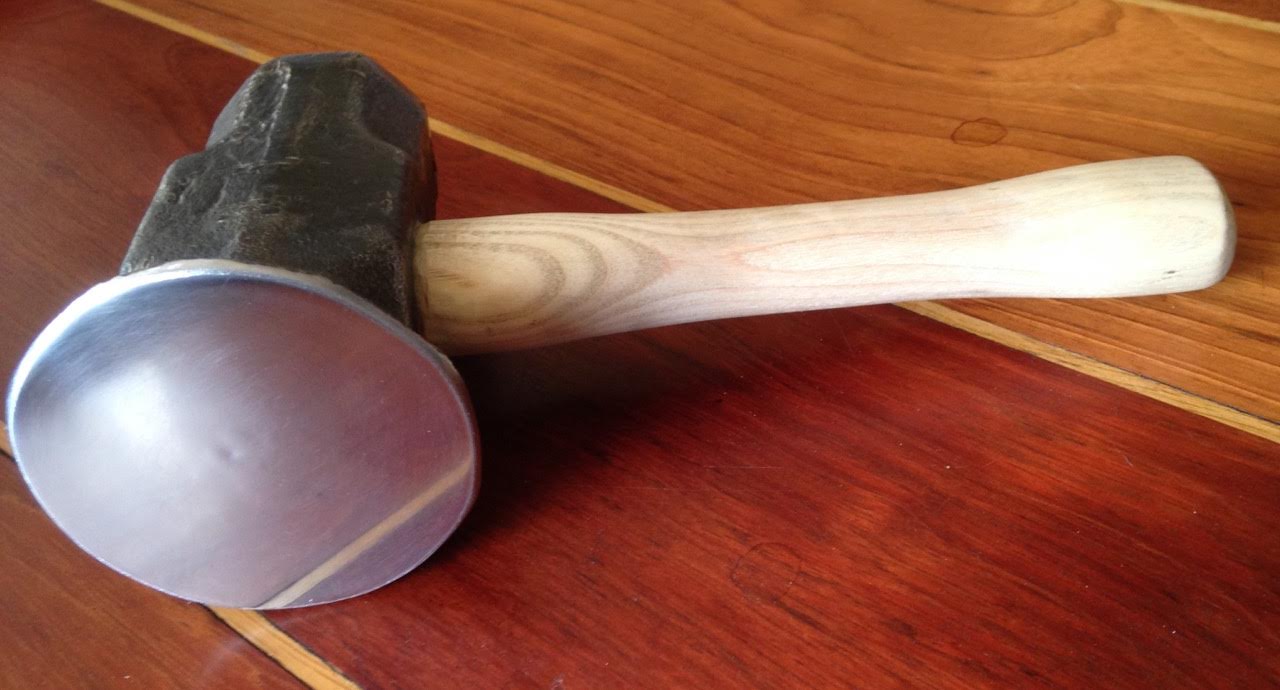
Pictured above is a custom made beating hammer we will be using for my upcoming 18th C. French binding class in the Netherlands.

Using a historic tool, or a replica of one, is an invaluable exercise for book conservators. It increases the ability to interpret subtleties of how a book was made. Beating hammers, for example, once ubiquitous, have been obsolete for almost 200 years. Using one in this workshop is usually a new experience for participants. In addition to the cathartic thrill of beating a book with a gargantuan 14 pound hammer, it helps us to understand the complexities of leaf morphology and textblock undulations.

Thanks to Smederij Berndt, the blacksmith, for taking the time to make this great looking tool. I can’t wait to give it a swing, that is, if I can lift it!


unnamed
The finished hammer. Photo: Smederij Berndt.


Improved Book Fixture

I’ve made two improvement to the in-situ book conservation fixture. First, the sliding arm is now machined out of a solid 1 x 1″ block of aluminum, so it much more rigid. The second is the front bar is now made from a 1″ rod of Delrin, much  more paper friendly than the previous aluminum one, and has a larger diameter. History and more images of an earlier version. Available for purchase here.

book fixture
Book Fixture


Shanna Leino’s Online Bookbinding Tool Store

Shanna Leino, who makes beautiful bookbinding tools, now has an ecommerce store, so you easily purchase her wares online. Buying directly from her puts a few more dollars in her pocket, rather than giving it to resellers. Come to think of it, I could use another pair of her leather polka dot paperweights.

Screen Shot 2016-03-08 at 7.34.39 AM
Leather polka dot paperweights. Available from shannaleino.com. Image courtesy Shanna Leino.