Kevin Driedger’s Portraits in Preservation

Kevin Driedger, on his Library Preservation 2 blog, is conducting a series of “Portraits in Preservation”.  Kevin’s rationale is, “Rather than focus on the preservation related stuff people have written, I want to focus on the preservation related people themselves. I’ve said before that I think conservators, and other preservation professionals, are the least studied and least written about part of the preservation world. So, I want to focus on the people who are actively involved in preservation activities, especially library related preservation activities. I want to interview these people about their life in preservation.”

So, perchance, if you interested in influential events in my professional development, how working in conservation has shaped my worldview or what I think is the most important thing for a conservation student to learn, look no further than Kevin’s blog entry here.

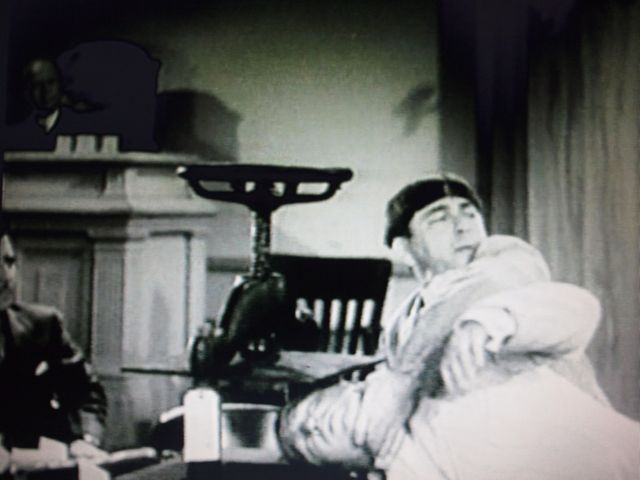
Alternative Uses for a Book Press

Buster Keaton & Fatty Arbuckle, The Bell Boy, 1918

.

The Three Stooges, Disorder in the Court, 1936

.

For information on the use, history and dating of copy presses, see Rhodes, Barbara and William Streeter, Before Photocopying: The Art & History of Mechanical Copying 1780-1938. New Castle, DE: Oak Knoll Press and Northhampton, Mass: Heraldry Bindery, 1999.

Accidental Verdigris

Verdigris forming around a machine screw secured with PVAc (Polyvinyl acetate)

I made this small brass hammer a couple of years ago.   One face is brass, and the other a removable piece of horse butt leather. When recently unscrewing the face, I was surprised to find verdigris forming.  But it makes sense: the acedic acid offgassing from the PVAc (Jade 403) must have reacted with the copper content in the brass. It you want to make verdigris, this might be a good thing: if you are working on a book with brass or bronze hardware, PVAc should be used with caution.

The brass face of this small hammer is useful for flattening joins when working with a grainy leather, like goat.  If the face is dinged up and dented, it tends to match the leather better than a smooth, clean face, which flattens the leather unnaturally. A second caution: sometimes a dented, irregularly shaped tool may function better than one that is cleaned up and made geometrically perfect. Try it out before you clean it up.