Upcoming Workshop. Cloth Case Bindings: Their History and Repair. October 24-28, 2016. Georgia Archives, Morrow, Georgia

CLOTH CASE BINDINGS: THEIR HISTORY AND REPAIR

October 24-28, 2016

Instructor: Jeff Peachey

Georgia Archives, Morrow, Georgia.

For almost 200 years, the cloth case binding has been the standard way publishers issue books. Throughout the nineteenth century, and even into the twentieth, it was often derided by bibliophiles as a temporary structure, not a ‘real’ book. However, it has proved to be a remarkably durable structure, now commonly used by conservators when rebinding books, by fine small press publications, and in library binding.  Quite likely, there are more cloth cased books than any other rigid board book structure on earth. 

This 5-day workshop will investigate the history of the cloth case binding, concentrating on the early years, 1825-1850. We will parse historic texts that describe this structure, while paying close attention to the introduction of four key pieces of machinery: the rolling press, the board shear, the guillotine, and the stamping press. Boards bindings will be considered as an industrial precursor to the cloth case, and we will make a structural model following a technical description from Cowie’s 1828 The Bookbinder’s Manual. By focusing on historic techniques, this workshop will also serve as introduction or refresher to the essential bookbinding hand-skills. Additionally, we will explore options for conserving and repairing cloth cased books by working on actual books provided by participants. Treatment options presented will include recasing, cloth rebacking, tissue repairs, hinge repairs, and boxing. Basic paper repairs, techniques of toning tissue and cloth, spine lining considerations, and the lifting of fragile material will be addressed. Discussions will include treatment decision making in relationship to specific institutional needs or the desires of private clients.

This workshop is open to all levels of experience: pre-program students, technicians, and mid-career conservators who desire a full time week at the bench. Ideally, a variety of participant experience levels will result in an invigorating exchange of information on binding techniques, institutional protocols, and treatment approaches.  Students should bring 5-10 non-valuable cloth cased books that can be sacrificed or repaired, and basic bookbinding tools.

Students should submit a resume and a brief one paragraph application statement, reviewing their background in bookbinding, book conservation, or other crafts, and stating what they hope to learn.

Workshop Fee: $650 which includes materials.

Application deadline: July 15, 2016.

The application, or questions about the facilities/ housing options/ transportation (Morrow is close to Atlanta) should be sent to Kim Norman: Kim <dot> Norman <at> usg <dot> edu

Other questions about the class should be sent to me.

Upcoming Tool Making Workshop in Provo, Utah. June 23-25, 2016.

I’m teaching a three day workshop this June at Brigham Young University.  Not only will there be time to make some knives, delrin folders and lifting tools, but we will also work on hacking/ tweaking/ restoring/ rehabilitating all types bookbinding tools. Come join us!

Bookbinding Tool Making and Tool Repair Intensive: Knives, Folders, Lifters and More.

Brigham Young University, Provo, Utah. June 23-25, 2016.

CLASS DESCRIPTION

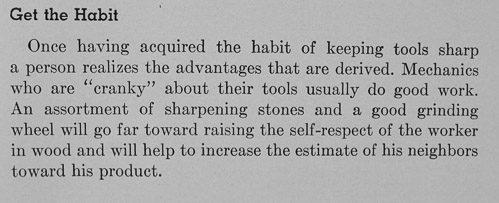
In this three day tool making intensive, we will make several knives by hand, using stock reduction, and make a variety of Delrin and Tonkin bamboo folding and lifting tools. Participants should also bring any tools they wish to discuss, sharpen, alter, clean or restore. The specific tools that bookbinders use will be examined in detail: paring knives, lifting knives, scissors, hole punches, scalpels, spokeshaves and board shear blades. The pros and cons of various sharpening systems will be discussed, including water stones, ceramic stones, diamond stones, oil stones, natural stones, silicone carbide powder, aluminum oxide powder, diamond paste, abrasive papers and stropping compounds. Basic principals of tool steel and edge geometry will be discussed. This class will focus on the techniques of efficient free-hand sharpening, which is applicable to any sharpening system. Participants will be provided the 3M Microfinishing film, a large paring or lifting knife blank, and all hard hacksaw blades to two small knives of their choosing, a variety of Delrin blanks and Tonkin Bamboo. The goal is to free participants from the plethora of misinformation and mystique that surrounds sharpening, learn to shape Delrin and bamboo, and learn to maintain and repair common bookbinding tools.

To register, go to: https://gbw.formstack.com/forms/toolmaking

Contact: katie<dot>smith<at>ldschurch<dot>org for information about the facilities

Contact me if you have questions about the workshop content

Waters Rising

Shelia Water’s Waters Rising, an epistolary record of the 1966 Florence flood, has just been published. I ordered a copy through The Legacy Press, and I am eagerly looking forward to reading it. What better way to commemorate the 50th anniversary of, arguably, the defining event in 20th century book conservation?

Many aspects of modern book conservation were formed during this time: phased conservation as a way to deal with masses of books, collegial exchange of information rather than the hoarding of craft secrets, a reconsideration of the virtues of limp vellum binding, an awareness of the problems of in-boards leather binding, and the hegemonic influence of UK based book conservation philosophy.

The book also includes a digitally remastered DVD of Roger Hill’s film, Restoration of Books, Florence, 1968, which should provide a nice macro overview of this event to accompany the micro detail found in the letters.

 
waters


The Blurb:

In Waters Rising, renowned calligrapher Sheila Waters recounts the story of the role that her husband Peter Waters (1930–2003) played as the person in charge of organizing the monumental efforts to save severely damaged books in the Biblioteca Nazionale Centrale di Firenze (National Library, Florence) after the devastating flood in 1966 fifty years ago. To give the most complete picture of the events that occurred initially in the recovery mission, Sheila presents nearly 50 of Peter’s letters written between the end of November 1966 and April 1967, in which he described day-to-day happenings, and her letters back, which kept him informed about things at home and boosted his confidence when problems seemed to be overwhelming.

In addition to these letters and Sheila’s narrative diary and timeline of events, Randy Silverman, Head of Preservation, University of Utah, has written a thought-provoking introduction that puts those conservation efforts into the context of today’s practices. Also, Valerii P. Leonov has written an appreciation of Peter’s assistance in the aftermath of a fire in 1988 that ravaged the Library of the Russian Academy of Sciences. The accompanying DVD features a digital remastering of Roger Hill’s film Restoration of Books, Florence, 1968.

Waters Rising is dedicated to the people whose names appear herein and to those unnamed Mud Angels who salvaged the books that the flood waters left behind.

496 pages • 283 color/black & white photographs (many of which Peter took) • hardcover • DVD • 2016 • ISBN: 978–1–940965000 • $45.00

Order your copy here