Peter Verheyen is doing some fascinating research, beginning to delve into the history of bookbinding as rehabilitation. His post contains some shocking, truly bizarre, graphic images of German WWI era bookbinders equipped with prosthetic bookbinding tools. Imagine bone folders, polishing irons, hammers all screwed—”plug and play” as Peter puts it—into holsters strapped over their stumps. Yet, judging from the images of the bindings, their skill level would put many modern fine binders to shame.
His investigation provides a counter narrative to the all too common notion that bookbinders are just “good with their hands”. I still encounter this, most often in academic contexts, from someone who is “good with their head”. Sometimes it is said out of ignorance, but sometimes it is an attempt to belittle the multiple intelligences, hard work, experience and knowledge it takes to work with your hands. Peters research illustrates you can be good with your hands, even if you have no hands. But you do need a head.
The ability to dexterously manipulate one’s hands creates doubt in the minds of others about brain power, for some reason. Even in 2015, this is still a problem in the field of book conservation, where many of us work all day with our hands. The ranking of the hand below the head is linked closely to ideas of class, and is possibly more prevalent in England than here in America. I’d be curious to hear about other countries. This may also be part of the reason for the relatively low salaries in the field of conservation, when compared to other professions with similar training and professional development expectations.
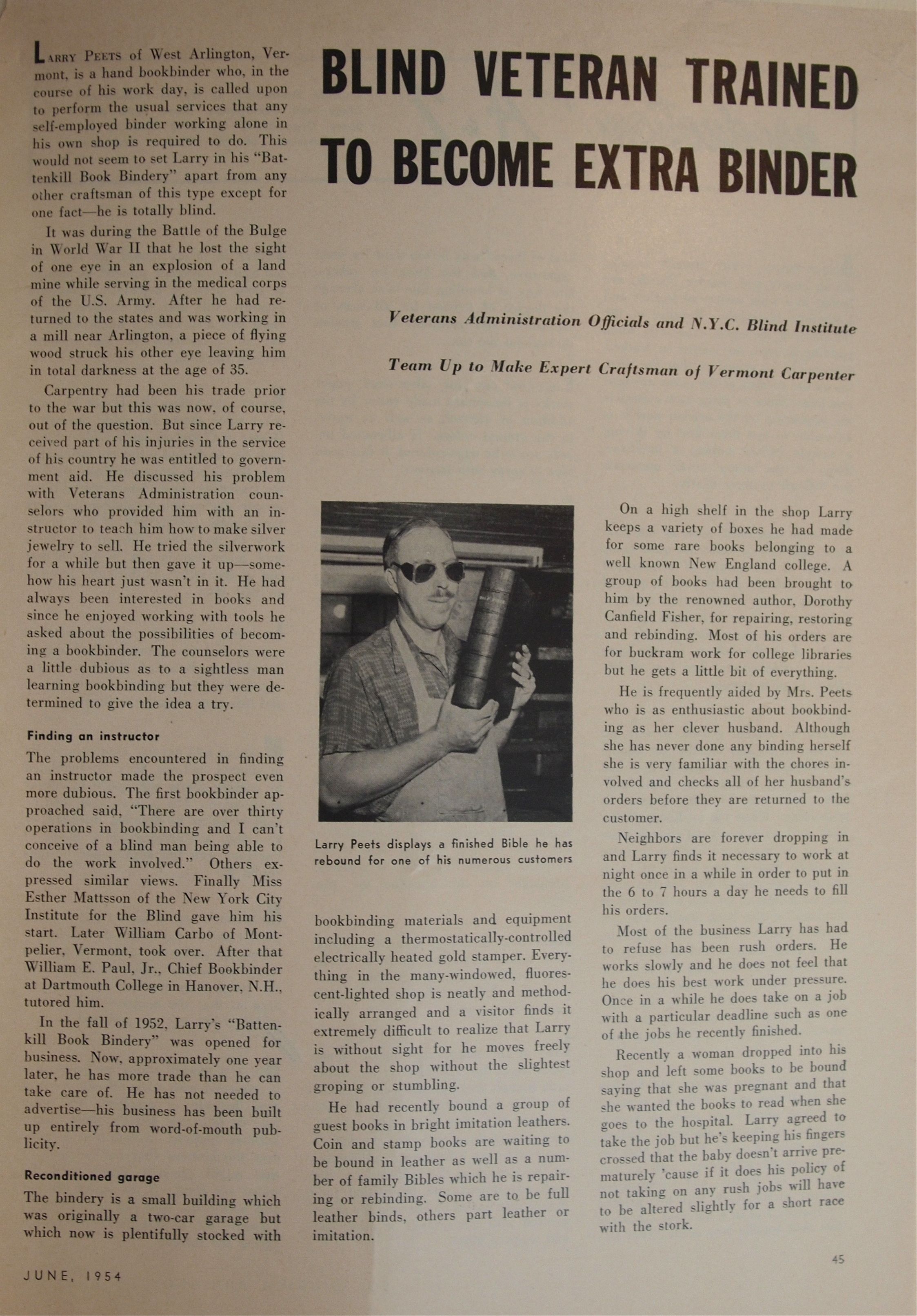
I was also reminded me of an article concerning a blind bookbinder from the 1950’s, which I reproduced below. In some senses this blind bookbinder is working with his hands twice as hard as the rest of us: simultaneously binding the book while judging the tactile feedback on what he is doing, rather than having the additional advantage of visual feedback. Obviously, his head is still involved.
I tried this once, and recased a book while blindfolded. WARNING: it isn’t pretty. Images here.



 Peachey Conservation