The Persistence of Imposition

The signatures in this mass market paperback (Weapons of Math Destruction, Cathy O’Neil, a great read, BTW) continue to group together, even though the book is perfect bound, and the spinefolds are cut.

Paper memory. Not enough pressing or pressure during or after folding. We could reconstruct the imposition based on this visual evidence, even though there are no conjugate leaves or other signature markings.

Whatever glue was used on the spine (PUR?) grips the newsprint-like leaves solidly, with no throw-up and lots of drape, making the book easy to hold and read. I’m embarrassed to admit this, but the tactile qualities are very satisfying in this book, at least in the short term, better than many high-end hand bound books.

New Tool! Rectangular Baren


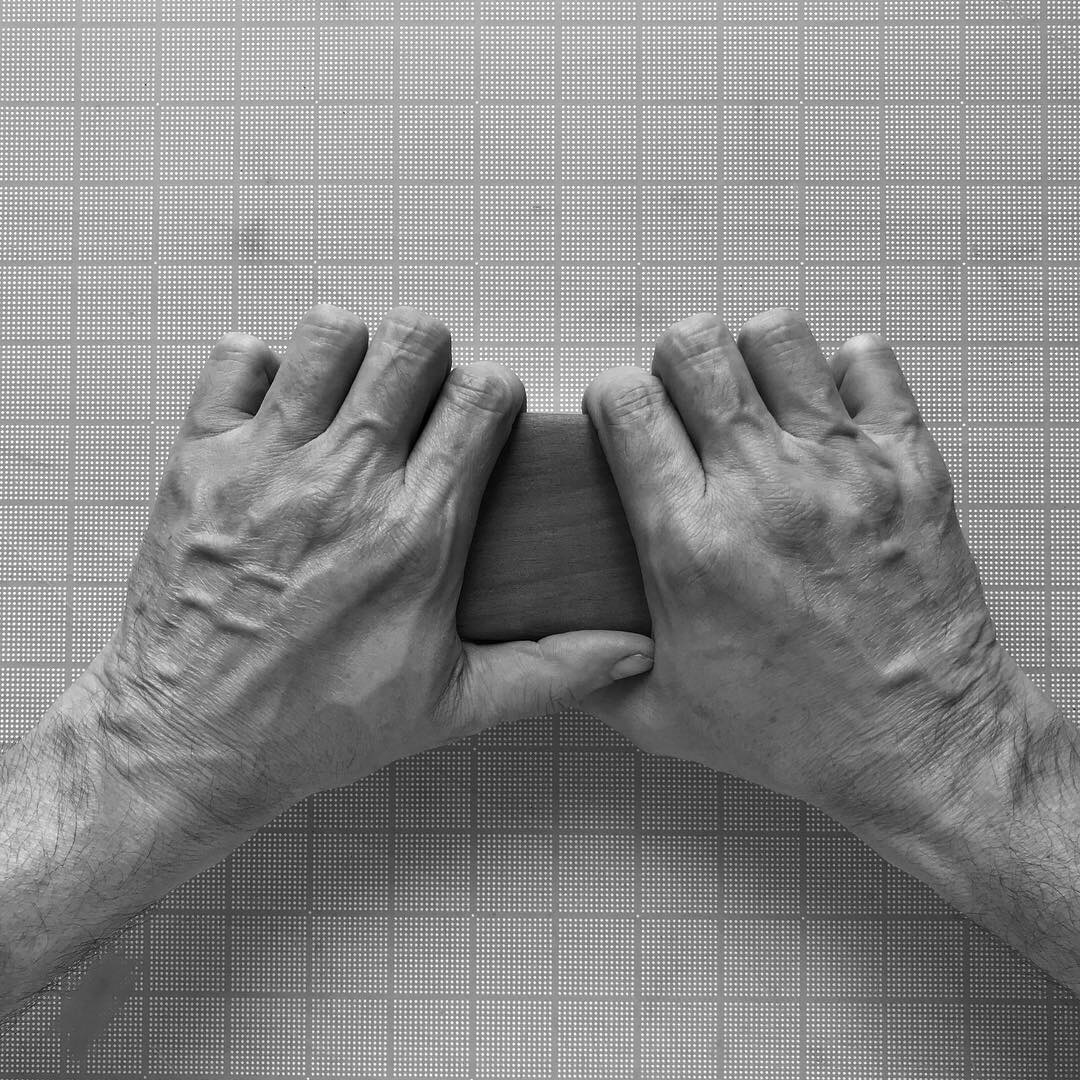
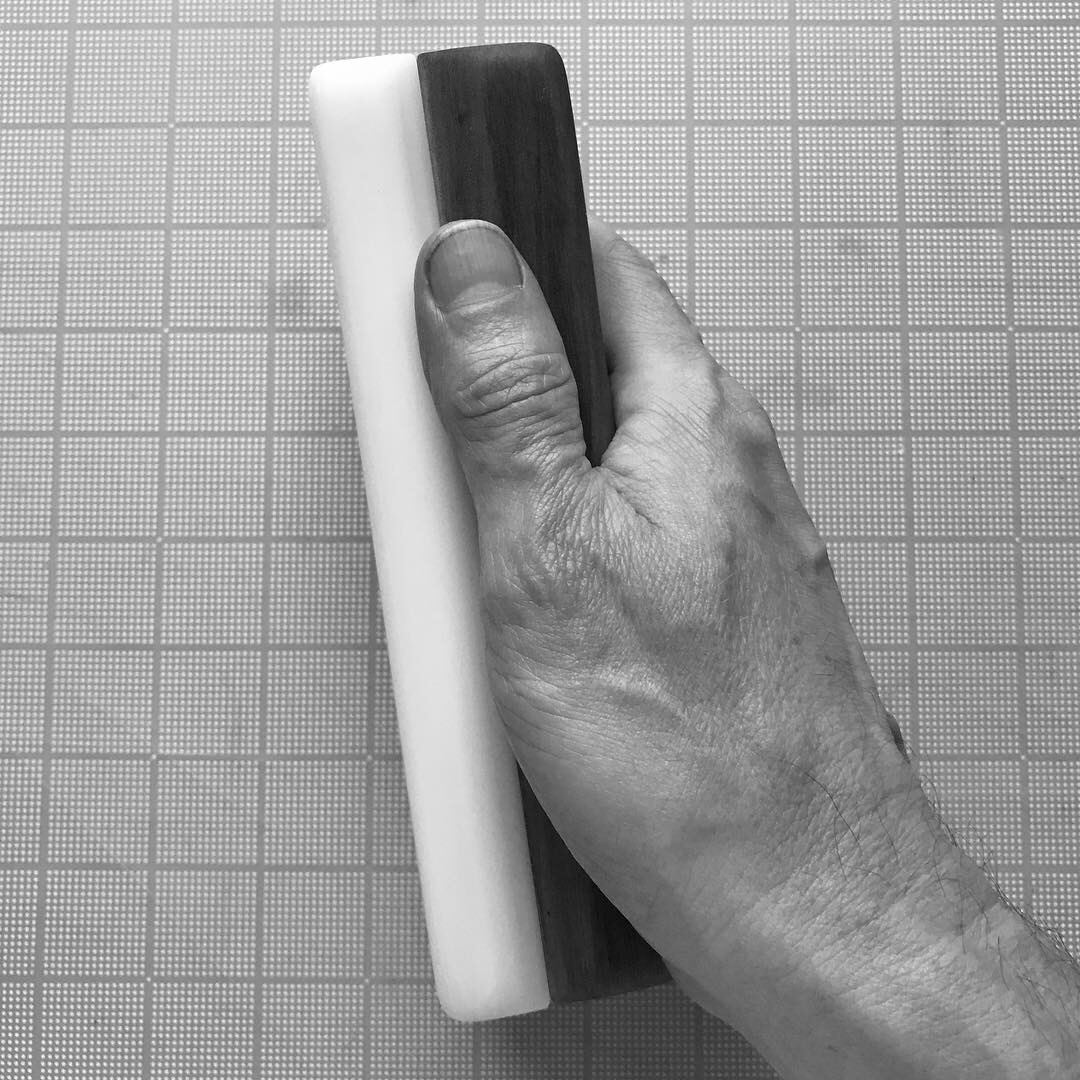
Around a year ago, I had a couple of really large boxes to make — around 22 x 30 inches — and quickly grew tired of holding my folder when smoothing the cloth. I tried using a printmakers baren, but the round shape felt awkward for bookbinding. Then a few weeks ago, while poking around an antique mall, I picked up an antique chalkboard eraser, found the ergonomics of it appealing, and realized with a Delrin sole and wood handle, a similar tool could be great for smoothing and adhering large pieces of paper and cloth to bookboard. The rectangular baren was born.

The size is comfortable to hold with one hand or two, and it is thick enough to hold without running your fingers into the work. Perfect for big projects, edition binding, paper conservation, or for anyone who finds gripping small folders difficult. The Delrin sole is non-marking,  .75” thick, has rounded edges, and there is a recessed finger gripping area. The tool has a pleasing heft. This first batch has apple wood handles, which are silky smooth. Approximately 6.5 x 2.5 x 1.75”.

Purchase the Rectangular Baren at Peachey Tools


What Happens to the Manufacturers of Bookbinding Machinery?

Desk blotter advertising. Late 1940’s?

In the 21st century, bookbinders are understandably nervous concerning the continued availability of essential machinery and replacement parts. Many of the board shears and guillotines we use on a daily basis are more than a hundred years old. This equipment not only needs to be maintained, but periodically their blades need to be resharpened or replaced. The last New York City grinding service, Ace, moved to New Jersey a number of years ago, priced out of Soho.

I support Ace by using their services. I also collect and preserve bits of history associated with these types of industries, such as this desk blotter ephemera I scored over the past weekend. This is the second bookbinding related desk blotter I’ve found in the past month, a little unusual,  though synchronous finds are not uncommon in dedicated flea market and antique mall exploration.

The Wapakoneta Co. was sold in 2009, but is still making knives and industrial cutting products. But as the numbers of newspapers, books, and other paper based products continues to shrink, what will happen to these vital ancillary trades — like board shear blade making and resharpening — that hand binders and conservation labs rely on?