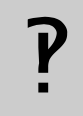
Quite likely the most useful, yet infrequently available typographical symbol from the 1960’s. The interrobang. What‽ You can find it in Special Characters of Helvetica, Courier, Palatino, and a few others.

Book Conservation
Quite likely the most useful, yet infrequently available typographical symbol from the 1960’s. The interrobang. What‽ You can find it in Special Characters of Helvetica, Courier, Palatino, and a few others.

Samuel Daniel, The Whole Works of Samuel Daniel, London, 1623. Collection David Kasten.
Seeing someone’s name, or a list of names, in a book is not unusual. It is still practiced to indicate ownership, prevent theft, and possibly to add value depending on the name. Names when accompanied by dates are often useful for establishing family history and can aid in dating bindings and repairs.
Earlier books sometimes posit the locus of identity to the book itself; “I belong to Peachey” for example. Sometimes a name is followed by the phrase, “this is my book”. This has always seemed a bit strange to me—why would someone sign a book that wasn’t theirs? Doesn’t the name alone signify ownership?
In this case, perhaps it doesn’t. Did Thomas Sedgewick sign a book that wasn’t his? The writing appears to be from the same hand; the ink color and degree of corrosion are quite similar, and the handwriting looks similar to me, especially the heavy “k”‘s at the end. Another possibility is that after reading the book he no longer wanted to be associated with it. Or maybe someone else added the second line, to deny Thomas Sedgewick ownership, or simply as a joke?
 An Asian style box was considered important enough to be illustrated in René Martin Dudin’s L’Art du Relieur-Doreur de Livres, Paris, Saillant & Nyon, 1772. My collection.
I’m preparing a presentation to accompany a workshop about drop spine boxes that contain an integral cradle. To date, I am scheduled to teach this workshop at Columbia College (Chicago, May 23-25) and at the Focus on Bookarts Conference (Forest Grove, OR, June 25-27).
I’d like to include a variety of images of historic, artistic and technically innovative book boxes. I am interested in early boxes from the nineteenth century, like the solander or the moulded fire-resisting pull-off case. I would love to have a selection of artistic boxes that either through design or action enhance or comment on the book enclosed within. Images of technically inventive boxes are also welcome, such as those that protect unusually sized or shaped books, house remains of binding parts removed, or have an integral cradle. I also intend to write up some kind of summary in a blog post.
If anyone has images they willing to share, please send up to 3 digital images to me by March 17, 2013. Include: your name, how you want to be identified (links to your website, etc), the name of the work (or book housed within), dimensions, date. I’m not sure if I will be able to use all the images, though if I only get one submission….
 Peachey Conservation