M2 Hybrid Knife Video

The M2 Paring Knife used for edge and overall paring.

For spines and headcaps in full leather binding and when rebacking, several tools are usually used. Some binders like to use a straight English knife and modified spokeshave or razor blade paring machine for this. Others like to use a straight English style and a round French or Swiss knife to accomplish this. But the M2 hybrid can do the job of all of these, and many like the simplicity and economy of using one knife.
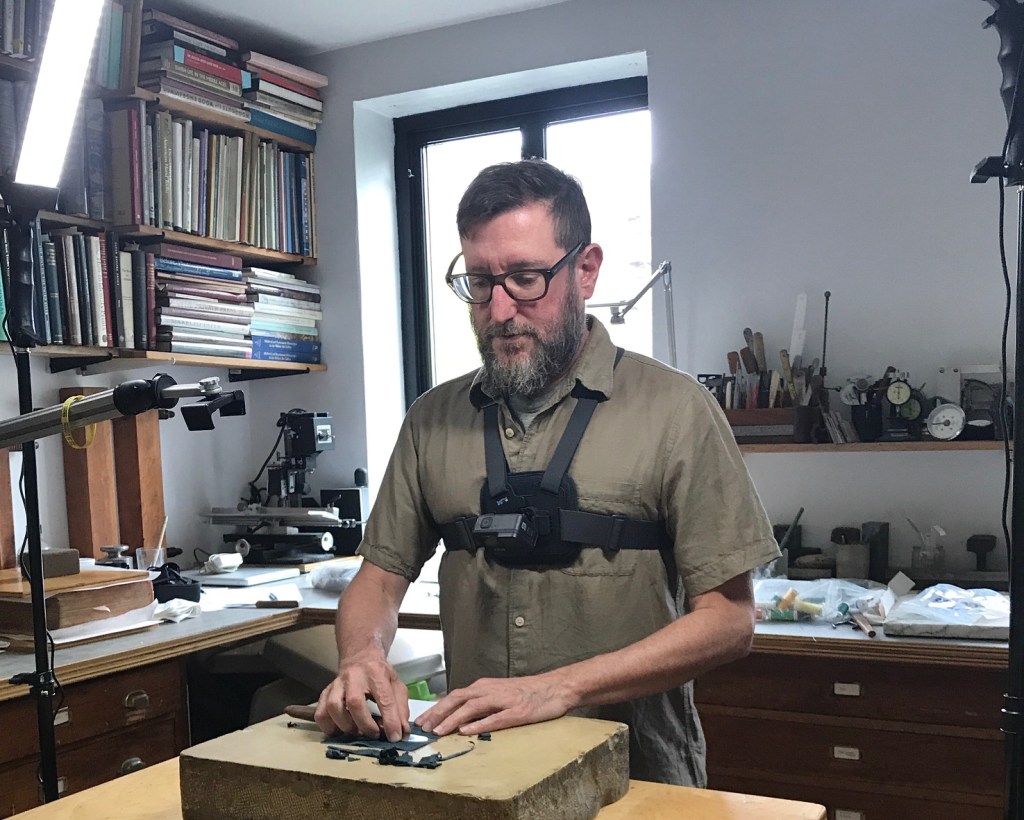
Body cam with heart center point of view!

I’ve been honing my video skills in preparation for more online workshops. Lots of new gear and tech: computer, lights, Vimeo plus, Zoom pro, wireless earbuds, GoPro, and iMovie. Oy!

I’m working on converting my repertoire of existing workshops into online versions. If there is something that particularly interests you, mention it in a comment or contact me directly!

Many thanks to Jeff Altepeter, Head of Bookbinding at North Bennett Street School, Karen Hanmer, Bookbinder and Book Artist, Henry Hebert, Conservator for Duke University Special Collections, and Andrew Huot, Owner of Big River Bindery, for sharing practical pedagogical advice about teaching online!

Using an M2 Hybrid Knife to pare into the skin.

Copy Press Mounted on a Safe

Last week, I blogged about a scene from a movie depicting a copy press on top of a safe, and wondered if it was a way they were actually used in offices.  Darryn Schneider of DAS Bookbinding in Australia sent me this wonderful image he found from the State Library of Victoria. Bingo! Well, at least there is one documented example….

Copy press on top of a safe. Interior of  a railway office, ca. 1901-1940.  State Library of Victoria. http://handle.slv.vic.gov.au/10381/38847

A Copy Press in Use? Or a Prop?

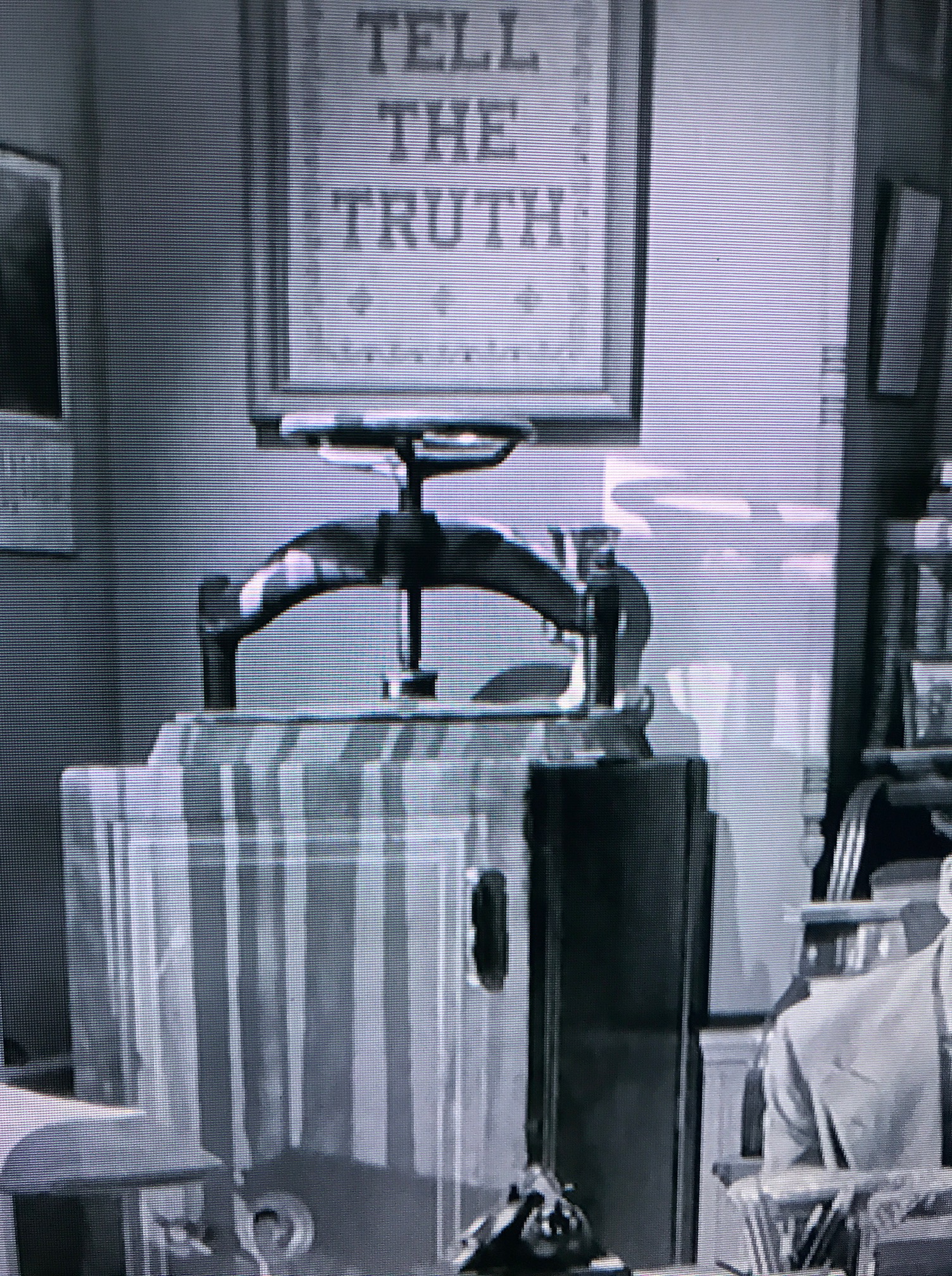
A still from Billy Wilder’s 1951 “Ace in the Hole”

Many — most? — bookbinders use a letterpress copy press for quick and light pressing needs, often called a “nip”. These presses were originally used in offices, for duplicating letters and other memoranda. Intriguingly, there are alternative uses for them.

They often have little daylight, which is the distance between the platens when fully open, and the thread pitch allows them to speedily move up and down. Because of this, they don’t generate a ton of pressure. Rhodes and Streeter have written a wonderfully comprehensive book about them.(1)

But apart from some advertising (and possibly some photos?), we don’t really know a lot about how these were used and installed in an office. They are often quite ornate, since they were presumably on display.

This is why the still from Wilder’s movie (which is a great and relevant movie to our current time, btw) interests me.  It makes a lot of sense to mount it on top of a safe, since they are both extremely heavy and there is a lot of torque when twisting the wheel. And the height of the tightening wheel looks to be a very comfortable chest height.  But is it a reflection of actual placement or just a prop?


1. Barbara Rhodes and William Wells Streeter. Before Photocopying: The Art and History of Mechanical Copying 1780 – 1938 (New Castle, DE: Oak Knoll Press and Northampton, Massachusetts: Heraldry Bindery, 1999)

Ron Lieberman sent an image of a gorgeous press stand he has.


One of the book presses at THE FAMILY ALBUM