
Timothy C. Ely
Artist in private practice – makes books, prints, drawings and the occasional guitar. Instagram
I had enough warning that I could watch over the course of a few days exactly what was used often. These are tools I grab when I am traveling to teach and they find cross over into other areas. Jeff knows this was a challenge as I have many tools inherited, made and gathered over the years. Next challenge should be the most important twenty five.
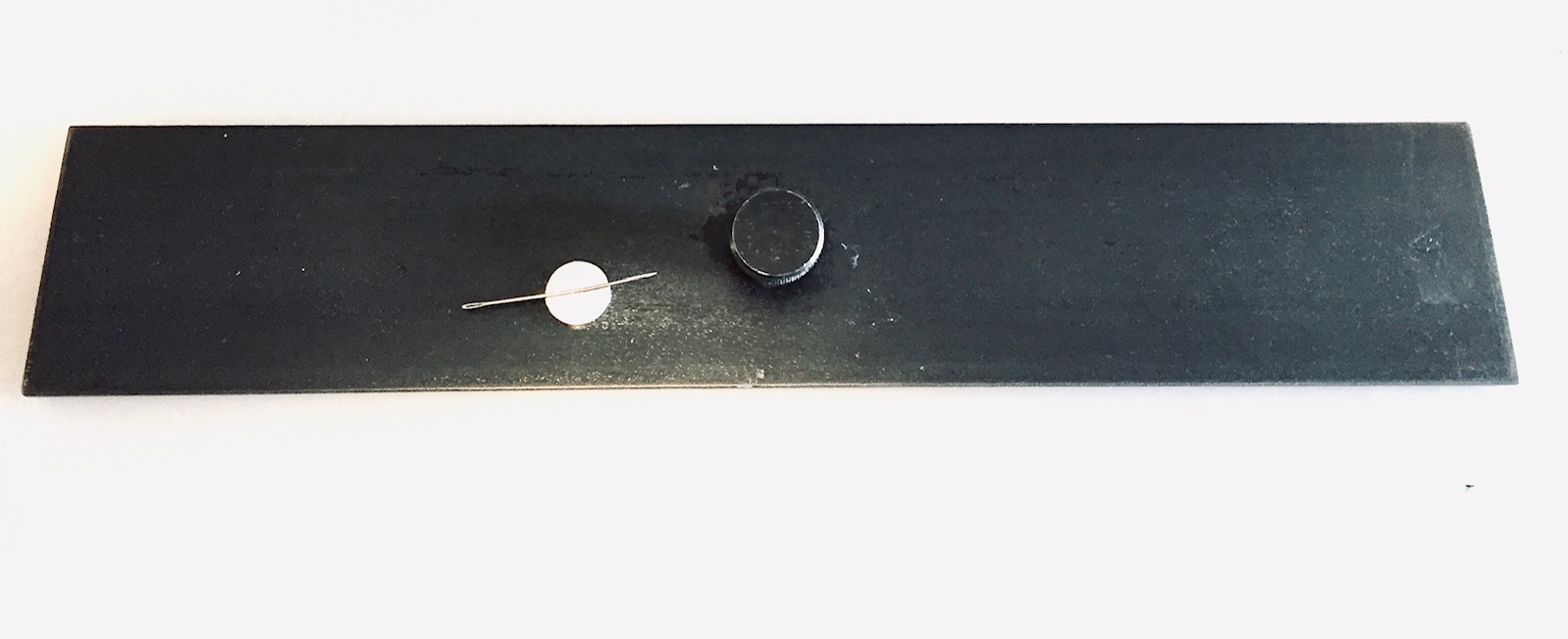
First off, a custom weight made by Randall Hankins of Salt Lake City. I have many weights of Randy’s as well as heavy things found over the years like massive things to hold x-ray machines in place. After making do with essentially the wrong things for decades, Randy and I designed these sixteen inch long weights so that some of the endpapers varieties I make could be selectively weighted or just kept from moving. I have a pair and I could not now work without them. Being steel, magnets can be applied — here is one catching a needle.
I can put you in touch, [contact Tim here] All are custom made.

Cobblers knife from Buck and Ryan [sadly gone] London. Purchased in 1982. Cutting paper and used as a marking knife.
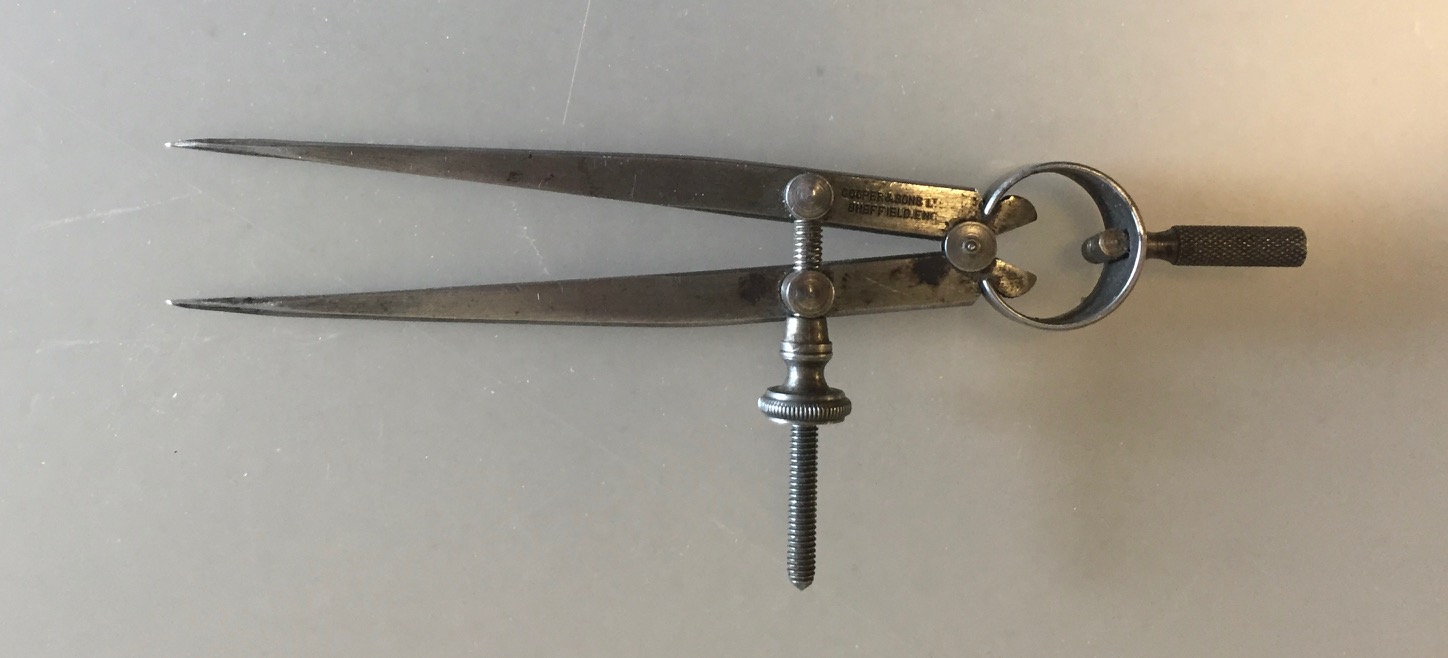
Margaret Smith [d.1982] her dividers, about 6 inches long. She was born while Victoria was still alive and bound books with a Victorian sensibility. Very gracious and knew everyone. Studies a bit with S. Cockerel and was full of stories. She made her stone burnisher from flint found at Brighton. I use this tool more than any. No idea how many dividers of all configurations and lengths that I have found.

Triangle for various squaring and metering jobs. This one allows the worker to dial up the amount of focus required for certain jobs.

My first bone folder. It is sharpened on the lower edge, about 3 inches so that I can fold and then cut folds without needing two tools. I have many bone folders, they are sort of talismans to the discipline and are nice. I have a giant folder made from free range mastodon by Jim Croft. This one is balanced for throwing.

 Peachey Conservation