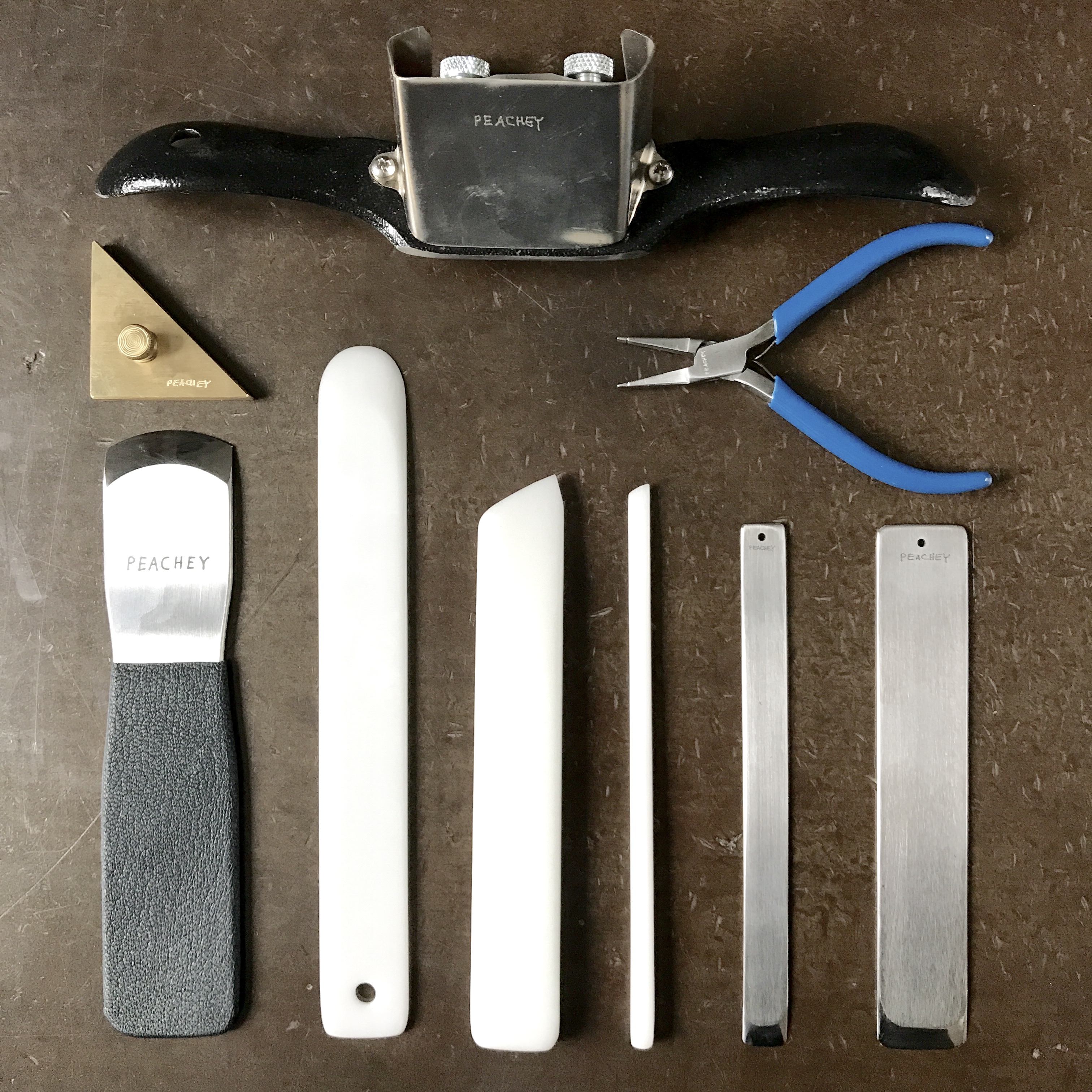
Some items popular with book and paper conservators include: the modified 151 spokeshave for paring leather (top), 2-inch triangle and bookbinder’s pliers (middle), and (l – r) A2 leather Swiss style knife, 8 inch Delrin lifter, Delrin folder, Delrin hera, and the set of lifting knives.
Contact me to arrange a meeting, or look for me at a low stakes Blackjack table.
The Bookbinder’s Pliers. It securely holds commonly used bookbinding needles.
When sewing books or endbands, it is sometimes helpful to grip the needle with a pliers in order to position it or increase leverage. Standard pliers do not grip a needle securely, and the jaws are the wrong shape for these types of manipulations. Precise needle control is also essential in book conservation, for in-situ resewing of loose signatures, endband reinforcement, and various types of board reattachment. If you have ever had to pierce a parchment spine lining, you will likely understand the purpose of these pliers immediately. These pliers are also great for removing staples.
The Bookbinder’s Pliers. Fits needle sizes from 24 gauge (.020″) to 12 gauge (.104″) The massive 12 gauge needle on the right is an antique John James, labeled bookbinders needle. Possibly it was intended for sawn-in cords?
The Bookbinder’s Pliers have a small groove cut near the tip, which securely grip needle sizes from 24 to 12 gauge. (.020″ – .104″) Note that 18 and 15 gauge needles are most common in bookbinding, though conservators may need smaller sizes for specialized tasks.
The Bookbinder’s Pliers holding a 24 gauge needle. Tip: always sew with needles that have eyes the same size as the shaft to prevent an excessively large hole in the paper.
The jaws are ground to .375″, which is wide enough to leverage and guide the needle through stubborn materials, but narrow enough to get close to the work. All edges of the pliers are rounded to prevent potential damage to the book and the user.
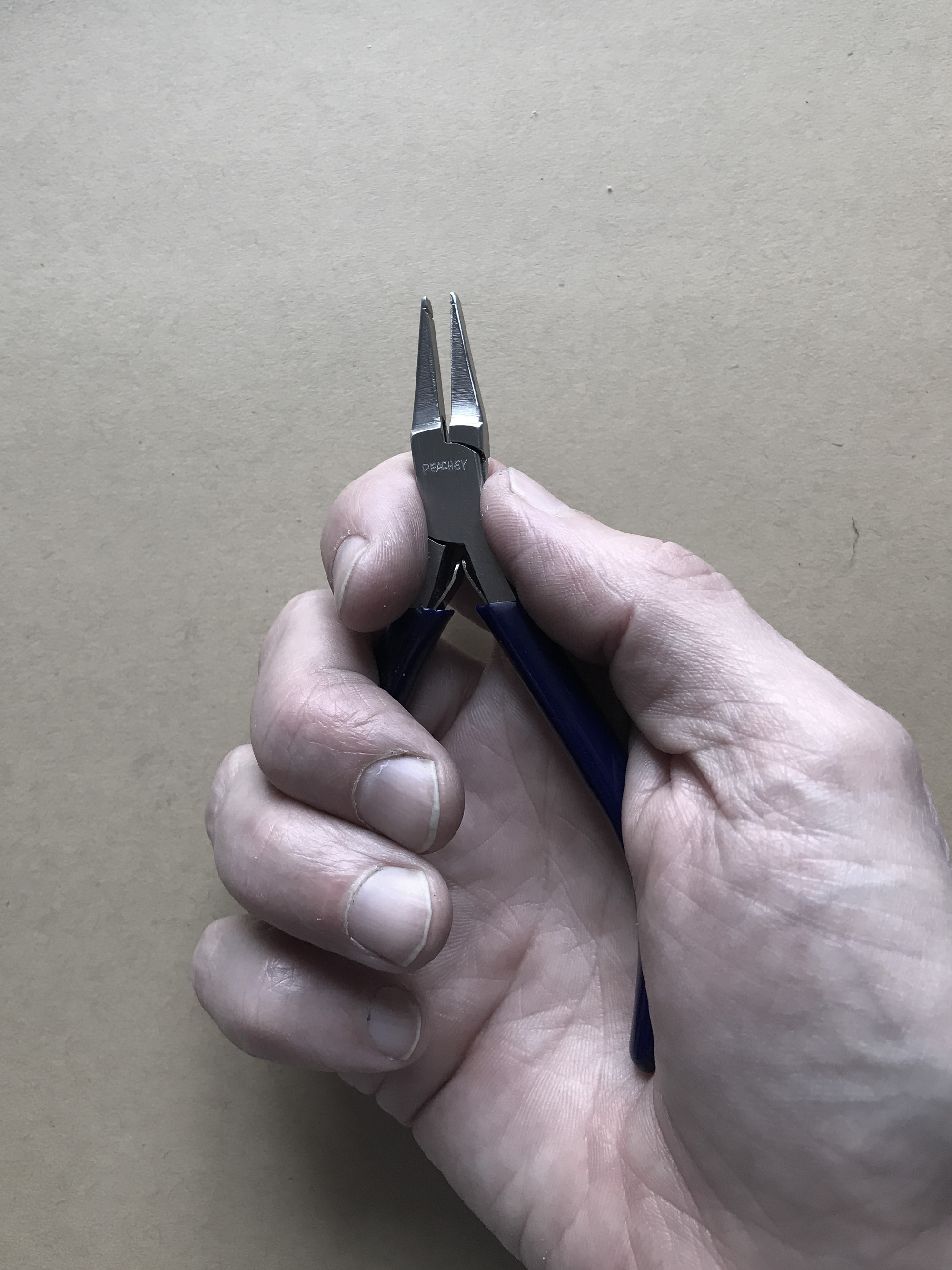
The Bookbinder’s Pliers fitting comfortably in the hand.
Made of stainless steel, this precision tool fits comfortably in the hand. The pliers have a box joint to apply even pressure. About 4.5″ long. You will wonder how you ever worked without these.
Around a year ago, I had a couple of really large boxes to make — around 22 x 30 inches — and quickly grew tired of holding my folder when smoothing the cloth. I tried using a printmakers baren, but the round shape felt awkward for bookbinding. Then a few weeks ago, while poking around an antique mall, I picked up an antique chalkboard eraser, found the ergonomics of it appealing, and realized with a Delrin sole and wood handle, a similar tool could be great for smoothing and adhering large pieces of paper and cloth to bookboard. The rectangular baren was born.
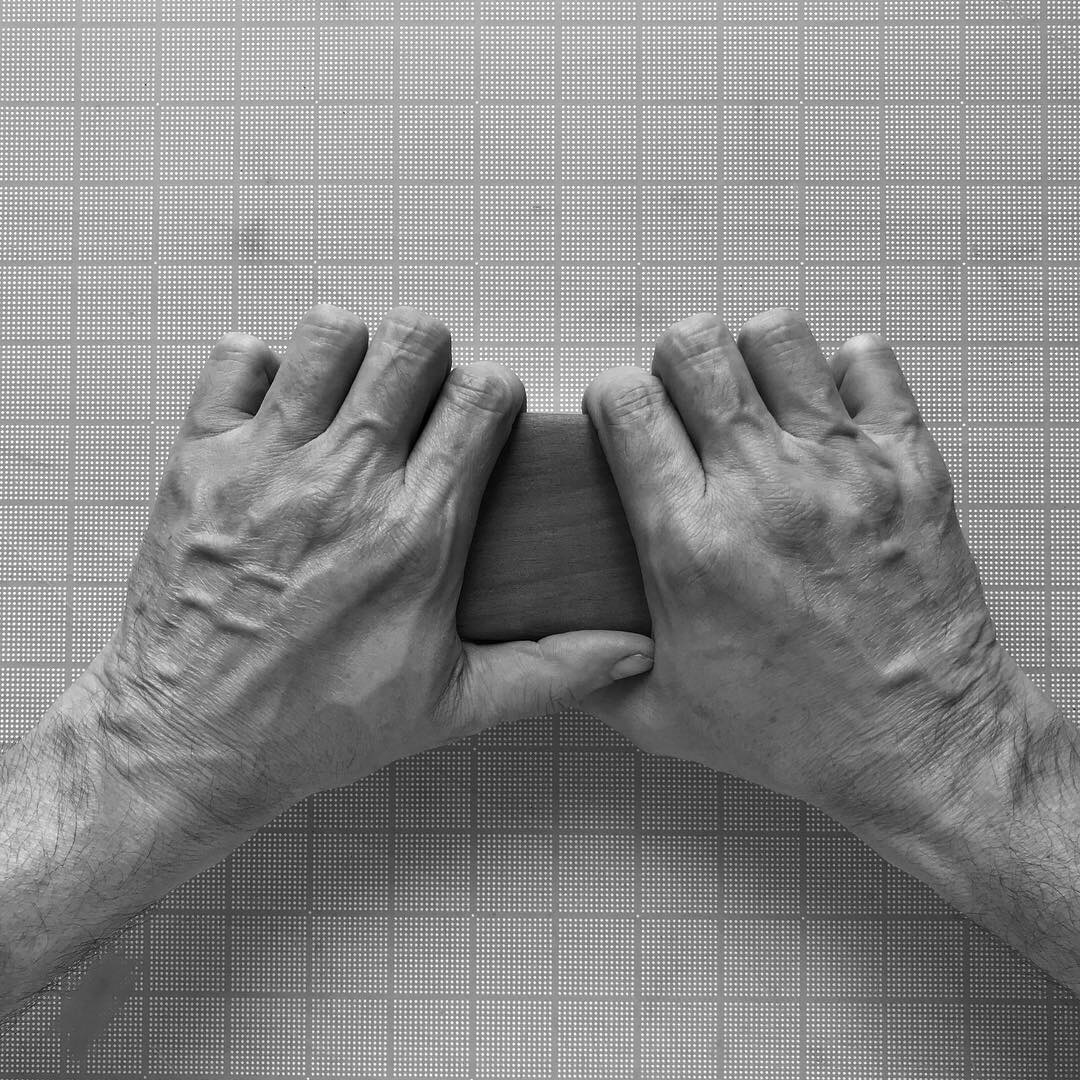
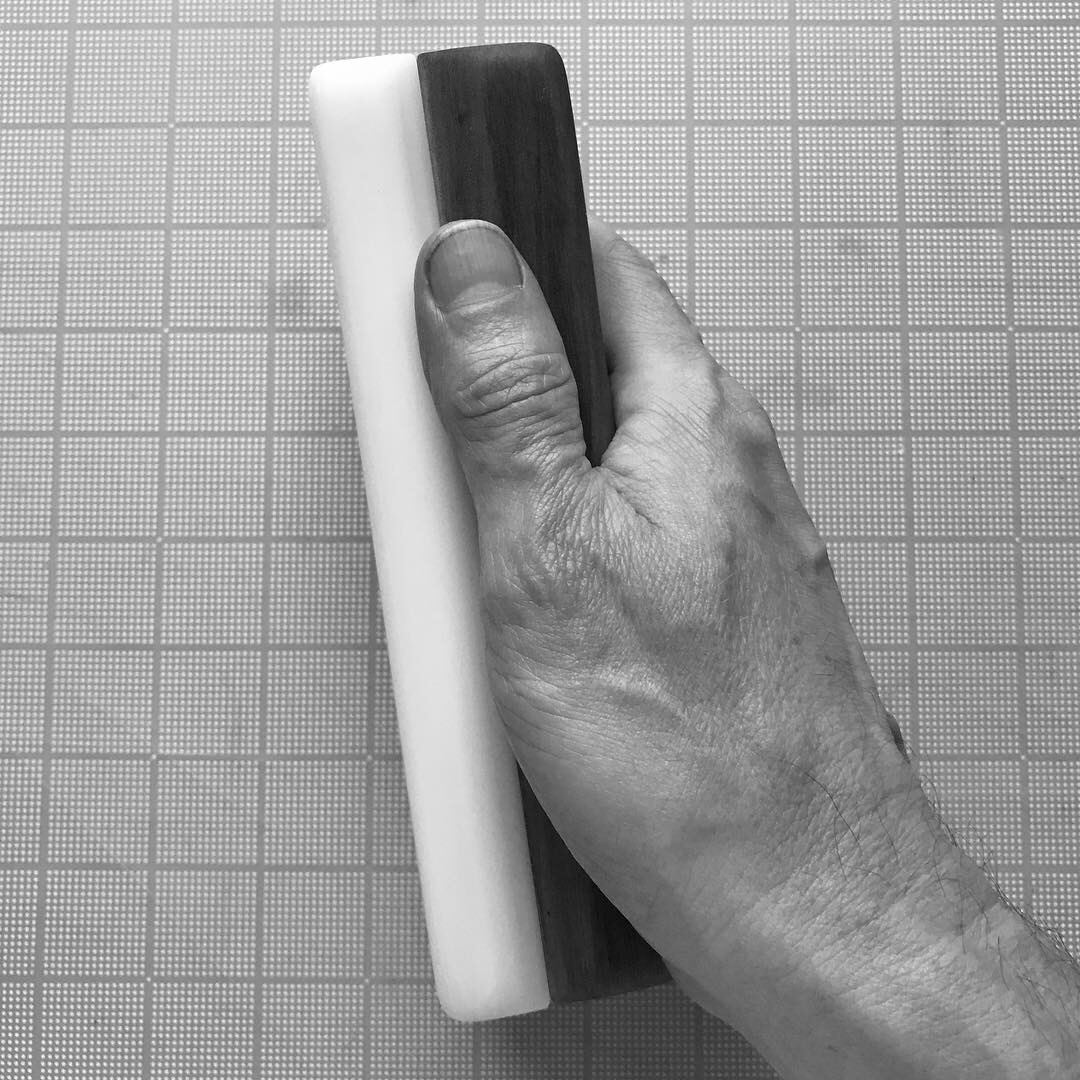
The size is comfortable to hold with one hand or two, and it is thick enough to hold without running your fingers into the work. Perfect for big projects, edition binding, paper conservation, or for anyone who finds gripping small folders difficult. The Delrin sole is non-marking, .75” thick, has rounded edges, and there is a recessed finger gripping area. The tool has a pleasing heft. This first batch has apple wood handles, which are silky smooth. Approximately 6.5 x 2.5 x 1.75”.





 Peachey Conservation