Just Looking

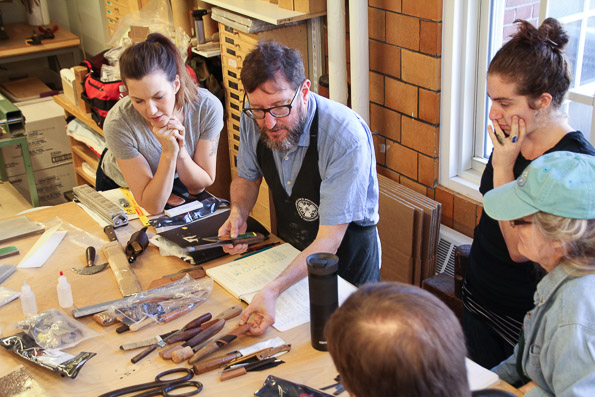
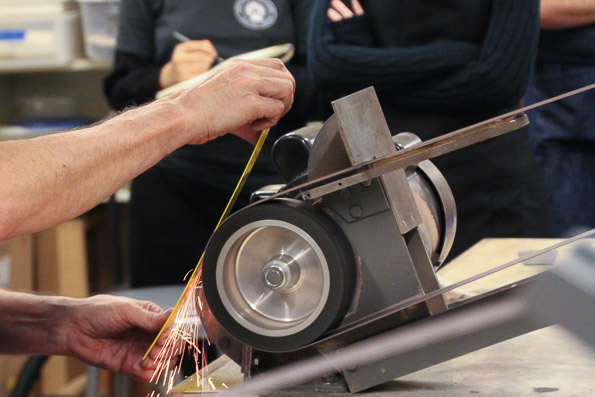
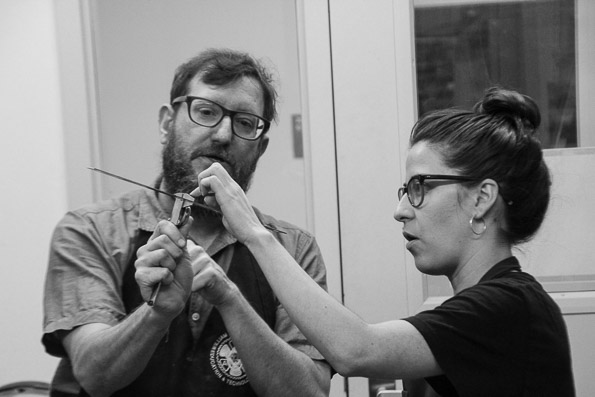
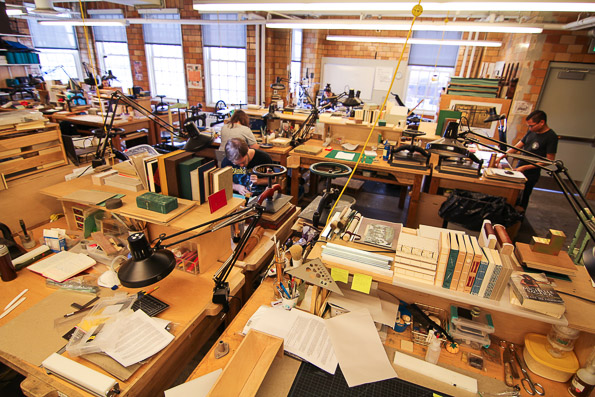
Once a year I teach a knife sharpening and tool making workshop in the bookbinding department at North Bennett Street School (NBSS) in Boston.  NBSS has the finest bench oriented two year bookbinding program in the world. If you have the passion, drive, commitment, dedication — and are crazy enough to pursue this antiquated profession in the 21st century — this is the place to do it. You will find many kindred spirits in your cohort.

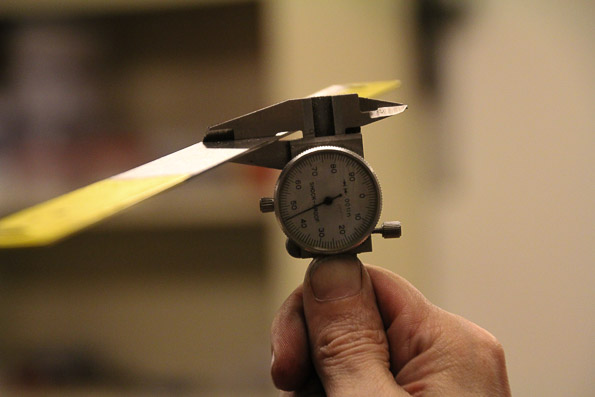
I cover all aspects of sharpening related to bookbinding: blade angles, bevel angles, types of steel, types knives, types of grits, grit progression, hand grinding using power tools, free hand sharpening, and stropping. These techniques can be adapted to virtually any type of sharpening system: oil stones, diamond stones, waterstones, lapping powders and finishing films. Free hand sharpening throws many students into the deep end, for a while, but ultimately equips them to sharpen most types of edge tools. Most bookbinding knives have complex shapes and handles  which preclude the use of jigs or honing guides.

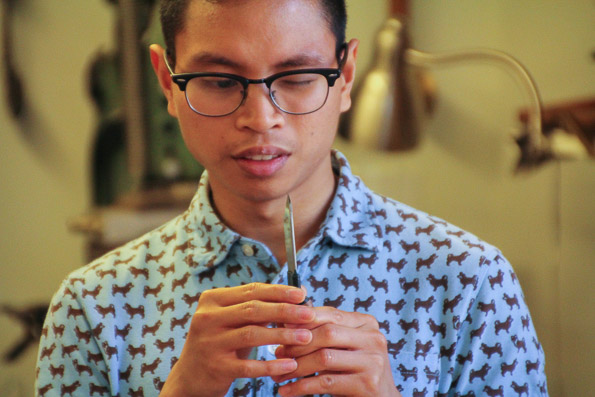
The foundation of this class is critical looking. Critical looking is not only closely watching the instructor demonstrate a technique, but it is looking at what you have done. Often when sighting or aligning, one eye is better than two.

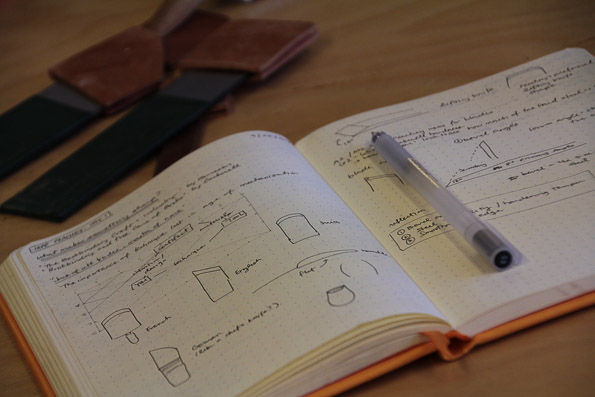
Once you can visually analyze what your hands have done, then you can correct, alter, adjust, repeat your hand technique. Critical thinking is taught via writing in undergraduate curriculums. Could critical looking be linked to drawing?  Taking a photo or shooting a video can be a useful shortcut for note taking that may gloss over important aspects, such as processing and replicating. Drawing really forces you to look closer, again and again and again.

Critical looking is different from just looking. In a narrow sense it means learning to interpret what you are looking at, what the scratch patterns, reflections, divots, rounded bevels mean in relation to how you were holding the knife. In a broader sense it means understanding  what the effect of your actions are. Critical looking is the basis of all sharpening, maybe all craft skills?


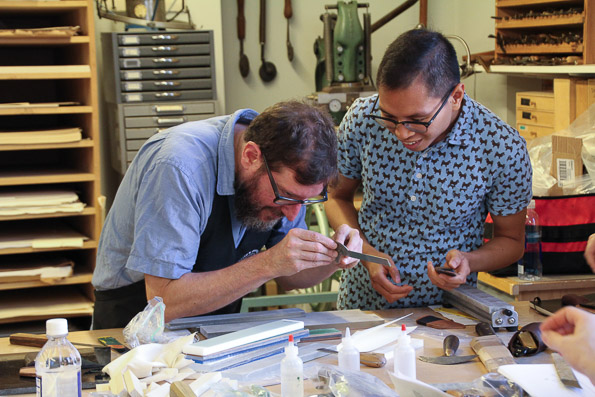
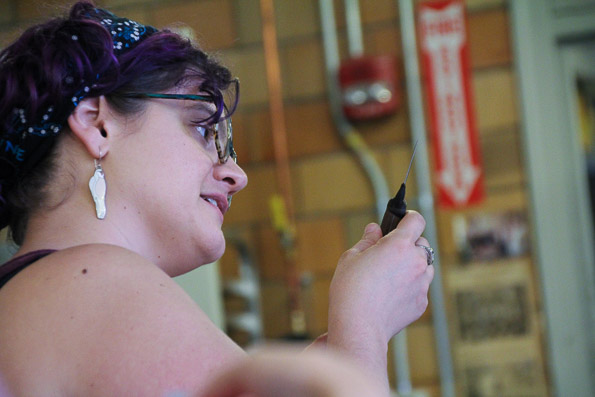
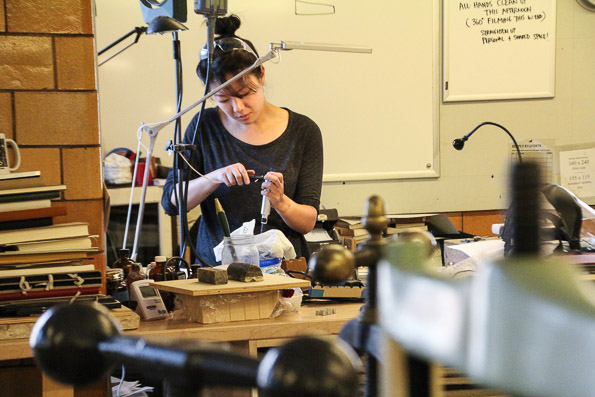
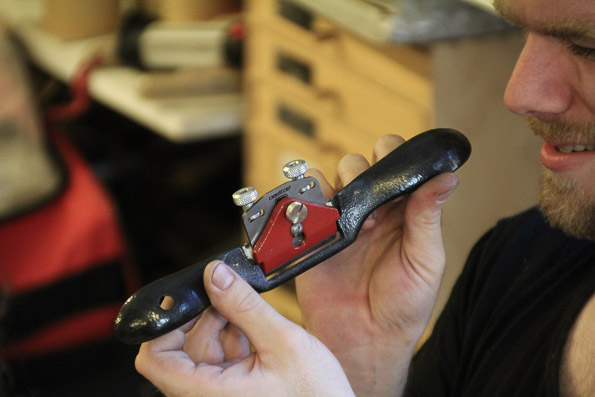
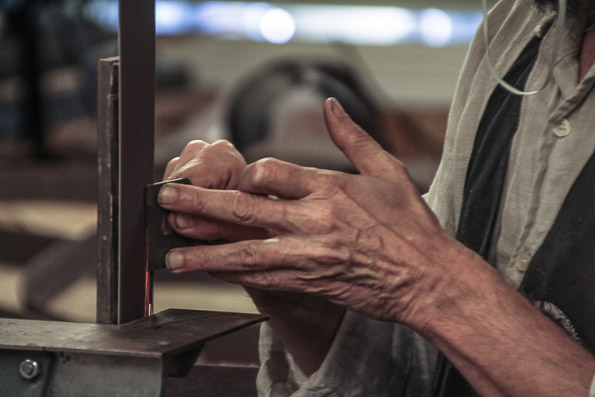
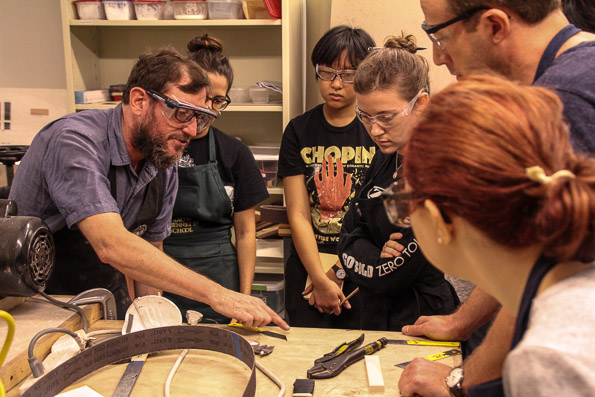
Below are some images of the 2017 workshop shot by Brian Burnett.


All Photos Copyright 2017 Brian Burnett. And he was critically looking.


Whatsit #3

It has been almost a decade since my first two whatsit posts,  Whatsit #1 and #Whatsit #2. Number 2 was identified by Tom Conroy, #1 is still a bit of a mystery. For those unfamiliar with this colloquial American term, a “whatsit” is an unidentified object, short for “what is it”? The Mid-West Tool Collectors association often features a number of them in their quarterly publication, The Gristmill. You get a lot for your annual membership from them, including a reprint of a classic tool oriented book. The Early American Industries Association usually features a panel discussing a number of them in front of a live audience. Full bore geeky fun!

Recently a colleague has sent me images of a seriously odd, unidentified tool she found in her conservation lab.  She first thought it was some kind of cloth cutting tool, but it didn’t really work. This makes sense given the conically shaped brass end of it: a cloth cutter would have to have two steel blades. The shape of the handle indicates it is used by pushing forward, but I’ve never seen anything like it.

Here is a more detailed description of the business end. “The cone is not solid.  The brass sheet overlaps the wooden handle for about 1.25 in.  The cone is secured on the handle with two brass “pins” (visible in the photos, 1 pin on each side) onto the handle.  The blade-like part opens wider than is shown in the photo.  I can move it to a  90° angle with the cone.  When I open the blade fully and squint at the base of the blade, it looks as though the same pin(s) attaching the cone to the handle may also attach the blade to the handle.  Maybe it’s a single pin that runs all the way through.” She later mentioned the blade opens to almost 90 degrees.

The size of the brass end seems too large for bookbinding applications, my first guess is it is a type of gardening tool called a dibber or dibble.  Possibly the blade would aerate the soil or cut small roots??  It is odd how new the handle and brass cone looks when compared to the wear and discoloration on the blade.

But I’m not sure of any of this And why did it end up in an institutional book conservation lab? I’m stumped.

ADDED: Sept. 27, 2017. MYSTERY SOLVED!  John Nove, coment below, and in a personal email sent me the identification.  It is a  Humboldt Sharpener for Cork Borers.  Well done John! https://www.humboldtmfg.com/cork-borer-sharpener.html


The stamping reads ” MADE IN WEST GERMANY”
This is the other side. Even the blade pivot pin is made of brass, which suggests light duty use.

New! Bookbinder’s Hammer for Sale

Quite likely, one of the last things the bookbinding world needs — besides another introductory bookbinding manual —  is a new specialized hammer. There are serviceable backing hammers commercially availaible for under $100 that just take a little filing of sharp edges and polishing of the face to work. Many people use old cobblers hammers that can be picked up for around $12 at flea markets. A froiture is arguably easier to use, and in most cases performs  as well or even better. Sometimes, a little piece of wood and any old hammer will do. Many times, with older books, your fingers are the only tools you really need.

But who cares!

I wanted to make the best bookbinder’s hammer possible, without consideration of the final cost.

I originally wanted this to be some kind of “tool art”. Then I recalled someone who told me anytime you put the word art after that of an object, there is a very good chance it is not art, but some kind of craft with pretenses to art. That said, it is very difficult for functional objects to be considered as Art. Still, there might be some kind of framework within tool-artifact-user interactions.

More practically, this hammer has a non-rusting stainless steel head, one face domed and one flat, with a slight texture to both faces which help move the paper, and a very comfortable applewood handle. The idea for the textured head came from an old brass hammer with a damaged and pitted head, that I use on leather. Somewhat counterintuitively, the textured surface marks the leather less, since the force is not concentrated at one specific spot, making it flat. The handle shape was derived from a jewelers chasing hammer and an old Hammond cobbler’s hammer I own.

This hammer can be used for backing, sewing compression, beating down slips, hammering corners, or any time you need a little extra persuasion. Like to get a client to cough up a little more dough for a particular project. This is a tool that could pay for itself the first time you use it.  The polished cylindrical body of the hammer can be used froiture like to smooth out a spine.

I use a hatchet to rough out the American apple wood, and then refine the shape with a spokeshave. The hammer has an oval eye to prevent the handle from twisting, and a stainless steel wedge to secure it. The handle is then sanded, lightly oiled and polished to 3 microns. The resulting surface is incredibly smooth. Apple wood was traditionally used for saw and other tool handles.

The stainless steel head has a one inch diameter, and is about two inches in length, though this varies with the length of the handle. The eight to nine inch long apple wood handles are all unique, but I make them generally to the shape depicted below.

This hammer very comfortable, well balanced, and extremely aesthetically pleasing. But Art?

Bookbinder’s Hammer: $425.00.  Purchase here.