W. O. Hickok Box

W.O.Hickock box. My Collection.

How much can we tease out of this nicely made wooden box with a sliding lid? Someone once told me that with enough rigor, knowledge and time, the whole history of the world could be found in any object. Mmmmm.

The Hickok company is still in business, and has made bookbinding and paper ruling tools for over 150 years. On this box, the shipping label also keeps the lid from sliding open in transit. The addressee, “News Bookbindery” must have been associated with the Goshen News, which was the newspaper in Goshen, Indiana. The wood is Southern yellow pine and has finger joints which are machine made using circular cutting heads. The bottom has saw marks from a 12 inch diameter circular saw.

Given the size, and very sturdy packaging, my guess it that it contained fragile Hickock ruling pens. The end of the box not visible in this image has written in pencil “17 point”, which would also support the ruling pen hypothesis, and could indicate the box was also used for storage. There is a Hickok order number, which I haven’t identified yet.

1910 Gane Brothers Catalog. Specific mention of mailing a small package. Apparently this is novel at the time? Source: https://babel.hathitrust.org/cgi/pt?id=nyp.33433057476958;view=1up;seq=44

In a 1910 Hickok catalog, there is special mention that smaller packages can be sent through the mail, and this occurs on the page that lists the styles of ruling pens.  The 3 cent purple Thomas Jefferson 1801-1809 stamp on the outside of the was issued in 1938.  I’m a little suprised a ruling machine was still in use at this late date, even in a small midwestern town. This must have been near the end of ruling machines.

Hickok is still in Harrisburg Pa, and still has lots of spare parts for ruling machines, and they still sell bookbinding equipment, such as my favorite book press, the Hickok 001/2. I visited in 1998 and wrote a short piece, “The W.O. Hickok Mfg. Co.: 150 Years of Bookbinding Equipment” for the Guild of Book Workers Newsletter #121.


Prices of Hickock ruling pens from a 1910 Gane Bros Catalog. They cost .015 cents per point. Source: https://babel.hathitrust.org/cgi/pt?id=nyp.33433057476958;view=1up;seq=44

The history of the world in this little box? Physically, it is evidence of the timber industry and industrial manufacture, as well as transportation and storage. The label is record of printing technology and the postal system. If the box contained ruling pens, these were used to make the pages for record keeping by clerks and accountants. This spins out into record keeping, finance, written marks, memory, foundations of civilization….
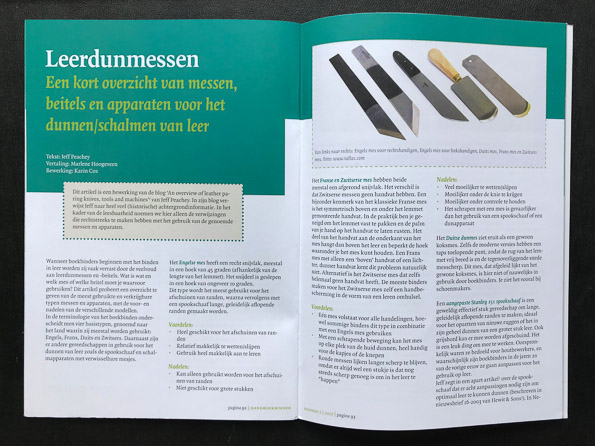
Leerdunmessen

My blog post “An Overview of Leather Paring Knives, Tools and Machines” was translated into Dutch and appears in the current issue of Handboekbinden (Jaargang 10, Nummer 3, 2017): 92-95.  According to Google translate, Leerdunmessen means “Learning Lessons”. Kind of cool!

Added 31 Oct 2017: A dutch friend let me know that Google translation is wrong, and Leerdunmessen actually means “Leather Paring”. Thanks Edith!

Just Looking

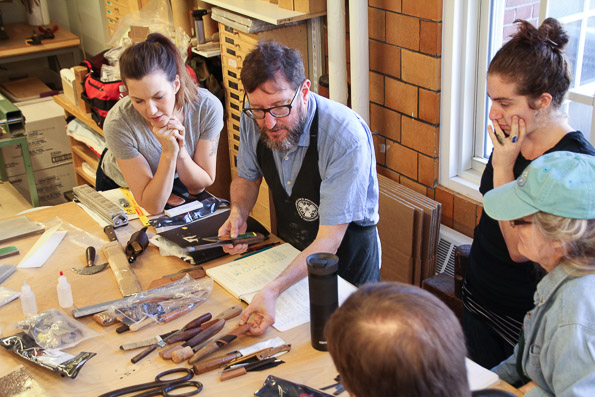
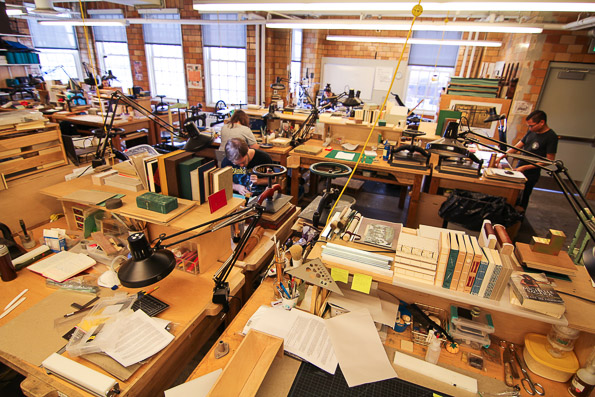
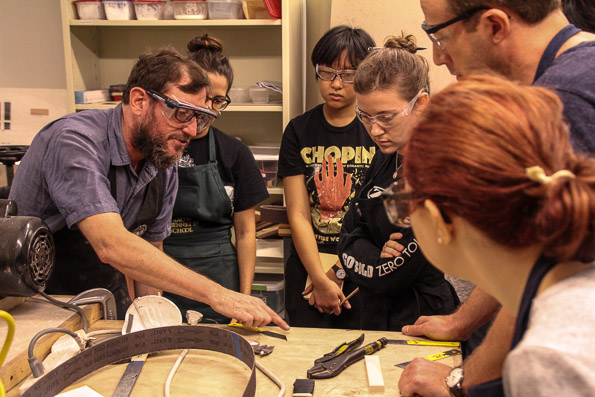
Once a year I teach a knife sharpening and tool making workshop in the bookbinding department at North Bennett Street School (NBSS) in Boston.  NBSS has the finest bench oriented two year bookbinding program in the world. If you have the passion, drive, commitment, dedication — and are crazy enough to pursue this antiquated profession in the 21st century — this is the place to do it. You will find many kindred spirits in your cohort.

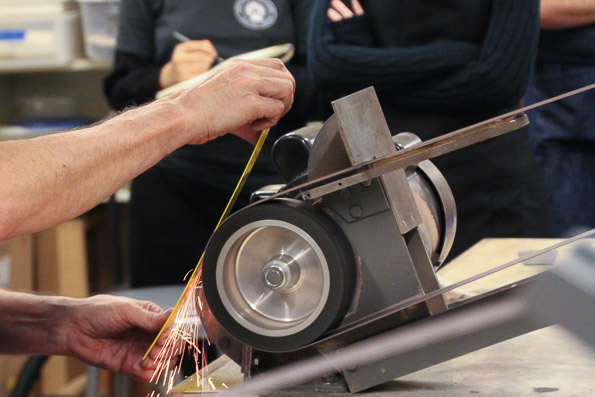
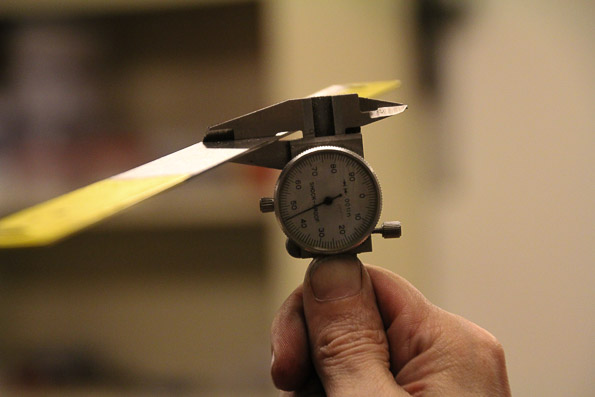
I cover all aspects of sharpening related to bookbinding: blade angles, bevel angles, types of steel, types knives, types of grits, grit progression, hand grinding using power tools, free hand sharpening, and stropping. These techniques can be adapted to virtually any type of sharpening system: oil stones, diamond stones, waterstones, lapping powders and finishing films. Free hand sharpening throws many students into the deep end, for a while, but ultimately equips them to sharpen most types of edge tools. Most bookbinding knives have complex shapes and handles  which preclude the use of jigs or honing guides.

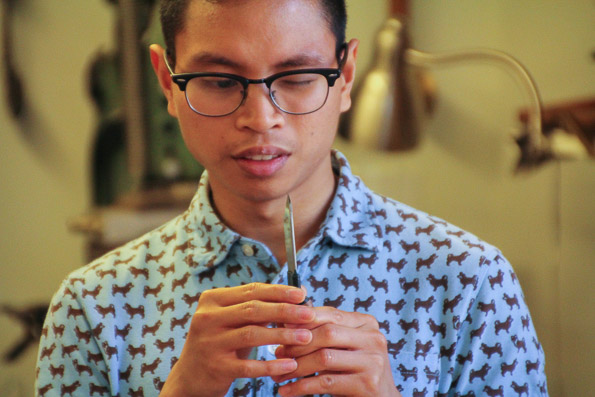
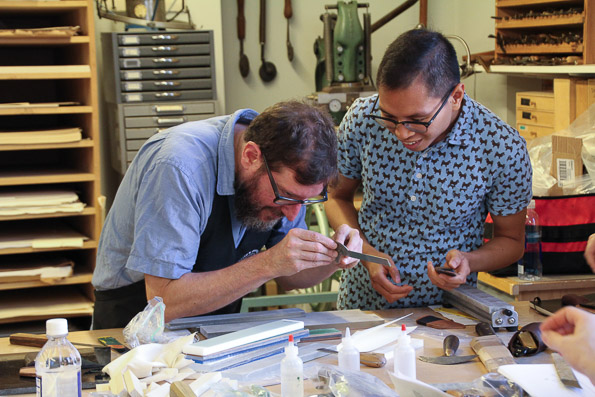
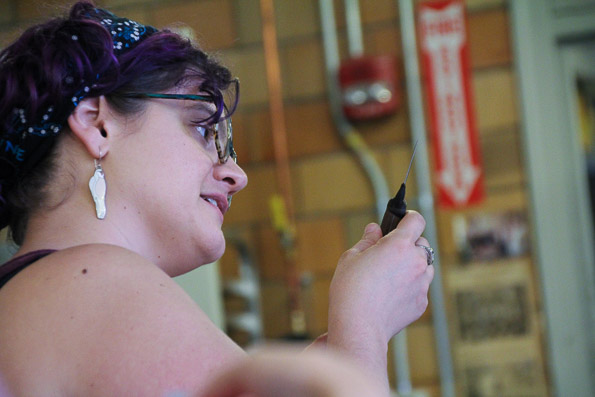
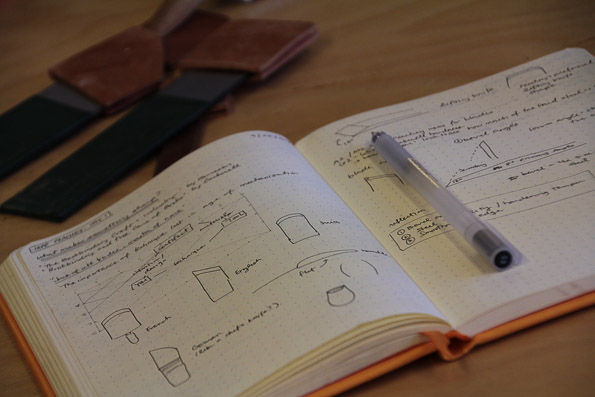
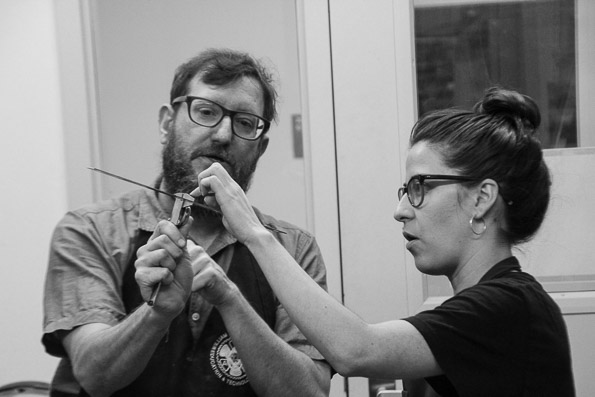
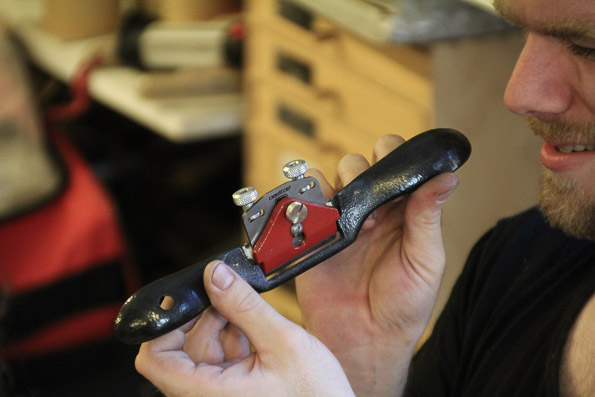
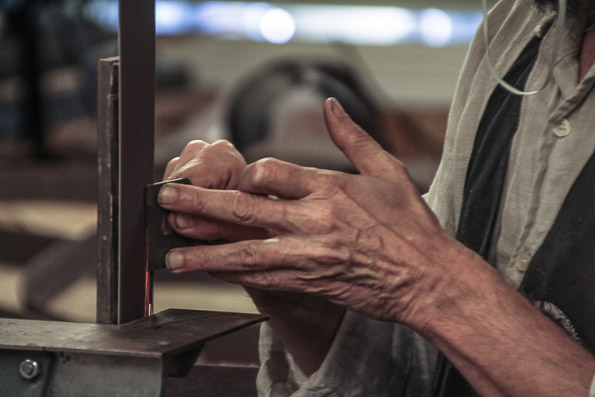
The foundation of this class is critical looking. Critical looking is not only closely watching the instructor demonstrate a technique, but it is looking at what you have done. Often when sighting or aligning, one eye is better than two.

Once you can visually analyze what your hands have done, then you can correct, alter, adjust, repeat your hand technique. Critical thinking is taught via writing in undergraduate curriculums. Could critical looking be linked to drawing?  Taking a photo or shooting a video can be a useful shortcut for note taking that may gloss over important aspects, such as processing and replicating. Drawing really forces you to look closer, again and again and again.

Critical looking is different from just looking. In a narrow sense it means learning to interpret what you are looking at, what the scratch patterns, reflections, divots, rounded bevels mean in relation to how you were holding the knife. In a broader sense it means understanding  what the effect of your actions are. Critical looking is the basis of all sharpening, maybe all craft skills?


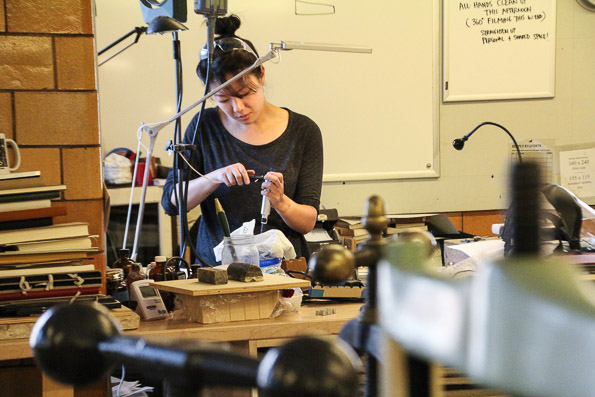
Below are some images of the 2017 workshop shot by Brian Burnett.


All Photos Copyright 2017 Brian Burnett. And he was critically looking.