Added 15 March 2016: A newer version of this fixture: https://jeffpeachey.com/2016/03/15/improved-book-fixture/
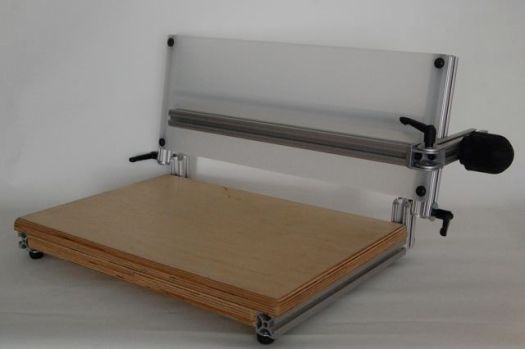
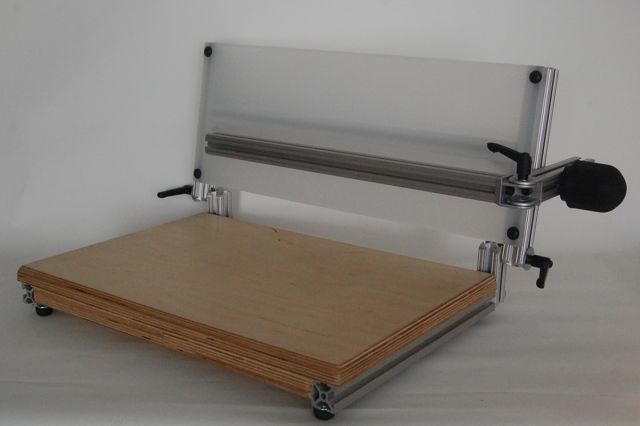
A jig guides a tool, whereas a fixture supports the workpiece – in this case is a bound book. Increasingly, much of a book conservator’s work involves working in-situ without disbinding a textblock. This fixture safely and securely supports the parts of the book not being worked on while treating pages. The idea for this fixture was originally developed by Raymond Jordan, Senior Book Conservator at Trinity College, Dublin (for an image of his version in use, see Preservation and Conservation in Small Libraries, ed. Hadgraft and Swift, 1994), with additional improvements by Chela Metzger, Conservator of Library Collections at Winterthur Museum, Delaware.
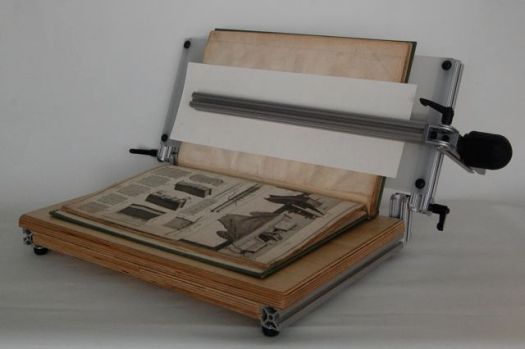
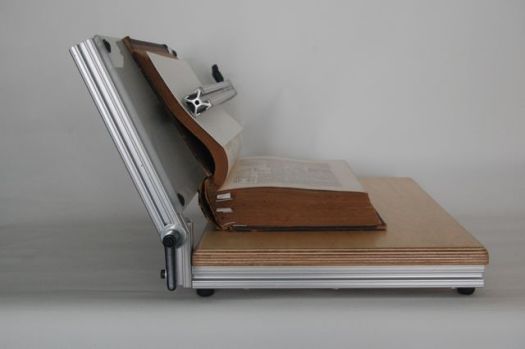
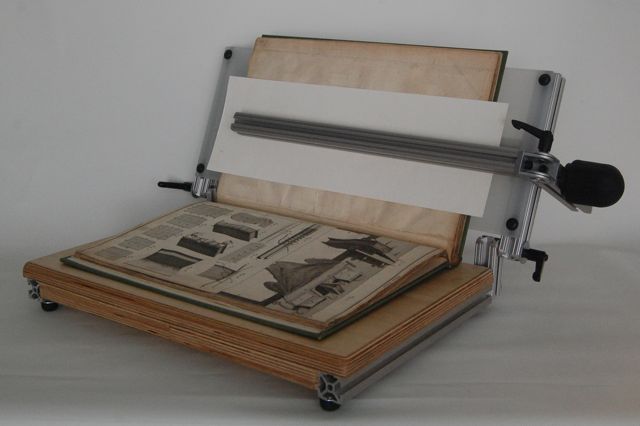
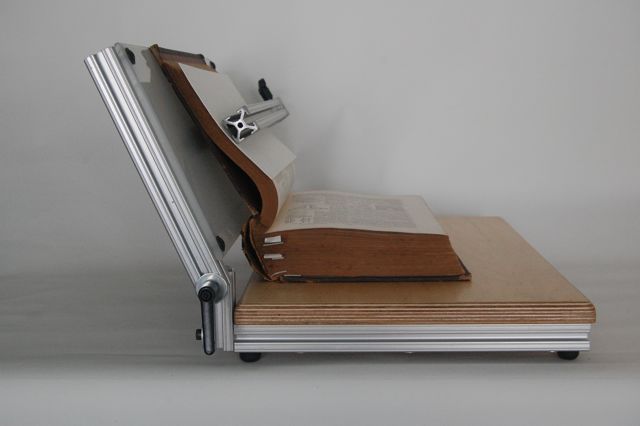
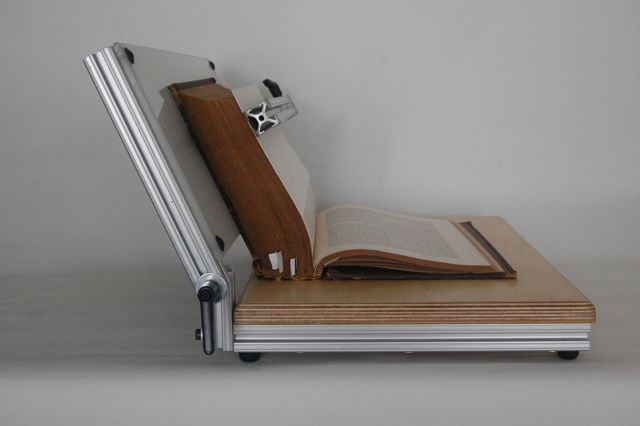
Many conservators construct impromptu assemblages, but this fixture professionally, safely, and securely holds printed books and manuscripts, even those with heavy wood boards, bosses and other furniture. It supports the text-block and board, so that the spine and sewing structure is not stressed while work is done on the pages; repairing tears, media consolidation, flattening dogeared corners, dry cleaning, etc…. It can also be used to support the text-block when flattening warped or distorted vellum bindings. Text-block are rarely planar: working in-situ enables the conservator to repair tears that conform to the natural undulations of a particular place, on a particular page. The hinged bar allows the pages to be quickly turned, yet is braced so it cannot fall down onto the page. Perfect for books with fragile sewing, brittle pages, or any time gentle, secure support is needed when working on bound items. It simplifies and speeds up the treatment process when many pages of a text-block need attention.
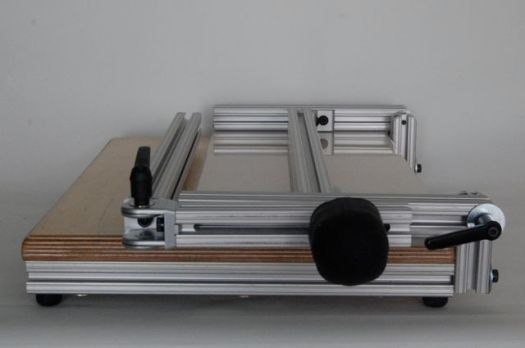
The bed size is 12 x 17 inches, a heavy anti-tipping 1.5” thick, and the maximum supplied thickness books is 6 inches. Fits octavo through folio books. If a thicker book is encountered, extension pieces can be purchased for a nominal charge. This support can be used with oversize books with slight modifications, instructions included. Adjustable arm levers allow a full range of clamping angles, no tools necessary. The front page bar is hinged to allow quick page turns. The uprights hinge from 0 degrees (parallel to the bed) to 180 degrees. Constructed out of aircraft grade plywood with a 1.5” thick base to resist tipping, polypropylene and clear anodized 6105-T5 aluminum. Custom sizes available.
In-situ Book Conservation Fixture $750.00





 Peachey Conservation