Historic Book Structures for Conservators 2015: One month, seventy-two books, seven students, and one tired instructor

historic structures class 2015
L-R: Jeff Peachey, Emilie Kracen, Catherine Stephens, Fionnuala Gerrity, Katherine Le, Diana Avelar Pires, Amber Hares, Valeria Kremser
photo-25
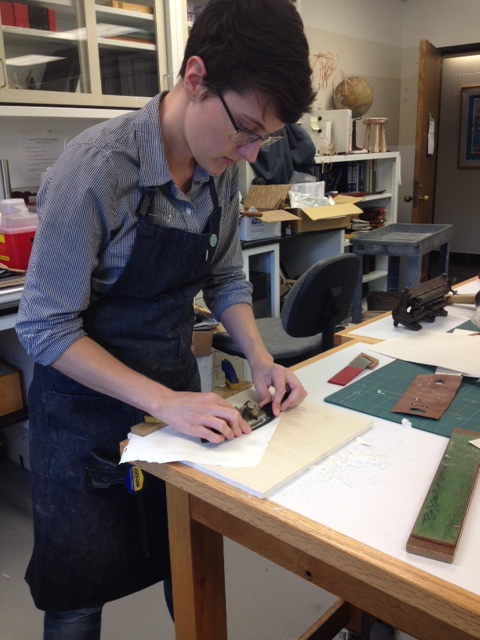
Cat Stevens spokeshaving an alum tawed skin. You need a very sharp spokeshave, modified for leather work, to tame this abrasive material.


photo 2-2
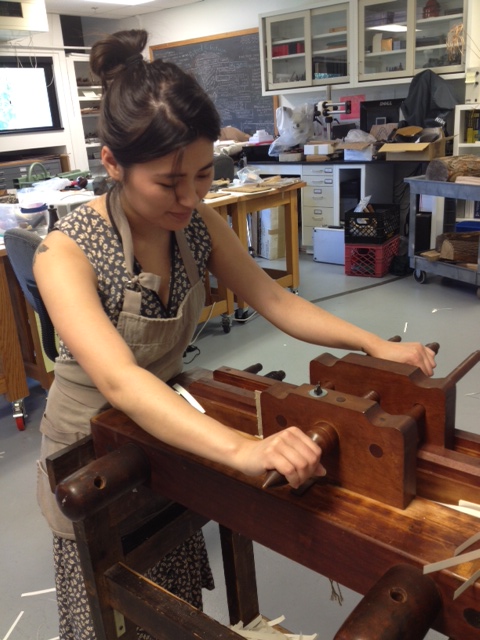
Katherine Le ploughing on a vintage Hickock “Amateur or Small Size” press and plough. Oddly, in a catalog ca. 1940 the regular and small size are the same price. I would be happy to trade my small one for a regular size!
photo 3-2
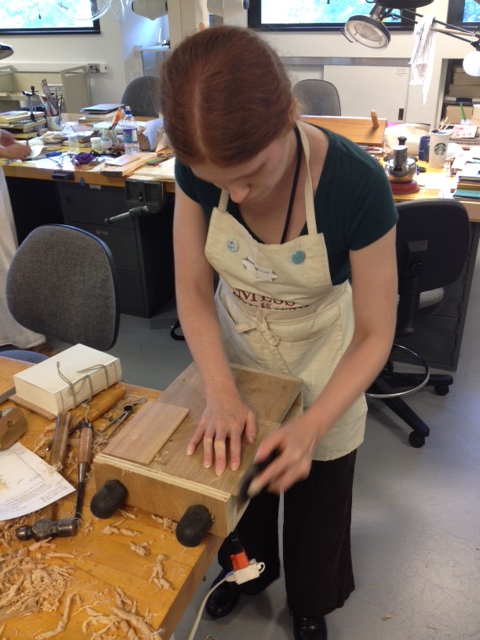
Fionnuala Gerrity using a low angle block plane to shape her wooden boards. She is using a  Lee Valley Veritas Apron Plane, which is a great value at less than $100.
photo-27
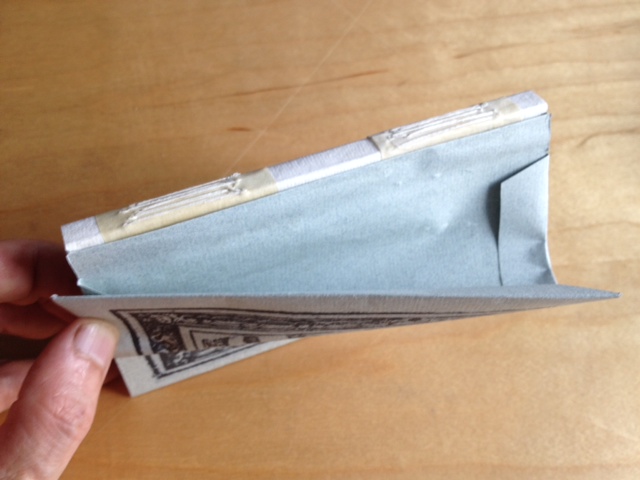
A model of a ca. 1500 Italian long stitch book made with guest Instructor Maria Fredericks.
photo 4-2
Elissa O’Loughlin giving a demonstration of semi-traditional Japanese paste making. Wait, how did she get into this class?!?
photo 5
Val Kresmer carving some channels in her wood boards. In front of her are some of the bookbinding, woodworking and metalworking tools for the class.
photo-26
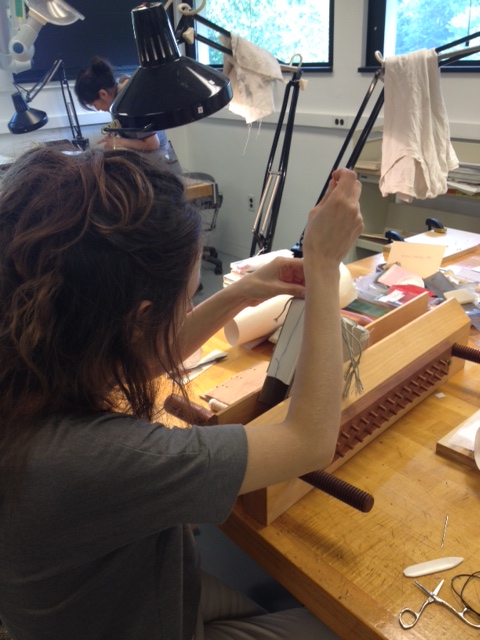
Amber Hares sewing a primary end band with a back bead on a 16th C. German model. This will later be covered with a secondary two color front bead.


diana cutting boards
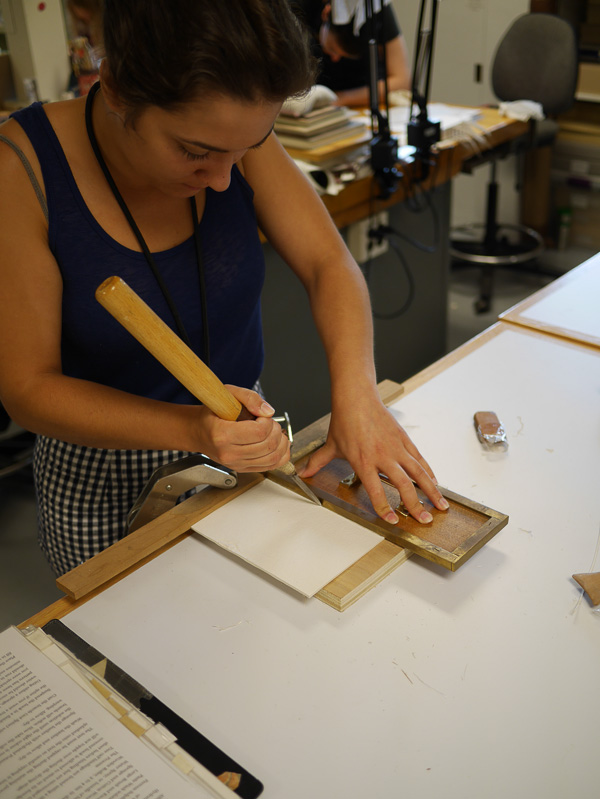
Diana Avalar Pires cutting through pasteboards with a reproduction 18th C. pointe for her full calf French model.
emily fraying slips
Emilie Kracen fraying and pointing slips.

The Importance of Extra Binding

“I pity those who call themselves cultured and with fine art taste who cannot take from their shelves some few specimens of first-class modern extra binding … giving to their possessors every time they handle them finer feelings and sweeter ecstasy of pleasure than many more costly objects of art they possess.”

-William Matthews Modern Bookbinding Practically Considered. New York: The Grolier Club, 1889. (pp. 94-95)

Mi-type

The Mechanics’ Magazine, Museum, Register, Journal, and Gazette. No. 1051,Saturday September 30, 1843, 265.

I recall hearing that most type is about 50% redundant if the only consideration is legibility. If so, I’m interested in why mi-type, or something like it, never caught on. If the entire history of print was reduced by half the material costs—assuming it was just a legible— this would have been significant in labor/ cost/ carbon reduction.