Heat Treated Tonkin Hera

Tonkin

I’ve done some research and ramped up the quality of the bamboo I use to make hera.

First I have decided to use Tonkin, a super strong and resilient bamboo which is used by bamboo fly fishing rod makers. As evident in the image above, it has a preponderance of dark “power fibers”, which give it strength and a pleasing density.  Look at the end of a chopstick for comparison, which is generally pure white weak pith. There are over 1,000 species of bamboo.

I’ve also decided to heat treat the bamboo after initial shaping.  Dr. Wolfram Schott has a fantastic paper, Bamboo in the Laboratory, if you are interested in more details. His Bamboo under the Microscope is also highly recommended. Both breaking strength and modulus of elasticity increases according to his research and tradition in rod making. I’m not totally convinced it makes a difference for such small tools, but it certainly doesn’t seem to hurt. And the stove adds a comfortable warmth on these increasingly cold fall days!

Heat treated Tonkin Hera for sale, $25


New Hera

Dividers; or, What Problem?

stevens dividers

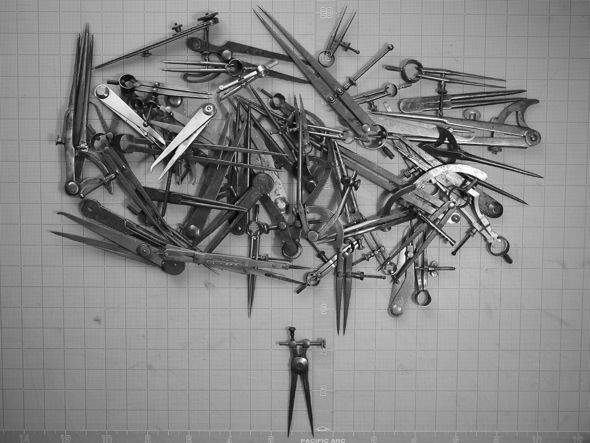
Some of my dividers.  

Sara Bryant of Big Jump Press wrote a breathlessly enthusiastic ode to dividers last month on her blog. Apart from extolling the virtues of comparison measurement, she wondered aloud if she perhaps was becoming a hoarder beause she has six pairs, and if it might be a problem.

My dear Sara, rest assured, you do not have a problem.

stevens divider

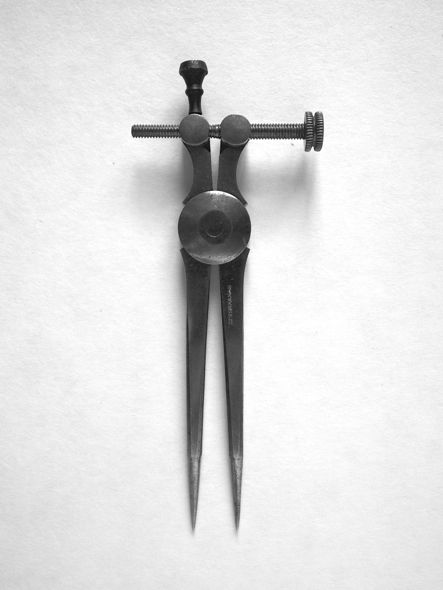
My favorite dividers, a 19th century Stevens & Co. Note the unusual, and extremely elegant position of the adjustment screw above the pivot point.

Paring on Glass

Screen Shot 2014-02-23 at 5.08.12 PM

Charles Tomas Jacobi The Printers’ Handbook of Trade Recipes, Hints & Suggestions  (London: Chiswick Press, 1891), 265.

Yes, yes, and yes. Note there is no mention of a litho stone. 18th century paring surfaces seem to generally be marble, I suspect the only reason litho stones became popular was that they were a cheap plentiful source of a flat surface in the late 19th. Save the litho stones for the printers or your beautiful bookbinding photography.