
Erin Fletcher
Hand bookbinder specializing in embroidered bindings
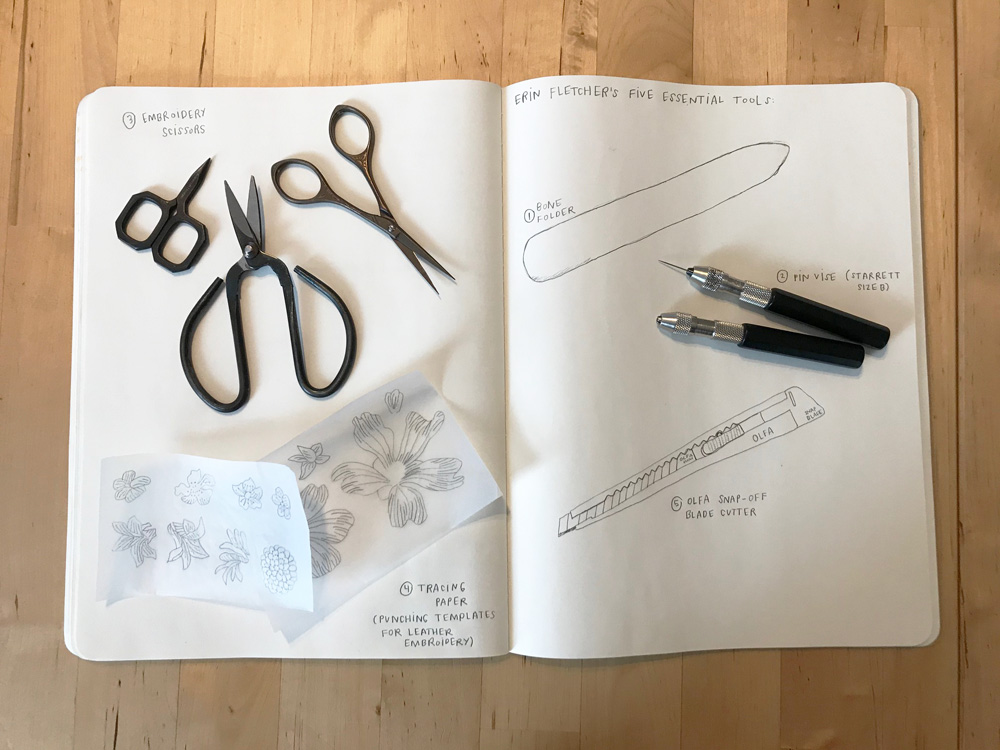
1. My oldest tool: a classic bone folder
I reach for this tool every day in the studio to assist in many aspects of my work. I’ve definitely developed an attachment to this specific bone folder and experience a mini panic attack if I can’t find it.
I reach for this tool every day in the studio to assist in many aspects of my work. I’ve definitely developed an attachment to this specific bone folder and experience a mini panic attack if I can’t find it.
2. Pin Vise
I find my pin vise essential for both my bookbinding and embroidery work. As opposed to an awl, I appreciate the versatility of a pin vise. Switching out the size of the needle based on the work offers me more control. I talk up this tool every chance I get during workshops.
I find my pin vise essential for both my bookbinding and embroidery work. As opposed to an awl, I appreciate the versatility of a pin vise. Switching out the size of the needle based on the work offers me more control. I talk up this tool every chance I get during workshops.
3. Embroidery Scissors
These small, slender scissors that cut to the point are great for snipping small stitches and getting me out of a bind when I make an error. Plus embroidery scissors come in a wide range of colors and designs, so they’re great for collecting.
These small, slender scissors that cut to the point are great for snipping small stitches and getting me out of a bind when I make an error. Plus embroidery scissors come in a wide range of colors and designs, so they’re great for collecting.
4. Tracing Paper
After drafting the design for a binding, I reach for the tracing paper to use throughout the design and binding process. It’s perfect for determining the layers of a design. I also use tracing paper to place onlays and pre-punch for embroidery. And it comes in handy for tooling.
5. Olfa Snap-Off Blade Cutter
I think it’s important to use tools that feel comfortable in your hand. This particular style of Olfa knife is my absolute favorite. It’s slim and wide, but not too slim or too wide. I bought several replacements during a trip to Tokyo!


 Peachey Conservation